
敌友难分:自噬在神经胶质瘤发生中的矛盾作用。
Friend or Foe: Paradoxical Roles of Autophagy in Gliomagenesis.
机构信息
Department of Animal Science, College of Agriculture and Life Sciences, Chonnam National University, Gwangju 61186, Korea.
Department of Biomedical Science, Chosun University, Gwangju 61452, Korea.
出版信息
Cells. 2021 Jun 6;10(6):1411. doi: 10.3390/cells10061411.
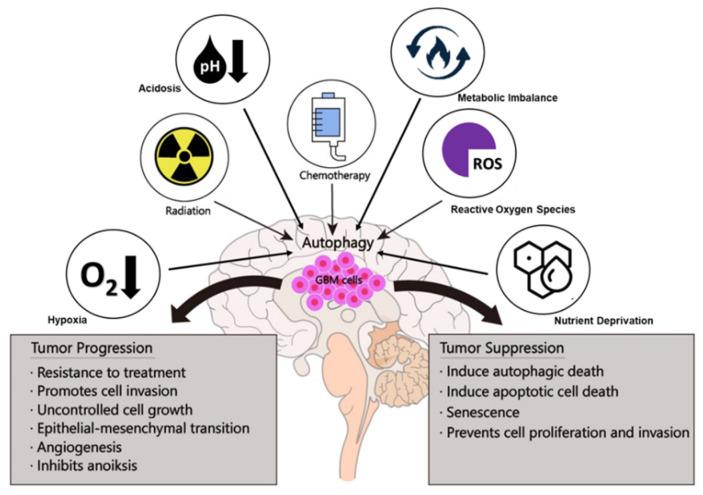
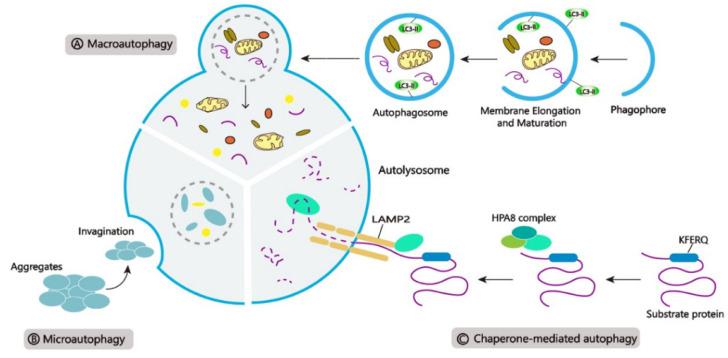
Glioblastoma multiforme (GBM) is the most common and aggressive type of primary brain tumor in adults, with a poor median survival of approximately 15 months after diagnosis. Despite several decades of intensive research on its cancer biology, treatment for GBM remains a challenge. Autophagy, a fundamental homeostatic mechanism, is responsible for degrading and recycling damaged or defective cellular components. It plays a paradoxical role in GBM by either promoting or suppressing tumor growth depending on the cellular context. A thorough understanding of autophagy's pleiotropic roles is needed to develop potential therapeutic strategies for GBM. In this paper, we discussed molecular mechanisms and biphasic functions of autophagy in gliomagenesis. We also provided a summary of treatments for GBM, emphasizing the importance of autophagy as a promising molecular target for treating GBM.
胶质母细胞瘤(GBM)是成人中最常见且侵袭性最强的原发性脑肿瘤,诊断后中位生存期约为 15 个月。尽管对其癌症生物学进行了几十年的深入研究,但 GBM 的治疗仍然是一个挑战。自噬是一种基本的稳态机制,负责降解和回收受损或有缺陷的细胞成分。它在 GBM 中发挥着矛盾的作用,根据细胞环境的不同,它可以促进或抑制肿瘤的生长。为了开发治疗 GBM 的潜在治疗策略,需要深入了解自噬的多效性作用。在本文中,我们讨论了自噬在 gliomagenesis 中的分子机制和双相功能。我们还总结了 GBM 的治疗方法,强调了自噬作为治疗 GBM 的有前途的分子靶点的重要性。

 Zotero 插件