
人类巨噬细胞吞噬作用及细胞内加工处理的分子机制
Molecular Mechanisms of Phagocytosis and Intracellular Processing by Human Macrophages.
作者信息
Woitzik Philipp, Linder Stefan
机构信息
Institute for Medical Microbiology, Virology and Hygiene, University Medical Center Eppendorf, 20246 Hamburg, Germany.
出版信息
Biology (Basel). 2021 Jun 22;10(7):567. doi: 10.3390/biology10070567.
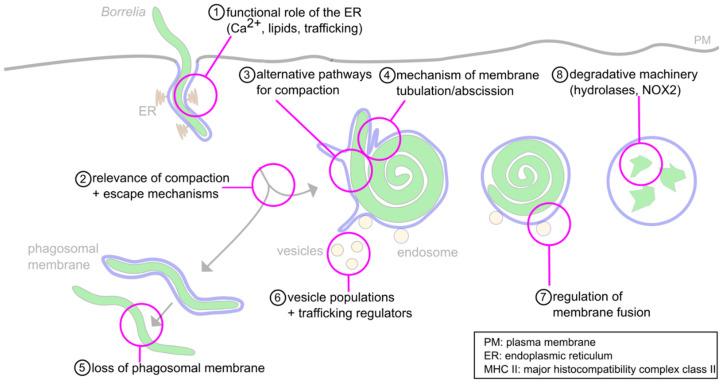
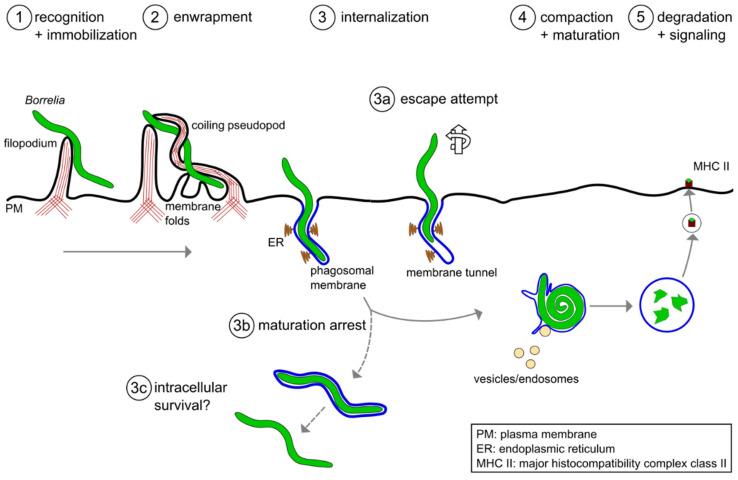
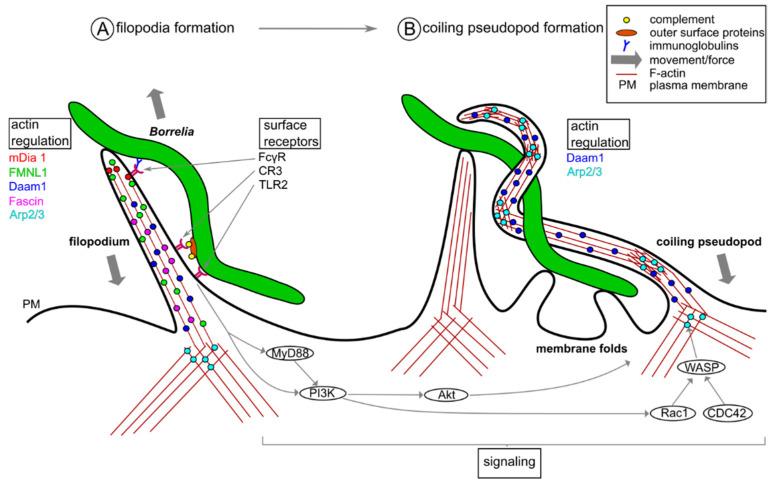
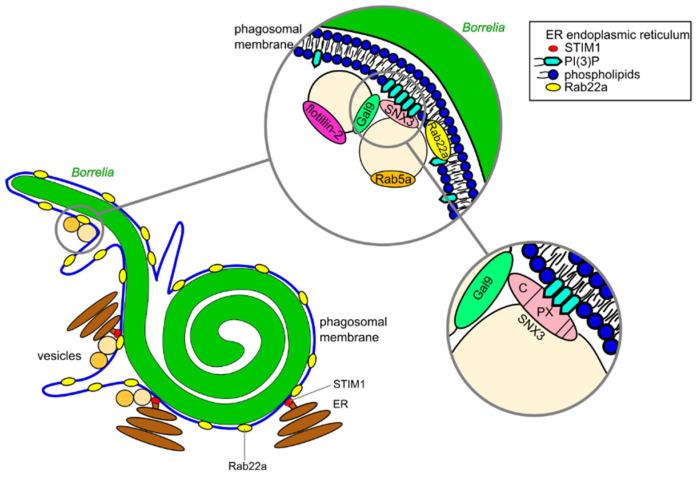
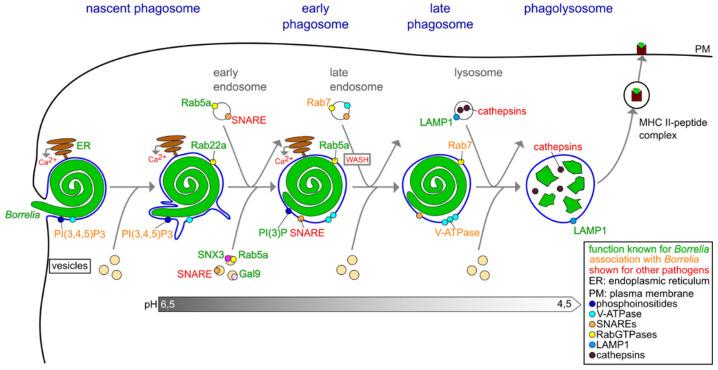
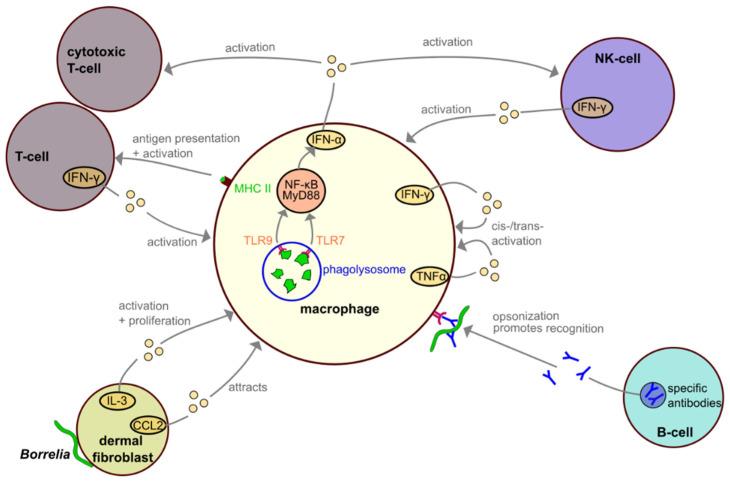
Lyme disease is the most common vector-borne illness in North America and Europe. Its causative agents are spirochetes of the complex. Infection with borreliae can manifest in different tissues, most commonly in the skin and joints, but in severe cases also in the nervous systems and the heart. The immune response of the host is a crucial factor for preventing the development or progression of Lyme disease. Macrophages are part of the innate immune system and thus one of the first cells to encounter infecting borreliae. As professional phagocytes, they are capable of recognition, uptake, intracellular processing and final elimination of borreliae. This sequence of events involves the initial capture and internalization by actin-rich cellular protrusions, filopodia and coiling pseudopods. Uptake into phagosomes is followed by compaction of the elongated spirochetes and degradation in mature phagolysosomes. In this review, we discuss the current knowledge about the processes and molecular mechanisms involved in recognition, capturing, uptake and intracellular processing of by human macrophages. Moreover, we highlight interactions between macrophages and other cells of the immune system during these processes and point out open questions in the intracellular processing of borreliae, which include potential escape strategies of .
莱姆病是北美和欧洲最常见的媒介传播疾病。其病原体是伯氏疏螺旋体属复合体的螺旋体。感染伯氏疏螺旋体可在不同组织中表现出来,最常见于皮肤和关节,但在严重情况下也会累及神经系统和心脏。宿主的免疫反应是预防莱姆病发生或发展的关键因素。巨噬细胞是先天免疫系统的一部分,因此是最早接触感染性伯氏疏螺旋体的细胞之一。作为专职吞噬细胞,它们能够识别、摄取、进行细胞内加工并最终清除伯氏疏螺旋体。这一系列事件包括通过富含肌动蛋白的细胞突起、丝状伪足和盘绕伪足进行初始捕获和内化。被摄取到吞噬体后,细长的螺旋体被压实并在成熟的吞噬溶酶体中降解。在本综述中,我们讨论了目前关于人类巨噬细胞识别、捕获、摄取和细胞内加工伯氏疏螺旋体的过程及分子机制的知识。此外,我们强调了在这些过程中巨噬细胞与免疫系统其他细胞之间的相互作用,并指出了伯氏疏螺旋体细胞内加工方面的未解决问题,其中包括伯氏疏螺旋体潜在的逃逸策略。
 Zotero 插件