
成人恶性肿瘤患者血流感染:流行病学、微生物学以及与死亡率和多重耐药相关的危险因素。
Bloodstream infections in adult patients with malignancy, epidemiology, microbiology, and risk factors associated with mortality and multi-drug resistance.
机构信息
Professor Alborzi Clinical Microbiology Research Center, Shiraz University of Medical Sciences, Shiraz, Iran.
Shiraz University of Medical Sciences, Shiraz, 7193711351, Iran.
出版信息
BMC Infect Dis. 2021 Jul 2;21(1):636. doi: 10.1186/s12879-021-06243-z.
BACKGROUND
This study aimed to investigate the epidemiology, microbiology, and risk factors associated with mortality and multi-drug resistance bacterial bloodstream infections (BSIs) among adult cancer patients in Shiraz, Iran. We also report a four-year trend of antimicrobial resistance patterns of BSIs.
METHODS
We conducted a retrospective study at a referral oncology hospital from July 2015 to August 2019, which included all adults with confirmed BSI.
RESULTS
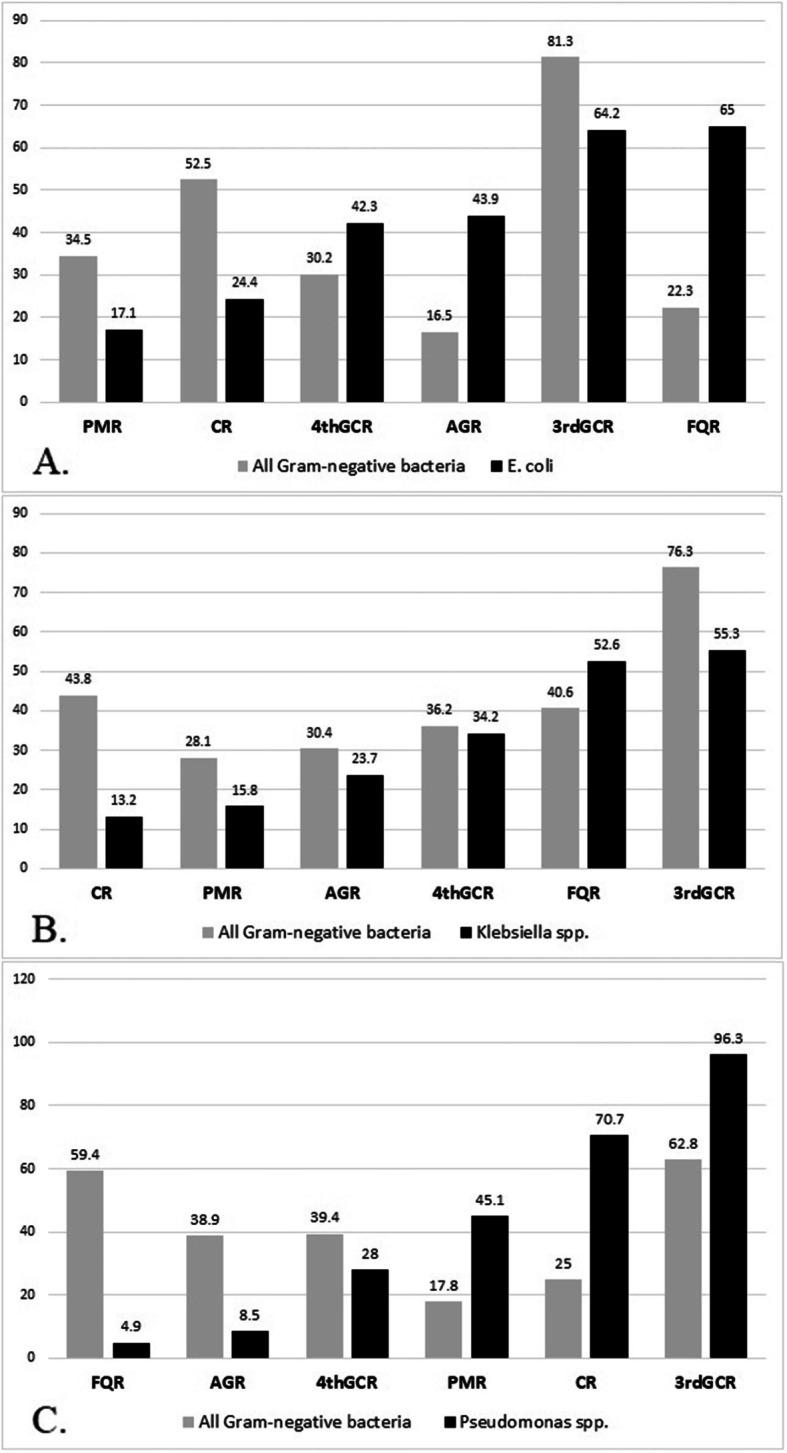
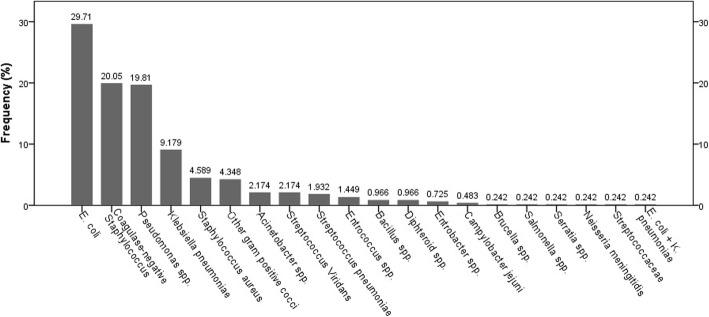
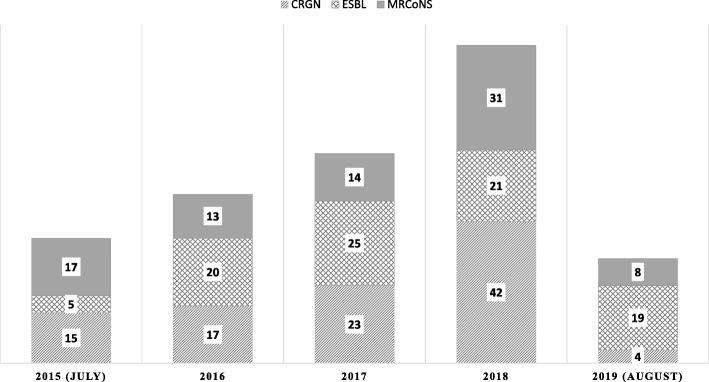
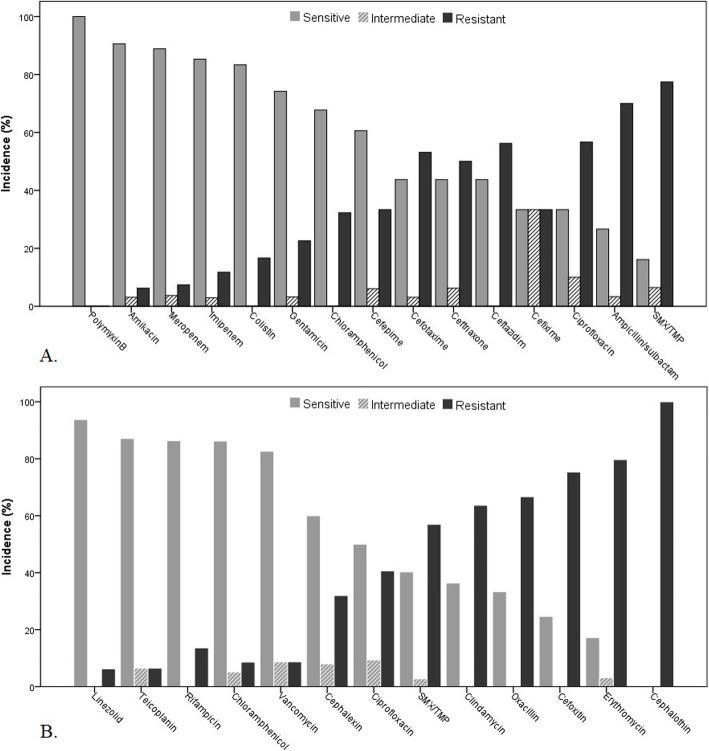
2393 blood cultures tested during the four-year study period; 414 positive cultures were included. The mean age of our patients was 47.57 ± 17.46 years old. Central Line-Associated BSI (CLABSI) was more common in solid tumors than patients with hematological malignancies. Gram-negative (GN) bacteria were more detected (63.3%, 262) than gram-positive bacteria (36.7%, 152). Escherichia coli was the most common gram-negative organism (123/262, 47%), followed by Pseudomonas spp. (82/262, 31%) and Klebsiella pneumoniae (38/262, 14.5%). Coagulase-negative staphylococci (CoNS) was the most frequently isolated pathogen among gram-positive bacteria (83/152, 54.6%). Acinetobacter spp., Pseudomonas spp., E. coli, and K. pneumoniae were the most common Extended-Spectrum Beta-Lactamase (ESBL) producers (100, 96.2, 66.7%, and 60.7, respectively). Acinetobacter spp., Pseudomonas spp., Enterobacter spp., E. coli, and K. pneumoniae were the most common carbapenem-resistant (CR) isolates (77.8, 70.7, 33.3, 24.4, and 13.2%, respectively). Out of 257 Enterobacterales and non-fermenter gram-negative BSIs, 39.3% (101/257) were carbapenem-resistant. Although the incidence of multi-drug resistance (MDR) gram-negative BSI increased annually during 2015-2018, the mortality rate of gram-negative BSI remains unchanged at about 20% (p-value = 0.55); however, the mortality rate was significantly greater (35.4%) in those with resistant gram-positive BSI (p-value = 0.001). The overall mortality rate was 21.5%. Early (7-day mortality) and late mortality rate (30-day mortality) were 10 and 3.4%, respectively.
CONCLUSIONS
The emergence of MDR gram-negative BSI is a significant healthcare problem in oncology centers. The high proportion of the most frequently isolated pathogens were CR and ESBL-producing Enterobacterales and Pseudomonas spp. We have few effective choices against MDRGN BSI, especially in high-risk cancer patients, which necessitate newer treatment options.
背景
本研究旨在探讨伊朗设拉子市成人癌症患者血流感染(BSI)的流行病学、微生物学和与死亡率及多重耐药菌相关的危险因素。我们还报告了 BSI 对抗菌药物耐药模式的四年趋势。
方法
我们在 2015 年 7 月至 2019 年 8 月期间对一家肿瘤转诊医院进行了回顾性研究,该研究纳入了所有确诊为 BSI 的成年人。
结果
在四年的研究期间共检测了 2393 份血培养,其中 414 份为阳性。我们患者的平均年龄为 47.57±17.46 岁。与血液系统恶性肿瘤患者相比,实体瘤患者中更常见中心静脉相关血流感染(CLABSI)。革兰氏阴性(GN)细菌的检出率(63.3%,262 例)高于革兰氏阳性菌(36.7%,152 例)。大肠埃希菌是最常见的革兰氏阴性菌(123/262,47%),其次是铜绿假单胞菌(82/262,31%)和肺炎克雷伯菌(38/262,14.5%)。凝固酶阴性葡萄球菌(CoNS)是革兰氏阳性菌中最常分离到的病原体(83/152,54.6%)。不动杆菌属、铜绿假单胞菌、大肠埃希菌和肺炎克雷伯菌是最常见的产超广谱β-内酰胺酶(ESBL)的菌属(100、96.2、66.7%和 60.7%)。不动杆菌属、铜绿假单胞菌、肠杆菌属、大肠埃希菌和肺炎克雷伯菌是最常见的耐碳青霉烯菌(CR)分离株(77.8%、70.7%、33.3%、24.4%和 13.2%)。在 257 例肠杆菌科和非发酵革兰氏阴性菌血流感染中,39.3%(101/257)为耐碳青霉烯菌。虽然 2015-2018 年期间,耐多药革兰氏阴性菌血流感染的发病率呈逐年上升趋势,但革兰氏阴性菌的死亡率仍保持在约 20%(p 值=0.55)不变;然而,耐革兰氏阳性菌血流感染的死亡率明显更高(35.4%,p 值=0.001)。总体死亡率为 21.5%。早期(7 天死亡率)和晚期死亡率(30 天死亡率)分别为 10%和 3.4%。
结论
耐多药革兰氏阴性菌血流感染的出现是肿瘤中心面临的一个重大医疗保健问题。最常分离到的病原体中,耐碳青霉烯菌和产 ESBL 的肠杆菌科和铜绿假单胞菌的比例很高。我们对抗多药革兰氏阴性菌血流感染的有效治疗选择很少,尤其是在高危癌症患者中,这需要新的治疗选择。



 Zotero 插件