
细菌对裂解性噬菌体和杀稻瘟菌素抗生素的交叉抗性演变
Evolution of Bacterial Cross-Resistance to Lytic Phages and Albicidin Antibiotic.
作者信息
Kortright Kaitlyn E, Doss-Gollin Simon, Chan Benjamin K, Turner Paul E
机构信息
Program in Microbiology, Yale School of Medicine, New Haven, CT, United States.
Department of Ecology and Evolutionary Biology, Yale University, New Haven, CT, United States.
出版信息
Front Microbiol. 2021 Jun 17;12:658374. doi: 10.3389/fmicb.2021.658374. eCollection 2021.
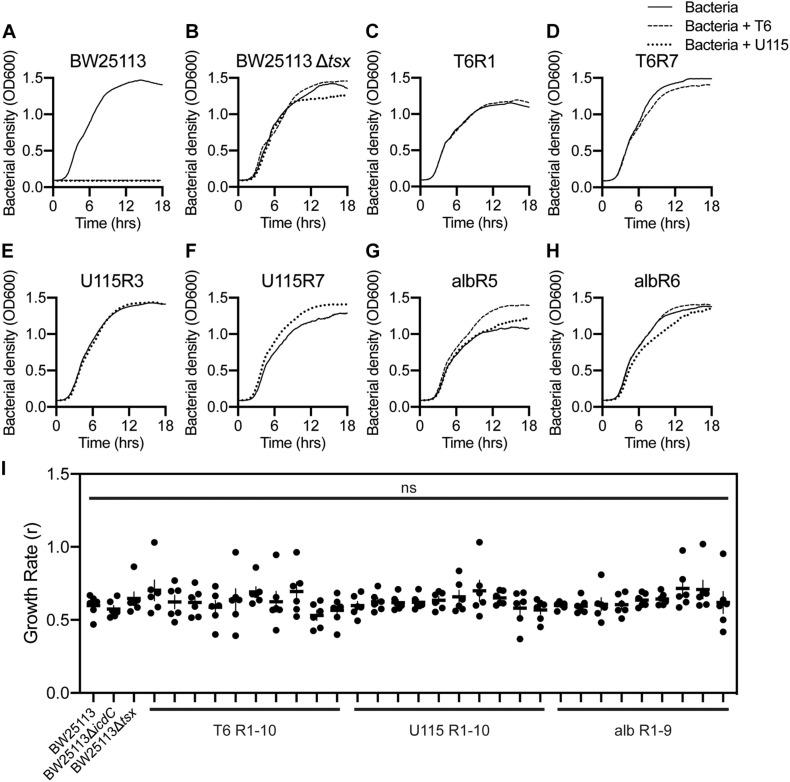
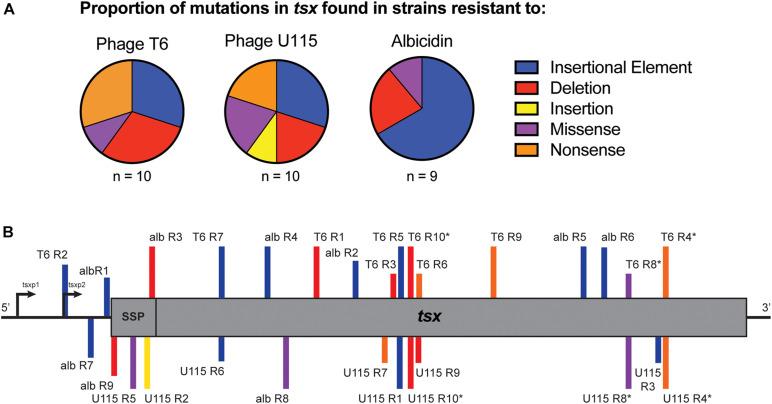
Due to concerns over the global increase of antibiotic-resistant bacteria, alternative antibacterial strategies, such as phage therapy, are increasingly being considered. However, evolution of bacterial resistance to new therapeutics is almost a certainty; indeed, it is possible that resistance to alternative treatments might result in an evolved trade-up such as enhanced antibiotic resistance. Here, we hypothesize that selection for bacteria to resist phage T6, phage U115, or albicidin, a DNA gyrase inhibitor, should often result in a pleiotropic trade-up in the form of cross-resistance, because all three antibacterial agents interact with the Tsx porin. Selection imposed by any one of the antibacterials resulted in cross-resistance to all three of them, in each of the 29 spontaneous bacterial mutants examined in this study. Furthermore, cross-resistance did not cause measurable fitness (growth) deficiencies for any of the bacterial mutants, when competed against wild-type in both low-resource and high-resource environments. A combination of whole-genome and targeted sequencing confirmed that mutants differed from wild-type change(s) in the gene. Our results indicate that evolution of cross-resistance occurs frequently in subjected to independent selection by phage T6, phage U115 or albicidin. This study cautions that deployment of new antibacterial therapies such as phage therapy, should be preceded by a thorough investigation of evolutionary consequences of the treatment, to avoid the potential for evolved trade-ups.
由于对全球抗生素耐药细菌增加的担忧,诸如噬菌体疗法等替代性抗菌策略正越来越多地被考虑。然而,细菌对新疗法产生耐药性的进化几乎是必然的;事实上,对替代疗法的耐药性可能会导致一种进化上的权衡,比如增强抗生素耐药性。在此,我们假设,选择让细菌抵抗噬菌体T6、噬菌体U115或DNA回旋酶抑制剂杀稻瘟菌素,通常会导致以交叉耐药形式出现的多效性权衡,因为这三种抗菌剂都与Tsx孔蛋白相互作用。在本研究检测的29个自发细菌突变体中,任何一种抗菌剂施加的选择都会导致对所有三种抗菌剂产生交叉耐药性。此外,当在低资源和高资源环境中与野生型竞争时,交叉耐药性不会导致任何细菌突变体出现可测量的适应性(生长)缺陷。全基因组测序和靶向测序相结合证实,突变体与野生型在基因上存在差异。我们的结果表明,在受到噬菌体T6、噬菌体U115或杀稻瘟菌素独立选择的情况下,交叉耐药性进化在中频繁发生。本研究提醒,在部署诸如噬菌体疗法等新的抗菌疗法之前,应全面调查该疗法的进化后果,以避免出现进化权衡的可能性。


 Zotero 插件