
噬菌体 - 抗生素协同(PAS)相互作用的当前态势
The Current Landscape of Phage-Antibiotic Synergistic (PAS) Interactions.
作者信息
Supina Brittany S I, Dennis Jonathan J
机构信息
Department of Biological Sciences, University of Alberta, Edmonton, AB T6G 2E9, Canada.
出版信息
Antibiotics (Basel). 2025 May 27;14(6):545. doi: 10.3390/antibiotics14060545.
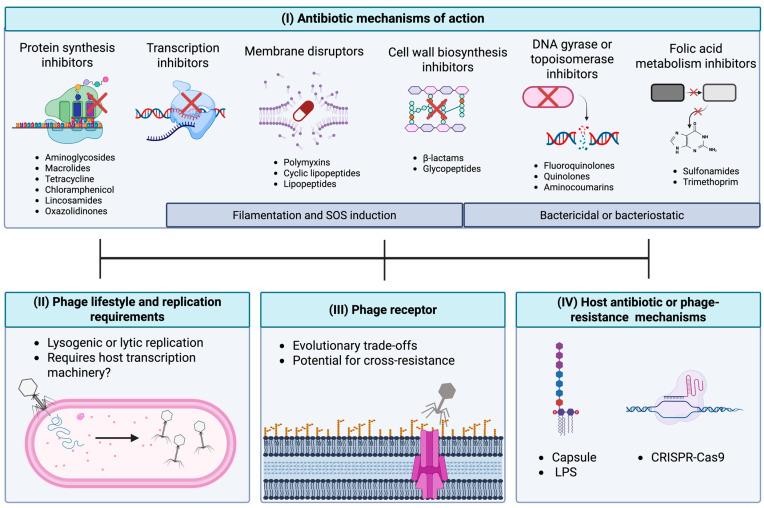
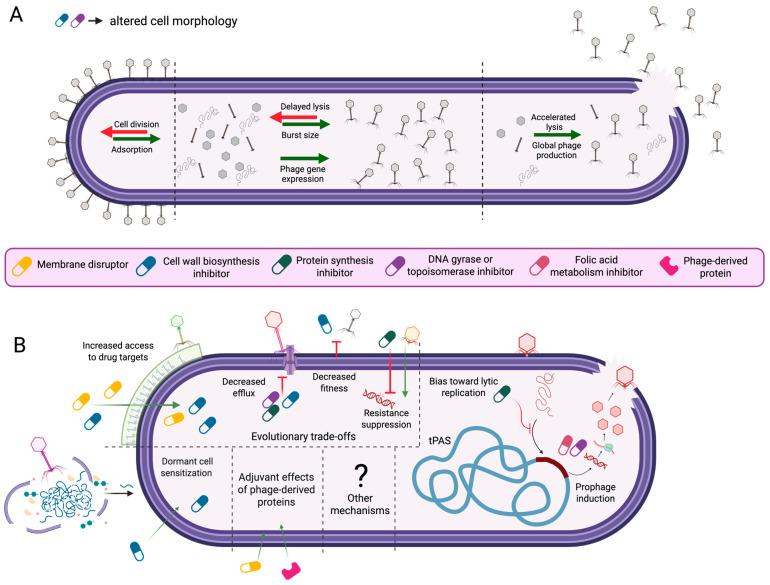
In response to the urgent need for new antibiotics targeting high-priority MDR pathogens, bacteriophages (phages) have emerged as promising non-traditional antimicrobial agents. Phages are viruses that infect bacteria and induce cell lysis through mechanisms distinct from those of antibiotics, making them largely unaffected by most antibiotic resistance mechanisms. Importantly, phages have been shown to work cooperatively with an array of clinically useful antibiotics, and phage-antibiotic synergy (PAS) represents a sophisticated strategy that may improve treatment outcomes. However, the interactions between phages and antibiotics are diverse, ranging from synergistic to antagonistic, and understanding the mechanisms underlying these interactions is crucial for developing effective PAS treatments. In this review, we summarize the potential evolutionary and molecular mechanisms that drive PAS and the current landscape of phage-antibiotic interactions. : Towards the development of robust PAS strategies, we review in vitro methods for assessing PAS and considerations for choosing and employing candidate phage-antibiotic combinations.
为了满足针对高优先级多重耐药病原体开发新型抗生素的迫切需求,噬菌体已成为有前景的非传统抗菌剂。噬菌体是感染细菌并通过与抗生素不同的机制诱导细胞裂解的病毒,这使得它们在很大程度上不受大多数抗生素耐药机制的影响。重要的是,噬菌体已被证明能与一系列临床有用的抗生素协同作用,噬菌体-抗生素协同作用(PAS)代表了一种可能改善治疗效果的复杂策略。然而,噬菌体与抗生素之间的相互作用多种多样,从协同到拮抗,理解这些相互作用背后的机制对于开发有效的PAS治疗至关重要。在这篇综述中,我们总结了驱动PAS的潜在进化和分子机制以及噬菌体-抗生素相互作用的现状。为了开发强大的PAS策略,我们综述了评估PAS的体外方法以及选择和应用候选噬菌体-抗生素组合的注意事项。

 Zotero 插件