
从 MT1 缺失的肝细胞癌中鉴定潜在的生物标志物。
Identification of Potential Biomarkers From Hepatocellular Carcinoma With MT1 Deletion.
机构信息
Department of Cell Biology and Genetics, School of Pre-clinical Medicine, Guangxi Medical University, Nanning, China.
Radiology Department, Affiliated Tumor Hospital of Guangxi Medical University, Nanning, China.
出版信息
Pathol Oncol Res. 2021 Apr 1;27:597527. doi: 10.3389/pore.2021.597527. eCollection 2021.
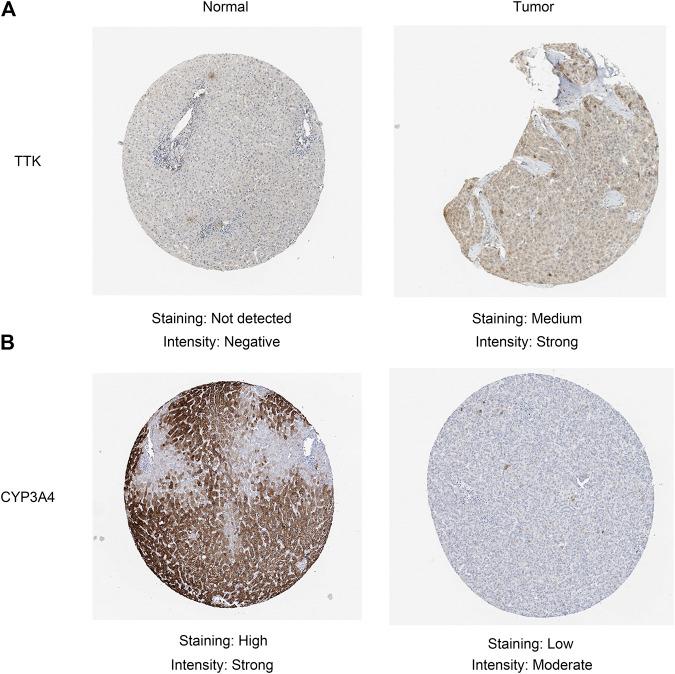
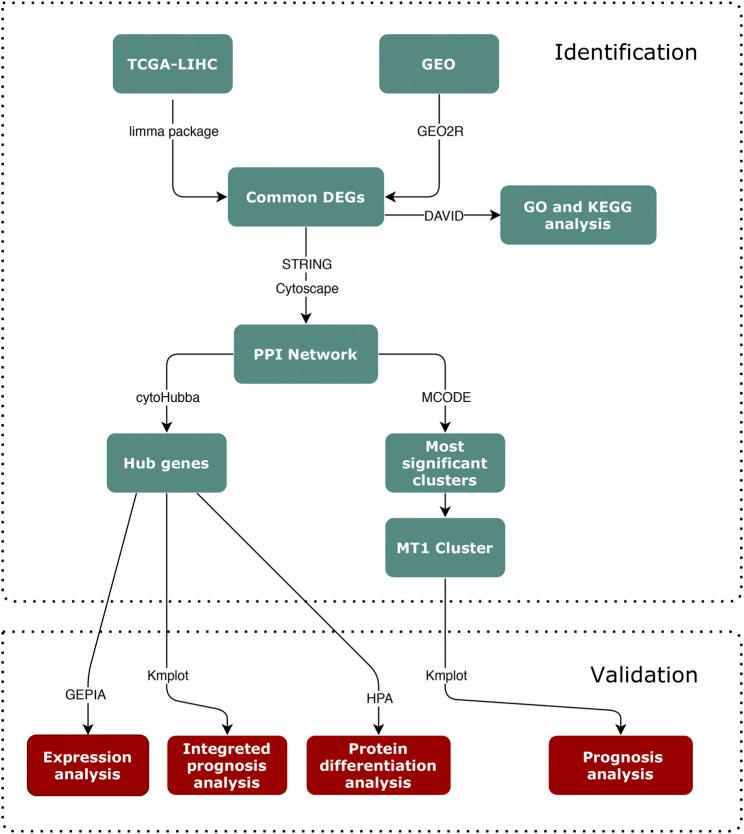
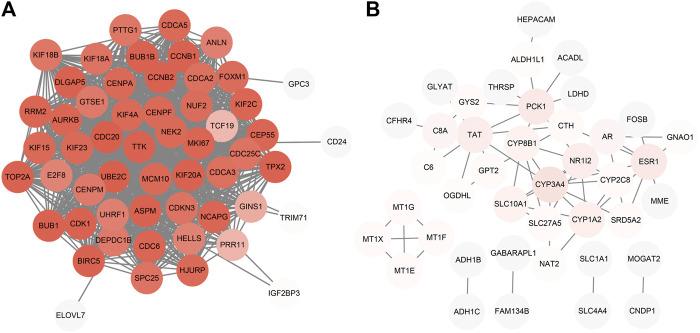
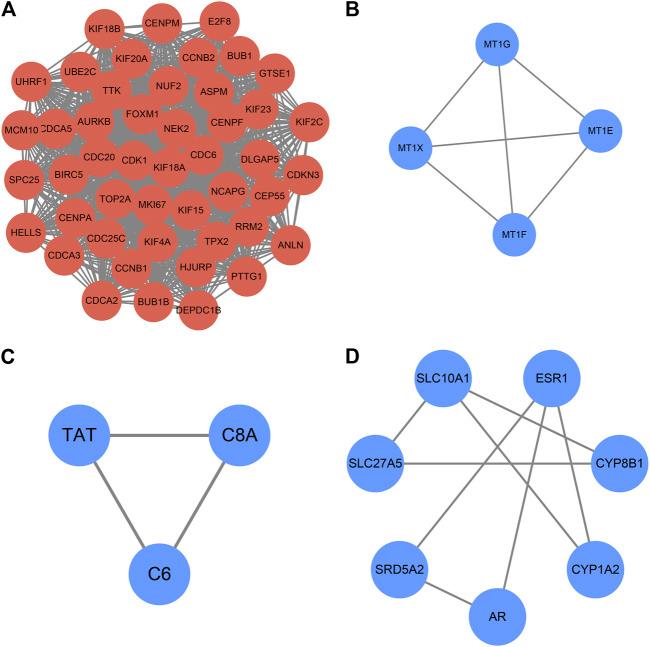
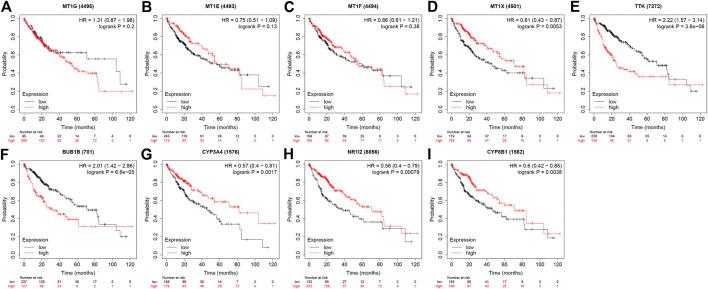
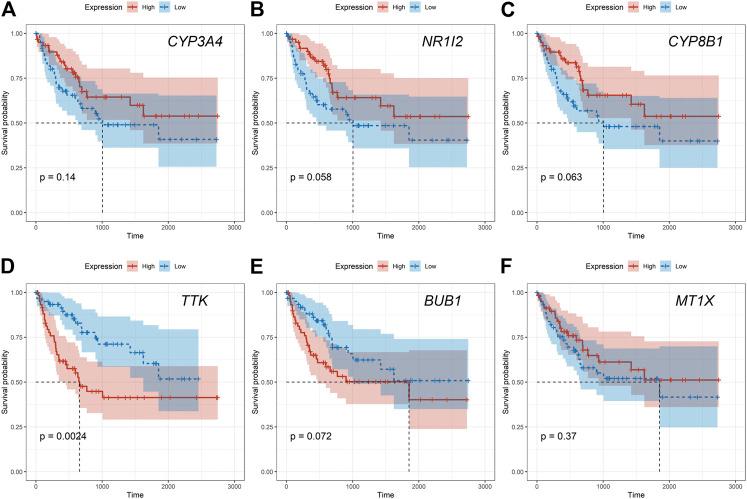
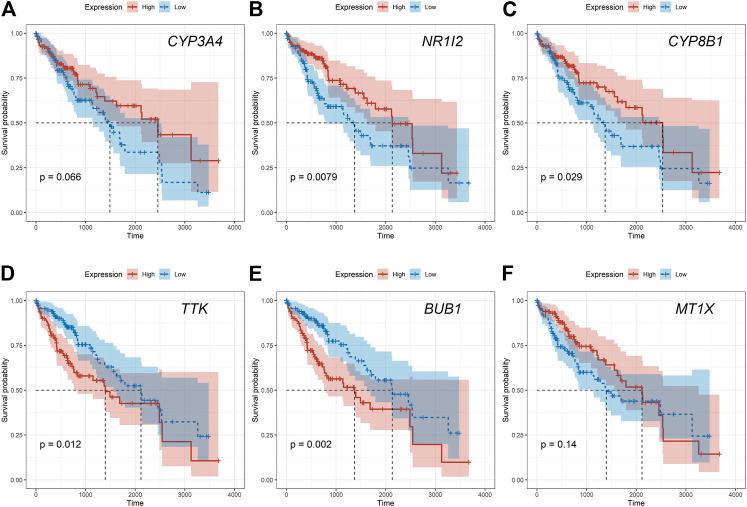
Hepatocellular carcinoma (HCC) is one of the deadliest cancers worldwide. Metallothioneins (MTs) are metal-binding proteins involved in multiple biological processes such as metal homeostasis and detoxification, as well as in oncogenesis. Copy number variation (CNV) plays a vital role in pathogenesis and carcinogenesis. Nevertheless, there is no study on the role of MT1 CNV in HCC. Array-based Comparative Genomic Hybridization (aCGH) analysis was performed to obtain the CNV data of 79 Guangxi HCC patients. The prognostic effect of MT1-deletion was analyzed by univariate and multivariate Cox regression analysis. The differentially expressed genes (DEGs) were screened based on The Gene Expression Omnibus database (GEO) and the Liver Hepatocellular Carcinoma of The Cancer Genome Atlas (TCGA-LIHC). Then function and pathway enrichment analysis, protein-protein interaction (PPI) and hub gene selection were applied on the DEGs. Lastly, the hub genes were validated by immunohistochemistry, tissue expression and prognostic analysis. The MT1-deletion was demonstrated to affect the prognosis of HCC and can act as an independent prognostic factor. 147 common DEGs were screened. The most significant cluster of DEGs identified by Molecular Complex Detection (MCODE) indicated that the expression of four MT1s were down-regulated. MT1X and other five hub genes (TTK, BUB1, CYP3A4, NR1I2, CYP8B1) were associated with the prognosis of HCC. TTK, could affect the prognosis of HCC with MT1-deletion and non-deletion. NR1I2, CYP8B1, and BUB1 were associated with the prognosis of HCC with MT1-deletion. In the current study, we demonstrated that MT1-deletion can be an independent prognostic factor in HCC. We identified TTK, BUB1, NR1I2, CYP8B1 by processing microarray data, for the first time revealed the underlying function of MT1 deletion in HCC, MT1-deletion may influence the gene expression in HCC, which may be the potential biomarkers for HCC with MT1 deletion.
肝细胞癌(HCC)是全球最致命的癌症之一。金属硫蛋白(MTs)是参与多种生物学过程的金属结合蛋白,如金属内稳态和解毒,以及致癌作用。拷贝数变异(CNV)在发病机制和癌变中起着至关重要的作用。然而,目前还没有关于 MT1 CNV 在 HCC 中的作用的研究。
我们使用基于阵列的比较基因组杂交(aCGH)分析方法获得了 79 名广西 HCC 患者的 CNV 数据。通过单变量和多变量 Cox 回归分析分析了 MT1 缺失的预后作用。基于基因表达综合数据库(GEO)和癌症基因组图谱肝脏肝癌(TCGA-LIHC)筛选差异表达基因(DEGs)。然后对 DEGs 进行功能和途径富集分析、蛋白质-蛋白质相互作用(PPI)和枢纽基因选择。最后,通过免疫组织化学、组织表达和预后分析验证了枢纽基因。
MT1 缺失被证明会影响 HCC 的预后,并可作为独立的预后因素。筛选出 147 个常见的 DEGs。通过分子复合物检测(MCODE)确定的最显著的 DEGs 聚类表明,四个 MT1s 的表达下调。MT1X 和其他五个枢纽基因(TTK、BUB1、CYP3A4、NR1I2、CYP8B1)与 HCC 的预后相关。TTK 可能会影响有 MT1 缺失和无 MT1 缺失的 HCC 的预后。NR1I2、CYP8B1 和 BUB1 与 MT1 缺失的 HCC 预后相关。
在本研究中,我们证明了 MT1 缺失可以作为 HCC 的独立预后因素。我们通过处理微阵列数据首次鉴定了 TTK、BUB1、NR1I2、CYP8B1,揭示了 MT1 缺失在 HCC 中的潜在功能,MT1 缺失可能影响 HCC 中的基因表达,这可能是 MT1 缺失型 HCC 的潜在生物标志物。



 Zotero 插件