
凝集素途径介导严重急性呼吸综合征冠状病毒2(SARS-CoV-2)蛋白激活补体。
Lectin Pathway Mediates Complement Activation by SARS-CoV-2 Proteins.
作者信息
Ali Youssif M, Ferrari Matteo, Lynch Nicholas J, Yaseen Sadam, Dudler Thomas, Gragerov Sasha, Demopulos Gregory, Heeney Jonathan L, Schwaeble Wilhelm J
机构信息
Department of Veterinary Medicine, School of Biological Sciences, University of Cambridge, Cambridge, United Kingdom.
Department of Microbiology and Immunology, Faculty of Pharmacy, Mansoura University, Mansoura, Egypt.
出版信息
Front Immunol. 2021 Jul 5;12:714511. doi: 10.3389/fimmu.2021.714511. eCollection 2021.
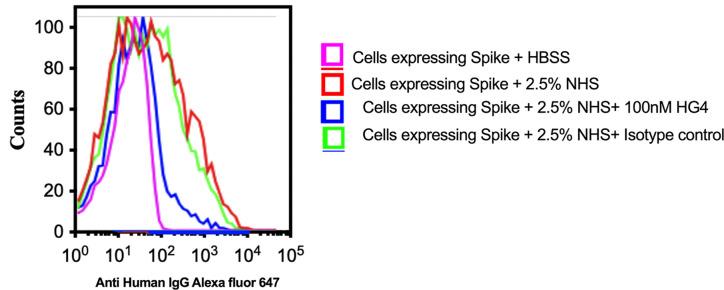
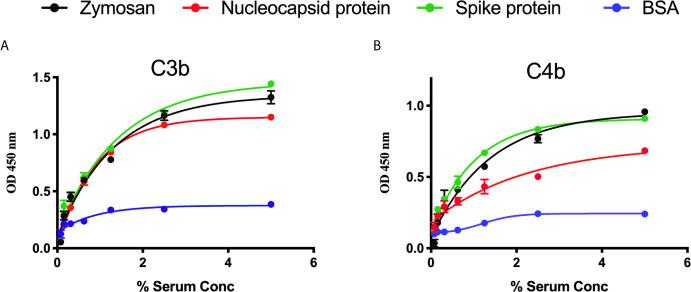
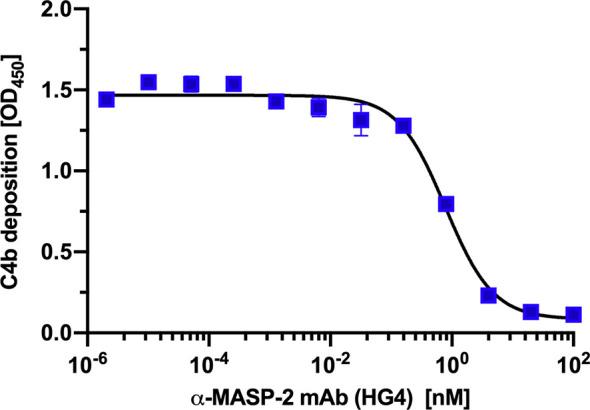
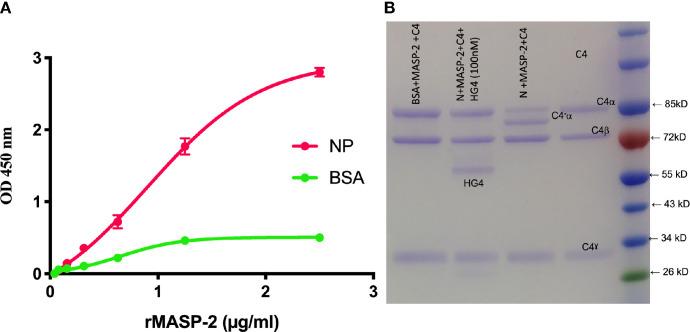
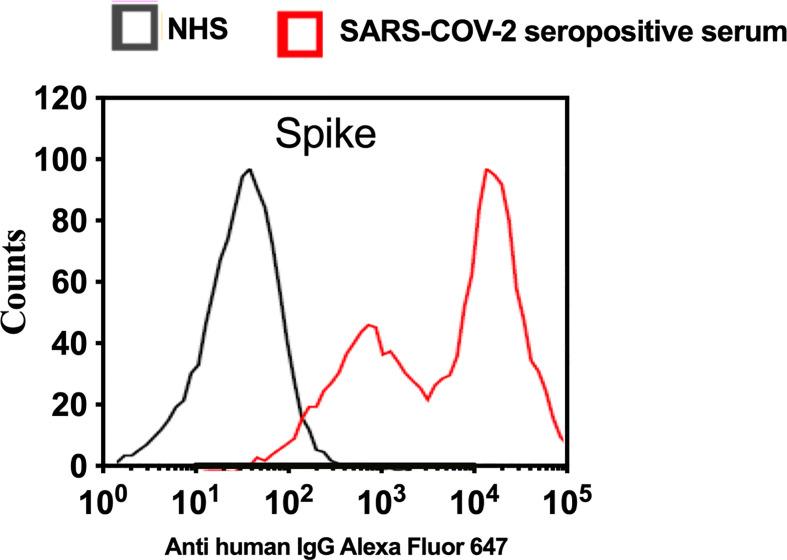
Early and persistent activation of complement is considered to play a key role in the pathogenesis of COVID-19. Complement activation products orchestrate a proinflammatory environment that might be critical for the induction and maintenance of a severe inflammatory response to SARS-CoV-2 by recruiting cells of the cellular immune system to the sites of infection and shifting their state of activation towards an inflammatory phenotype. It precedes pathophysiological milestone events like the cytokine storm, progressive endothelial injury triggering microangiopathy, and further complement activation, and causes an acute respiratory distress syndrome (ARDS). To date, the application of antiviral drugs and corticosteroids have shown efficacy in the early stages of SARS-CoV-2 infection, but failed to ameliorate disease severity in patients who progressed to severe COVID-19 pathology. This report demonstrates that lectin pathway (LP) recognition molecules of the complement system, such as MBL, FCN-2 and CL-11, bind to SARS-CoV-2 S- and N-proteins, with subsequent activation of LP-mediated C3b and C4b deposition. In addition, our results confirm and underline that the N-protein of SARS-CoV-2 binds directly to the LP- effector enzyme MASP-2 and activates complement. Inhibition of the LP using an inhibitory monoclonal antibody against MASP-2 effectively blocks LP-mediated complement activation. FACS analyses using transfected HEK-293 cells expressing SARS-CoV-2 S protein confirm a robust LP-dependent C3b deposition on the cell surface which is inhibited by the MASP-2 inhibitory antibody. In light of our present results, and the encouraging performance of our clinical candidate MASP-2 inhibitor Narsoplimab in recently published clinical trials, we suggest that the targeting of MASP-2 provides an unsurpassed window of therapeutic efficacy for the treatment of severe COVID-19.
补体的早期持续激活被认为在COVID-19发病机制中起关键作用。补体激活产物协调促炎环境,这可能通过将细胞免疫系统细胞募集到感染部位并将其激活状态转变为炎症表型,对诱导和维持对SARS-CoV-2的严重炎症反应至关重要。它先于细胞因子风暴、触发微血管病的进行性内皮损伤和进一步的补体激活等病理生理里程碑事件,并导致急性呼吸窘迫综合征(ARDS)。迄今为止,抗病毒药物和皮质类固醇的应用在SARS-CoV-2感染早期已显示出疗效,但未能改善进展为严重COVID-19病理的患者的疾病严重程度。本报告表明,补体系统的凝集素途径(LP)识别分子,如MBL、FCN-2和CL-11,与SARS-CoV-2 S蛋白和N蛋白结合,随后激活LP介导的C3b和C4b沉积。此外,我们的结果证实并强调,SARS-CoV-2的N蛋白直接与LP效应酶MASP-2结合并激活补体。使用针对MASP-2的抑制性单克隆抗体抑制LP可有效阻断LP介导的补体激活。使用表达SARS-CoV-2 S蛋白的转染HEK-293细胞进行的流式细胞术分析证实,细胞表面存在强大的LP依赖性C3b沉积,该沉积被MASP-2抑制性抗体抑制。鉴于我们目前的结果,以及我们的临床候选药物MASP-2抑制剂Narsoplimab在最近发表的临床试验中的令人鼓舞的表现,我们建议靶向MASP-2为治疗严重COVID-19提供了无与伦比的治疗效果窗口。

 Zotero 插件