
COVID-19大流行期间口罩妥善处置的增值方案综述。
Review of the valorization options for the proper disposal of face masks during the COVID-19 pandemic.
作者信息
Asim Nilofar, Badiei Marzieh, Sopian Kamaruzzaman
机构信息
Solar Energy Research Institute, Universiti Kebangsaan Malaysia, Malaysia.
Independent Researcher: 91777-35843 Mashhad, Iran.
出版信息
Environ Technol Innov. 2021 Aug;23:101797. doi: 10.1016/j.eti.2021.101797. Epub 2021 Jul 14.
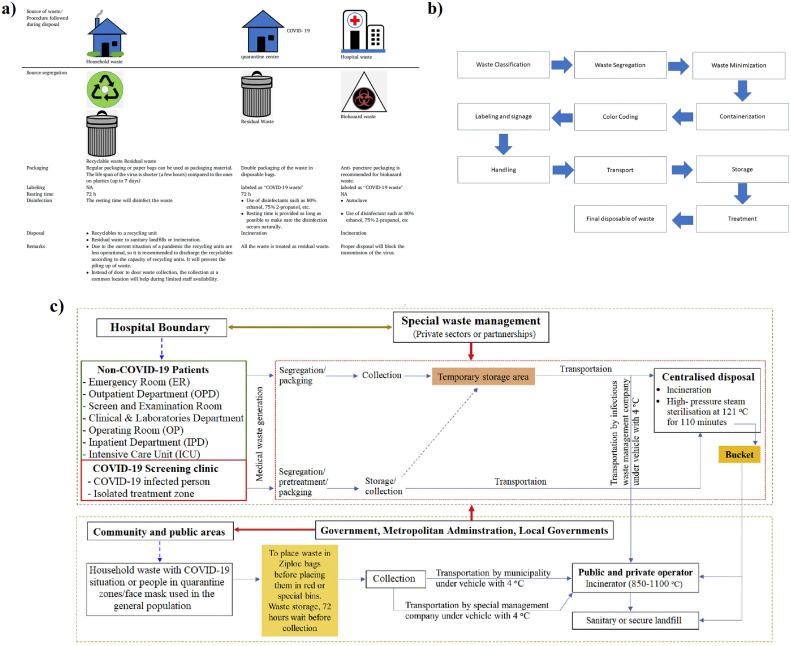
The COVID-19 pandemic has affected not only human health and economies but also the environment due to the large volume of waste in the form of discarded personal protective equipment. The remarkable increase in the global usage of face masks, which mainly contain polypropylene, and improper waste management have led to a serious environmental challenge called microplastic pollution. Potential practices for waste management related to waste valorization of discarded face masks as the major type of waste during the COVID-19 pandemic are explored in this study. Recommendations based on governmental practices, situation of state facilities, and societal awareness and engagement applicable to emergency (including COVID-19 pandemic) and postpandemic scenarios are offered while considering potential solutions and available waste management practices in different countries during emergency conditions. However, multicriteria decision making for a country must determine the optimal solution for waste management on the basis of all affecting factors. Awareness of scientific, governments, and communities worldwide will successfully eradicate this important environmental issue.
新冠疫情不仅影响了人类健康和经济,还因大量废弃个人防护装备形式的垃圾而对环境产生了影响。口罩全球使用量显著增加,而口罩主要由聚丙烯制成,加之不当的废物管理,导致了一个严峻的环境挑战——微塑料污染。本研究探讨了新冠疫情期间作为主要垃圾类型的废弃口罩废物增值相关的潜在废物管理做法。在考虑不同国家紧急情况下的潜在解决方案和可用废物管理做法的同时,还提供了基于政府做法、国家设施状况以及适用于紧急情况(包括新冠疫情)和疫情后情景的社会意识与参与度的建议。然而,一个国家的多标准决策必须基于所有影响因素来确定废物管理的最佳解决方案。全球科学界、政府和社区的意识将成功根除这一重要的环境问题。


 Zotero 插件