
微生物降解 COVID-19 医疗废物产生的微塑料的策略。
Microbial strategies for degradation of microplastics generated from COVID-19 healthcare waste.
机构信息
Department of Botany, Shyampur Siddheswari Mahavidyalaya (affiliated to University of Calcutta), Howrah-711312, West Bengal, India.
Zuckerberg Institute for Water Research, Jacob Blaustein Institutes for Desert Research, Ben Gurion University of the Negev, Midreshet Ben Gurion, 8499000, Israel.
出版信息
Environ Res. 2023 Jan 1;216(Pt 1):114438. doi: 10.1016/j.envres.2022.114438. Epub 2022 Sep 28.
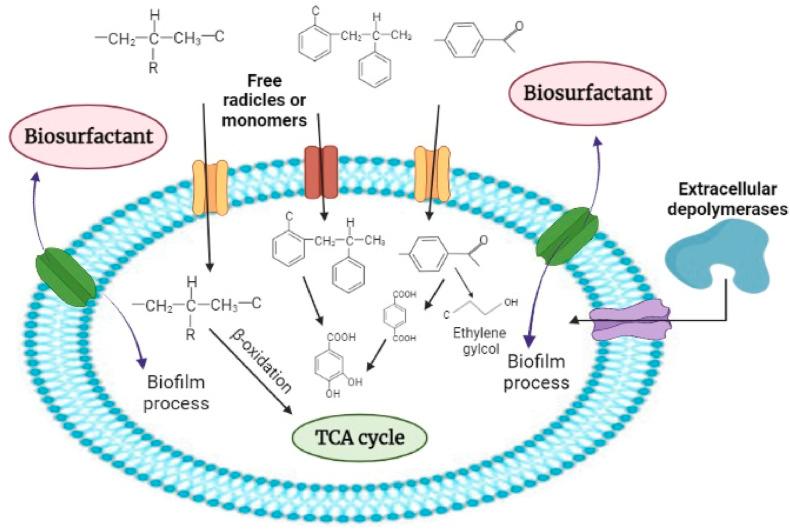
COVID-19 pandemic has led to the generation of massive plastic wastes, comprising of onetime useable gloves, masks, tissues, and other personal protective equipment (PPE). Recommendations for the employ of single-use disposable masks made up of various polymeric materials like polyethylene, polyurethane, polyacrylonitrile, and polypropylene, polystyrene, can have significant aftermath on environmental, human as well as animal health. Improper disposal and handling of healthcare wastes and lack of proper management practices are creating serious health hazards and an extra challenge for the local authorities designated for management of solid waste. Most of the COVID-19 medical wastes generated are now being treated by incineration which generates microplastic particles (MPs), dioxin, furans, and various toxic metals, such as cadmium and lead. Moreover, natural degradation and mechanical abrasion of these wastes can lead to the generation of MPs which cause a serious health risk to living beings. It is a major threat to aquatic lives and gets into foods subsequently jeopardizing global food safety. Moreover, the presence of plastic is also considered a threat owing to the increased carbon emission and poses a profound danger to the global food chain. Degradation of MPs by axenic and mixed culture microorganisms, such as bacteria, fungi, microalgae etc. can be considered an eco-sustainable technique for the mitigation of the microplastic menace. This review primarily deals with the increase in microplastic pollution due to increased use of PPE along with different disinfection methods using chemicals, steam, microwave, autoclave, and incineration which are presently being employed for the treatment of COVID-19 pandemic-related wastes. The biological treatment of the MPs by diverse groups of fungi and bacteria can be an alternative option for the mitigation of microplastic wastes generated from COVID-19 healthcare waste.
新冠疫情大流行导致了大量塑料废物的产生,其中包括一次性使用的手套、口罩、纸巾和其他个人防护设备(PPE)。建议使用由各种聚合物材料(如聚乙烯、聚氨酯、聚丙烯腈和聚丙烯、聚苯乙烯)制成的一次性使用 disposable 口罩,这可能会对环境、人类和动物健康产生重大影响。医疗废物的不当处理和处置以及缺乏适当的管理做法,正在给负责管理固体废物的地方当局带来严重的健康危害和额外挑战。现在,大多数新冠病毒医疗废物都是通过焚烧处理的,这会产生微塑料颗粒(MPs)、二恶英、呋喃和各种有毒金属,如镉和铅。此外,这些废物的自然降解和机械磨损会导致 MPs 的产生,从而对生物造成严重的健康风险。这对水生生物构成了严重威胁,并随后危及全球食品安全。此外,由于碳排放增加,塑料的存在也被认为是一种威胁,对全球食物链构成了深远的危险。需氧和混合培养微生物(如细菌、真菌、微藻等)对 MPs 的降解可以被认为是一种生态可持续的技术,可用于减轻微塑料的威胁。本综述主要讨论了由于个人防护设备使用增加以及目前用于处理新冠疫情相关废物的化学物质、蒸汽、微波、高压灭菌和焚烧等不同消毒方法导致的微塑料污染增加的问题。不同真菌和细菌群体对 MPs 的生物处理是减轻新冠病毒医疗废物产生的微塑料废物的一种替代选择。


 Zotero 插件