
通过抑制植物赖氨酸生物合成探索新型除草剂作用模式。
Towards novel herbicide modes of action by inhibiting lysine biosynthesis in plants.
作者信息
Soares da Costa Tatiana P, Hall Cody J, Panjikar Santosh, Wyllie Jessica A, Christoff Rebecca M, Bayat Saadi, Hulett Mark D, Abbott Belinda M, Gendall Anthony R, Perugini Matthew A
机构信息
Department of Biochemistry and Genetics, La Trobe Institute for Molecular Science, La Trobe University, Bundoora, Australia.
Australian Synchrotron, ANSTO, Clayton, Australia.
出版信息
Elife. 2021 Jul 27;10:e69444. doi: 10.7554/eLife.69444.
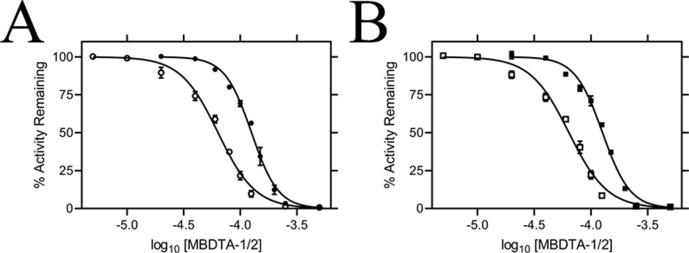
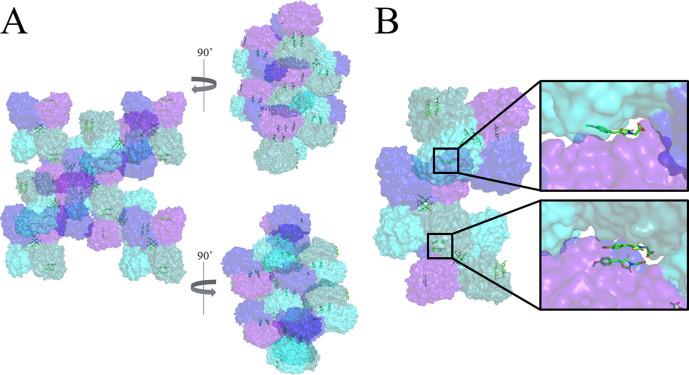
Weeds are becoming increasingly resistant to our current herbicides, posing a significant threat to agricultural production. Therefore, new herbicides with novel modes of action are urgently needed. In this study, we exploited a novel herbicide target, dihydrodipicolinate synthase (DHDPS), which catalyses the first and rate-limiting step in lysine biosynthesis. The first class of plant DHDPS inhibitors with micromolar potency against DHDPS was identified using a high-throughput chemical screen. We determined that this class of inhibitors binds to a novel and unexplored pocket within DHDPS, which is highly conserved across plant species. The inhibitors also attenuated the germination and growth of seedlings and confirmed their pre-emergence herbicidal activity in soil-grown plants. These results provide proof-of-concept that lysine biosynthesis represents a promising target for the development of herbicides with a novel mode of action to tackle the global rise of herbicide-resistant weeds.
杂草对我们目前使用的除草剂的抗性越来越强,这对农业生产构成了重大威胁。因此,迫切需要具有新型作用模式的新型除草剂。在本研究中,我们利用了一种新型除草剂靶标——二氢吡啶二羧酸合酶(DHDPS),它催化赖氨酸生物合成的第一步且是限速步骤。通过高通量化学筛选,鉴定出了第一类对DHDPS具有微摩尔效力的植物DHDPS抑制剂。我们确定这类抑制剂与DHDPS内一个新的未被探索的口袋结合,该口袋在植物物种中高度保守。这些抑制剂还减弱了幼苗的萌发和生长,并证实了它们在土壤种植植物中的苗前除草活性。这些结果提供了概念验证,即赖氨酸生物合成是开发具有新型作用模式的除草剂以应对全球除草剂抗性杂草增加的一个有前景的靶标。





 Zotero 插件