
电压门控域 III 的构象差异定义了钠通道失活的关闭和开放状态。
Conformations of voltage-sensing domain III differentially define NaV channel closed- and open-state inactivation.
机构信息
Department of Biomedical Engineering, Washington University in St. Louis, St. Louis, MO.
Department of Medicine, Brigham and Women's Hospital, Boston, MA.
出版信息
J Gen Physiol. 2021 Sep 6;153(9). doi: 10.1085/jgp.202112891. Epub 2021 Aug 4.
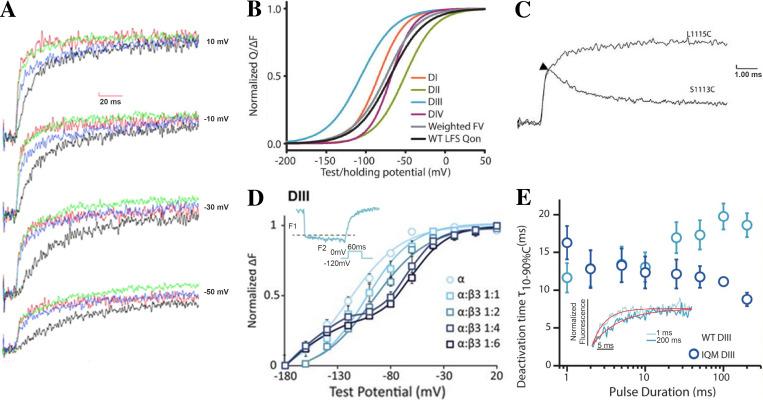
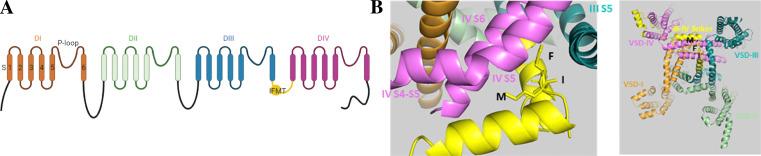
Voltage-gated Na+ (NaV) channels underlie the initiation and propagation of action potentials (APs). Rapid inactivation after NaV channel opening, known as open-state inactivation, plays a critical role in limiting the AP duration. However, NaV channel inactivation can also occur before opening, namely closed-state inactivation, to tune the cellular excitability. The voltage-sensing domain (VSD) within repeat IV (VSD-IV) of the pseudotetrameric NaV channel α-subunit is known to be a critical regulator of NaV channel inactivation. Yet, the two processes of open- and closed-state inactivation predominate at different voltage ranges and feature distinct kinetics. How inactivation occurs over these different ranges to give rise to the complexity of NaV channel dynamics is unclear. Past functional studies and recent cryo-electron microscopy structures, however, reveal significant inactivation regulation from other NaV channel components. In this Hypothesis paper, we propose that the VSD of NaV repeat III (VSD-III), together with VSD-IV, orchestrates the inactivation-state occupancy of NaV channels by modulating the affinity of the intracellular binding site of the IFMT motif on the III-IV linker. We review and outline substantial evidence that VSD-III activates in two distinct steps, with the intermediate and fully activated conformation regulating closed- and open-state inactivation state occupancy by altering the formation and affinity of the IFMT crevice. A role of VSD-III in determining inactivation-state occupancy and recovery from inactivation suggests a regulatory mechanism for the state-dependent block by small-molecule anti-arrhythmic and anesthetic therapies.
电压门控钠离子通道(NaV)是动作电位(AP)产生和传播的基础。NaV 通道开放后迅速失活,称为开放状态失活,在限制 AP 持续时间方面起着至关重要的作用。然而,NaV 通道失活也可以在通道开放之前发生,即关闭状态失活,以调节细胞兴奋性。四聚体 NaV 通道α亚基重复 IV(VSD-IV)内的电压感应域(VSD)被认为是 NaV 通道失活的关键调节因子。然而,开放状态和关闭状态失活这两个过程主要在不同的电压范围内发生,并且具有不同的动力学特征。失活如何在这些不同的范围内发生,从而导致 NaV 通道动力学的复杂性尚不清楚。然而,过去的功能研究和最近的冷冻电镜结构揭示了 NaV 通道其他成分对失活的显著调节。在本假说文章中,我们提出 NaV 重复 III(VSD-III)的 VSD 与 VSD-IV 一起,通过调节 III-IV 连接环上 IFMT 基序的细胞内结合位点的亲和力,来协调 NaV 通道失活状态的占据。我们回顾并概述了大量证据,证明 VSD-III 以两个不同的步骤激活,其中中间和完全激活构象通过改变 IFMT 裂缝的形成和亲和力来调节关闭状态和开放状态失活状态的占据。VSD-III 在失活状态占据和失活恢复中的作用表明了小分子抗心律失常和麻醉治疗的状态依赖性阻断的调节机制。


 Zotero 插件