
世界卫生组织非洲区域国家 COVID-19 疫情的预测因素。
Predictors of COVID-19 epidemics in countries of the World Health Organization African Region.
机构信息
Usher Institute, University of Edinburgh, Edinburgh, United Kingdom.
WHO Regional Office for Africa, Brazzaville, Republic of Congo.
出版信息
Nat Med. 2021 Nov;27(11):2041-2047. doi: 10.1038/s41591-021-01491-7. Epub 2021 Sep 3.
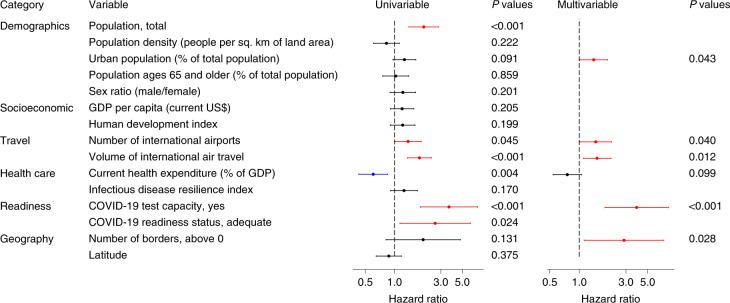
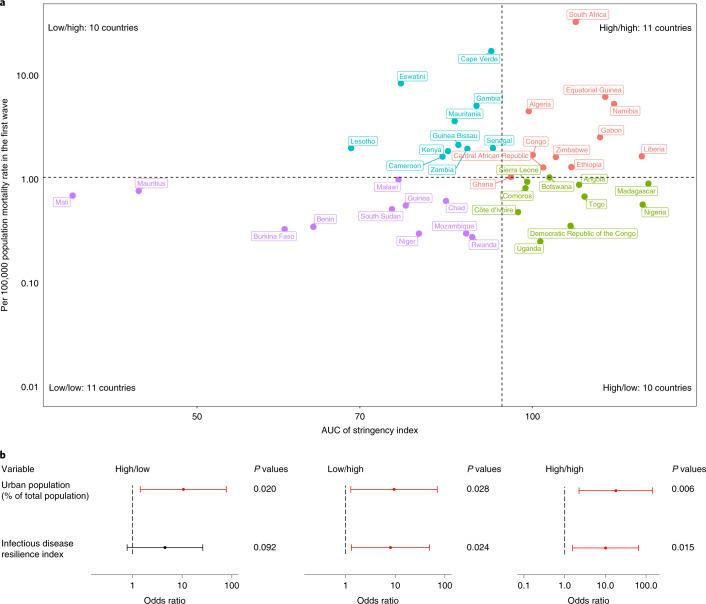
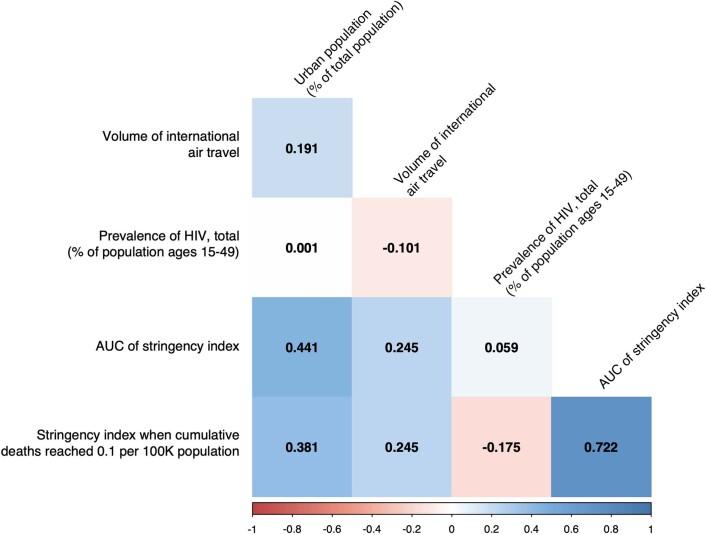
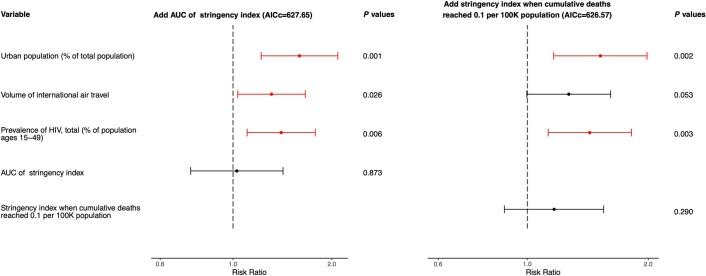
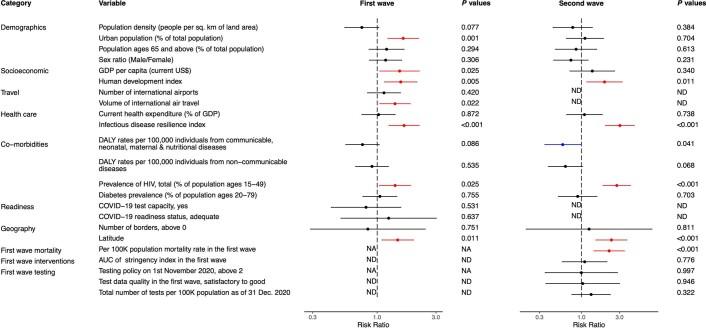
Countries of the World Health Organization (WHO) African Region have experienced a wide range of coronavirus disease 2019 (COVID-19) epidemics. This study aimed to identify predictors of the timing of the first COVID-19 case and the per capita mortality in WHO African Region countries during the first and second pandemic waves and to test for associations with the preparedness of health systems and government pandemic responses. Using a region-wide, country-based observational study, we found that the first case was detected earlier in countries with more urban populations, higher international connectivity and greater COVID-19 test capacity but later in island nations. Predictors of a high first wave per capita mortality rate included a more urban population, higher pre-pandemic international connectivity and a higher prevalence of HIV. Countries rated as better prepared and having more resilient health systems were worst affected by the disease, the imposition of restrictions or both, making any benefit of more stringent countermeasures difficult to detect. Predictors for the second wave were similar to the first. Second wave per capita mortality could be predicted from that of the first wave. The COVID-19 pandemic highlights unanticipated vulnerabilities to infectious disease in Africa that should be taken into account in future pandemic preparedness planning.
世界卫生组织(WHO)非洲区域的国家经历了范围广泛的 2019 年冠状病毒病(COVID-19)疫情。本研究旨在确定在第一波和第二波大流行期间,预测 WHO 非洲区域国家中首例 COVID-19 病例和人均死亡率的因素,并检验其与卫生系统准备情况和政府大流行应对措施的关联。通过一项基于区域和国家的观察性研究,我们发现,人口城市化程度较高、国际连通性较高、COVID-19 检测能力较强的国家更早地发现首例病例,但岛国则较晚。首例病例人均死亡率较高的预测因素包括人口城市化程度较高、大流行前国际连通性较高以及艾滋病毒流行率较高。被评为准备更充分和卫生系统更具弹性的国家受到的疾病影响最大,包括实施限制措施或两者兼而有之,因此很难发现更严格的应对措施带来的任何好处。第二波的预测因素与第一波相似。可以根据第一波来预测第二波的人均死亡率。COVID-19 大流行凸显了非洲对传染病的意外脆弱性,这在未来的大流行防范规划中应加以考虑。






 Zotero 插件