
得克萨斯州休斯顿放宽 COVID-19 限制后季节性呼吸道病毒的再次出现。
The Reemergence of Seasonal Respiratory Viruses in Houston, Texas, after Relaxing COVID-19 Restrictions.
机构信息
Center for Molecular and Translational Human Infectious Diseases Research, Department of Pathology and Genomic Medicine, Houston Methodist Research Institute and Houston Methodist Hospital, Houston, Texas, USA.
出版信息
Microbiol Spectr. 2021 Oct 31;9(2):e0043021. doi: 10.1128/Spectrum.00430-21. Epub 2021 Sep 8.
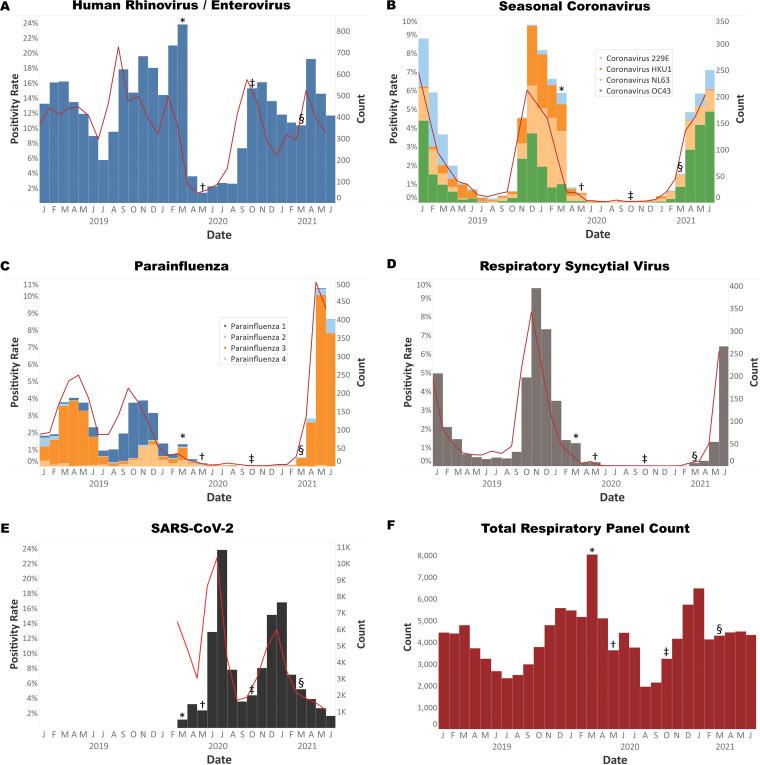
Measures intended to limit the spread of the severe acute respiratory syndrome coronavirus 2 (SARS-CoV-2) virus at the start of the coronavirus disease 2019 (COVID-19) pandemic resulted in a rapid decrease in other respiratory pathogens. Herein, we describe the trends of respiratory pathogens in a major metropolitan health care system central microbiology reference laboratory before and during the COVID-19 pandemic, with attention to when COVID-19 mitigation measures were implemented and relaxed. During the initial lockdown period, COVID-19 was the primary respiratory pathogen detected by multiplex respiratory panels. As COVID-19 containment measures were relaxed, the first non-COVID respiratory viruses to return to prepandemic levels were members of the rhinovirus/enterovirus family. After the complete removal of COVID-19 precautions at the state level, including an end to mask mandates, we observed the robust return of seasonal coronaviruses, parainfluenza virus, and respiratory syncytial virus. Inasmuch as COVID-19 has dominated the landscape of respiratory infections since early 2020, it is important for clinicians to recognize that the return of non-COVID respiratory pathogens may be rapid and significant when COVID-19 containment measures are removed. We describe the return of non-COVID respiratory viruses after the removal of COVID-19 mitigation measures. It is important for the public and physicians to recognize that, after months of COVID-19 being the primary driver of respiratory infection, more typical seasonal respiratory illnesses have returned, and this return is out of the normal season for some of these pathogens. Thus, clinicians and the public must now consider both COVID-19 and other respiratory illnesses when a patient presents with symptomatic respiratory illness.
为了在 2019 年冠状病毒病(COVID-19)大流行开始时限制严重急性呼吸综合征冠状病毒 2(SARS-CoV-2)病毒的传播,采取了措施,导致其他呼吸道病原体迅速减少。在此,我们描述了 COVID-19 大流行期间,主要大都市医疗保健系统中央微生物学参考实验室中呼吸道病原体的趋势,重点介绍了 COVID-19 缓解措施的实施和放宽时间。在最初的封锁期间,COVID-19 是多重呼吸道面板检测到的主要呼吸道病原体。随着 COVID-19 控制措施的放宽,第一批返回大流行前水平的非 COVID 呼吸道病毒是鼻病毒/肠道病毒家族的成员。在州级完全取消 COVID-19 预防措施(包括取消口罩强制令)后,我们观察到季节性冠状病毒、副流感病毒和呼吸道合胞病毒的强劲回归。由于 COVID-19 自 2020 年初以来一直主导着呼吸道感染的格局,因此当 COVID-19 控制措施取消时,临床医生认识到非 COVID 呼吸道病原体的迅速和显著回归非常重要。我们描述了 COVID-19 缓解措施取消后非 COVID 呼吸道病毒的回归。公众和医生都应该认识到,在 COVID-19 成为呼吸道感染主要驱动因素的几个月后,更典型的季节性呼吸道疾病已经回归,而且其中一些病原体的回归已经超出了正常季节。因此,当患者出现有症状的呼吸道疾病时,临床医生和公众现在必须同时考虑 COVID-19 和其他呼吸道疾病。
 Zotero 插件