
小分子与 SARS-CoV-2 主蛋白酶的相互作用:全原子微秒 MD 模拟的计算、PELE 蒙特卡罗模拟和体外活性抑制的测定。
Small molecule interactions with the SARS-CoV-2 main protease: In silico all-atom microsecond MD simulations, PELE Monte Carlo simulations, and determination of in vitro activity inhibition.
机构信息
Epigenomic Medicine, Department of Diabetes, Central Clinical School, Monash University, Melbourne, VIC, 3004, Australia; School of Science, College of Science, Engineering & Health, RMIT University, VIC, 3001, Australia.
Epigenomic Medicine, Department of Diabetes, Central Clinical School, Monash University, Melbourne, VIC, 3004, Australia.
出版信息
J Mol Graph Model. 2022 Jan;110:108050. doi: 10.1016/j.jmgm.2021.108050. Epub 2021 Oct 11.
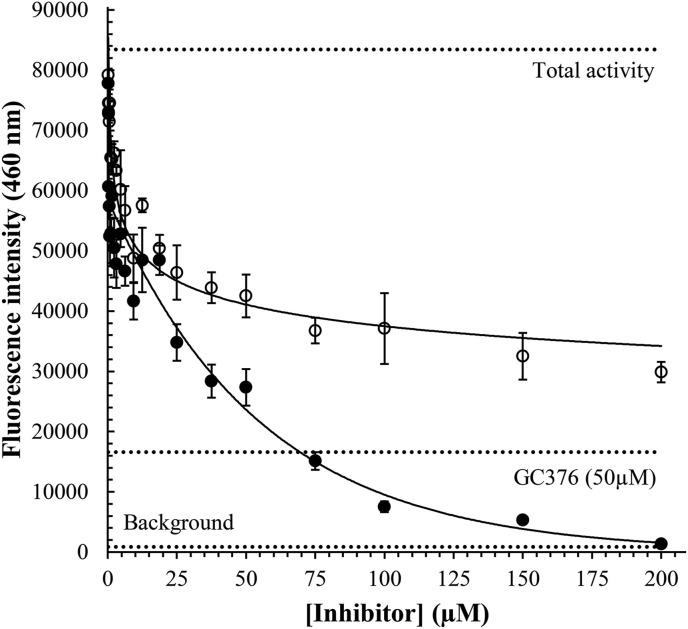
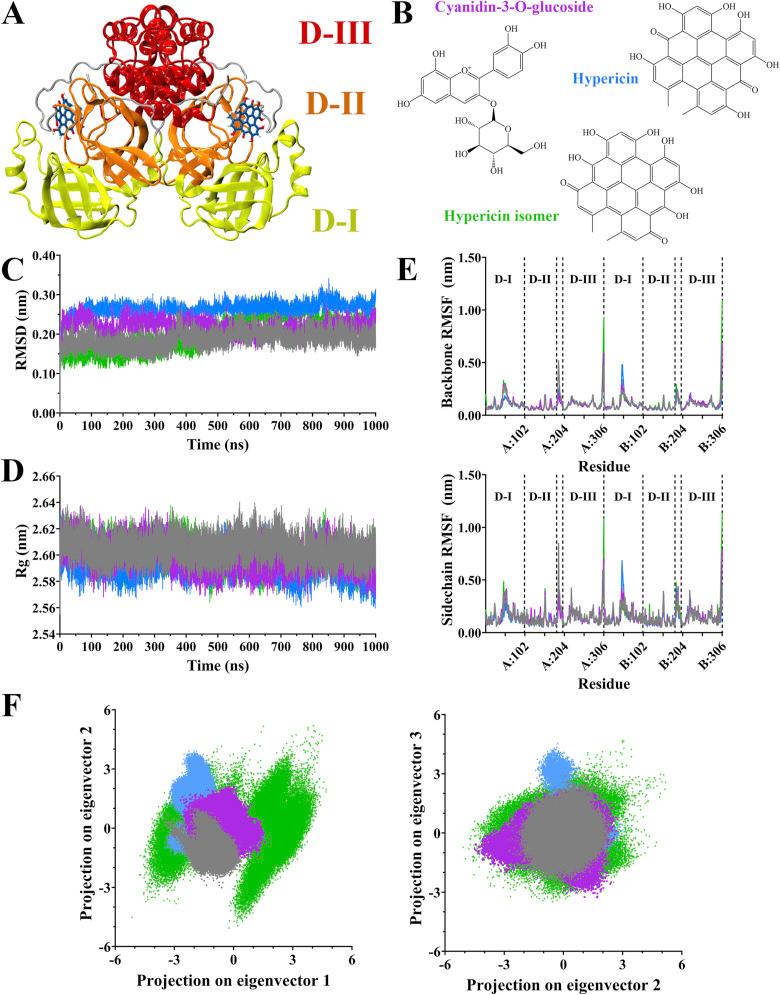
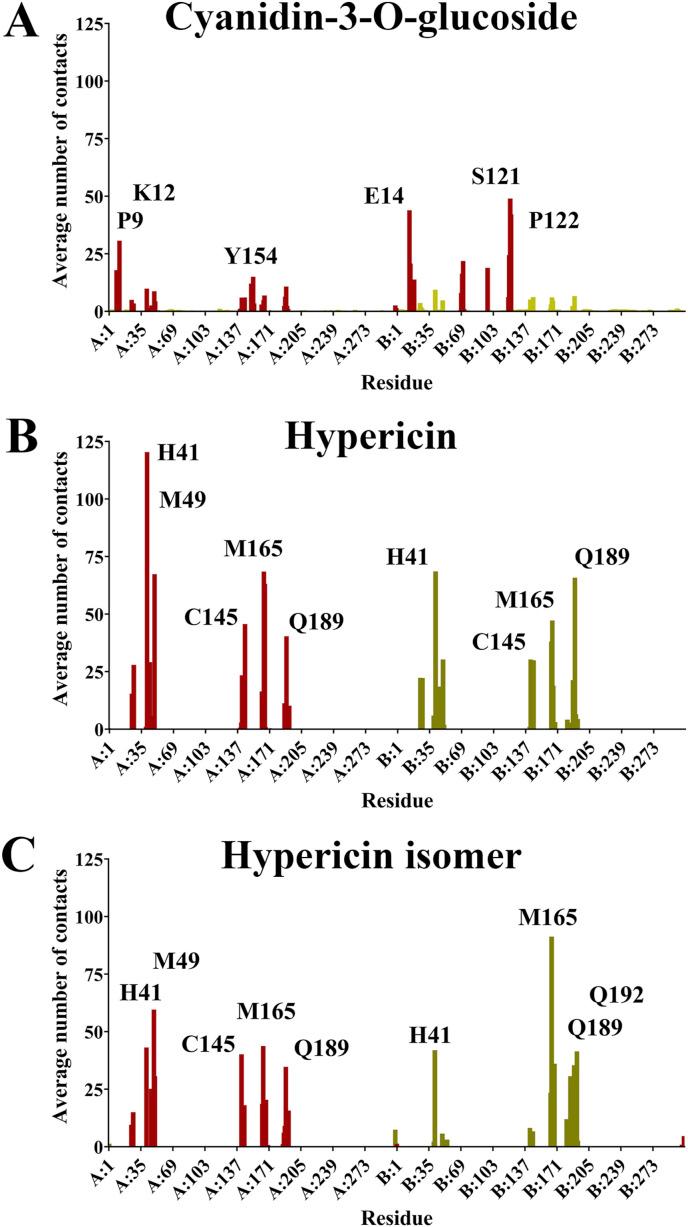
The severe acute respiratory syndrome coronavirus 2 (SARS-CoV-2) has caused the ongoing COVID-19 pandemic. With some notable exceptions, safe and effective vaccines, which are now being widely distributed globally, have largely begun to stabilise the situation. However, emerging variants of concern and vaccine hesitancy are apparent obstacles to eradication. Therefore, the need for the development of potent antivirals is still of importance. In this context, the SARS-CoV-2 main protease (M) is a critical target and numerous clinical trials, predominantly in the private domain, are currently in progress. Here, our aim was to extend our previous studies, with hypericin and cyanidin-3-O-glucoside, as potential inhibitors of the SARS-CoV-2 M. Firstly, we performed all-atom microsecond molecular dynamics simulations, which highlight the stability of the ligands in the M active site over the duration of the trajectories. We also invoked PELE Monte Carlo simulations which indicate that both hypericin and cyanidin-3-O-glucoside preferentially interact with the M active site and known allosteric sites. For further validation, we performed an in vitro enzymatic activity assay that demonstrated that hypericin and cyanidin-3-O-glucoside inhibit M activity in a dose-dependent manner at biologically relevant (μM) concentrations. However, both ligands are much less potent than the well-known covalent antiviral GC376, which was used as a positive control in our experiments. Nevertheless, the biologically relevant activity of hypericin and cyanidin-3-O-glucoside is encouraging. In particular, a synthetic version of hypericin has FDA orphan drug designation, which could simplify potential clinical evaluation in the context of COVID-19.
严重急性呼吸综合征冠状病毒 2 (SARS-CoV-2) 引发了持续的 COVID-19 大流行。除了一些显著的例外,现在全球广泛分发的安全有效的疫苗在很大程度上开始稳定局势。然而,令人关注的变异病毒和疫苗犹豫仍然是明显的障碍。因此,开发有效的抗病毒药物仍然很重要。在这种情况下,SARS-CoV-2 主要蛋白酶 (M) 是一个关键的靶标,目前有许多临床试验,主要在私营部门,正在进行中。在这里,我们的目的是扩展我们之前的研究,使用金丝桃素和矢车菊素-3-O-葡萄糖苷作为 SARS-CoV-2 M 的潜在抑制剂。首先,我们进行了全原子微秒分子动力学模拟,这些模拟突出了配体在 M 活性部位的稳定性,在轨迹的整个过程中都不会改变。我们还调用了 PELE 蒙特卡罗模拟,表明金丝桃素和矢车菊素-3-O-葡萄糖苷都优先与 M 的活性部位和已知的变构部位相互作用。为了进一步验证,我们进行了体外酶活性测定,结果表明金丝桃素和矢车菊素-3-O-葡萄糖苷以剂量依赖的方式在生物相关浓度 (μM) 下抑制 M 的活性。然而,与著名的共价抗病毒药物 GC376 相比,这两种配体的活性都要低得多,GC376 被用作我们实验中的阳性对照。尽管如此,金丝桃素和矢车菊素-3-O-葡萄糖苷的生物相关活性是令人鼓舞的。特别是,金丝桃素的一种合成版本被美国食品和药物管理局指定为孤儿药物,这可能简化了在 COVID-19 背景下的潜在临床评估。



 Zotero 插件