
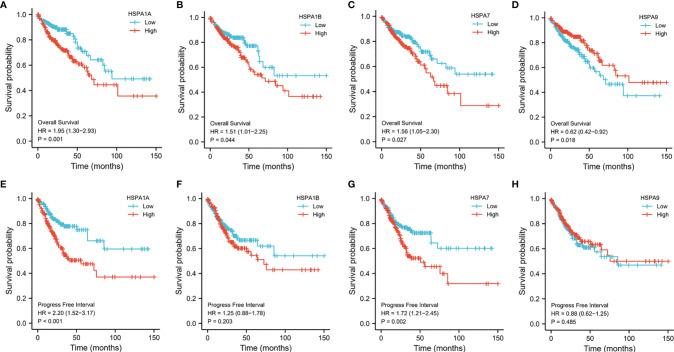
HSPA1A/HSPA1B/HSPA7的上调和HSPA9的下调与结肠癌患者的不良生存相关。
Upregulation of HSPA1A/HSPA1B/HSPA7 and Downregulation of HSPA9 Were Related to Poor Survival in Colon Cancer.
作者信息
Guan Yufeng, Zhu Xianjun, Liang Junjie, Wei Min, Huang Shan, Pan Xiaofen
机构信息
Department of General Surgery, Guangzhou Panyu Central Hospital, Guangzhou, China.
Department of Oncology, The Seventh Affiliated Hospital, Sun Yat-sen University, Shenzhen, China.
出版信息
Front Oncol. 2021 Oct 26;11:749673. doi: 10.3389/fonc.2021.749673. eCollection 2021.
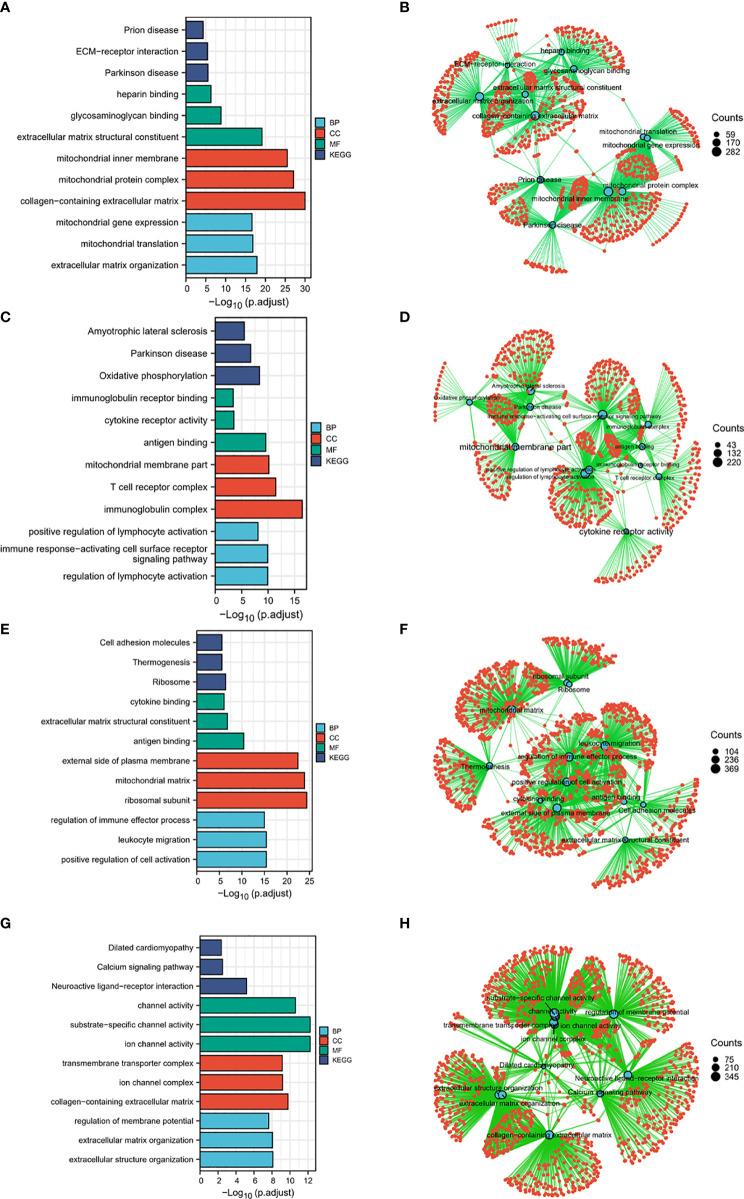
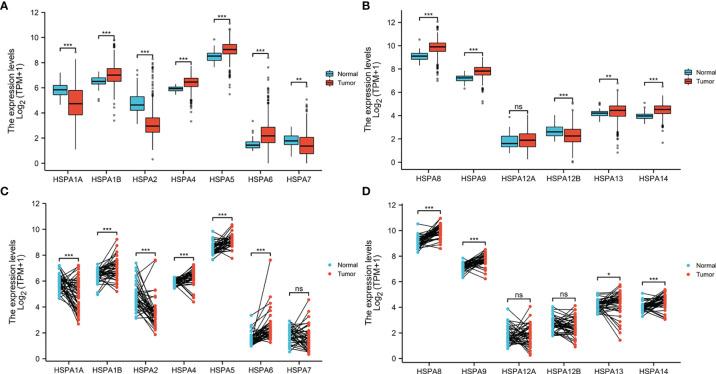
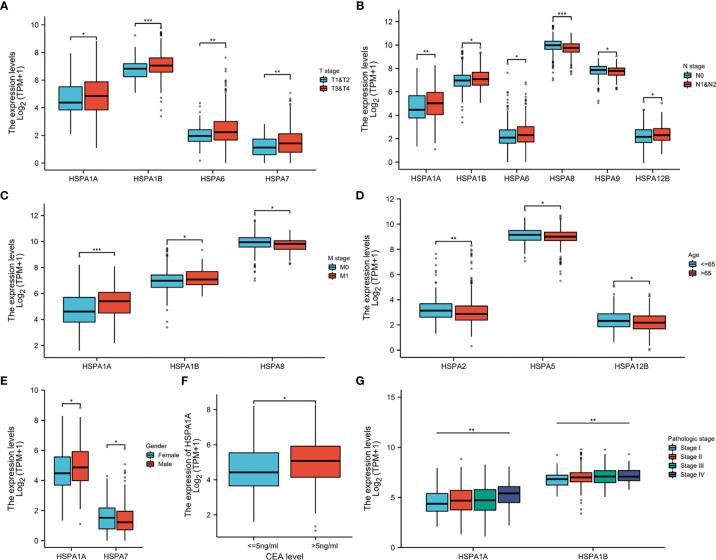
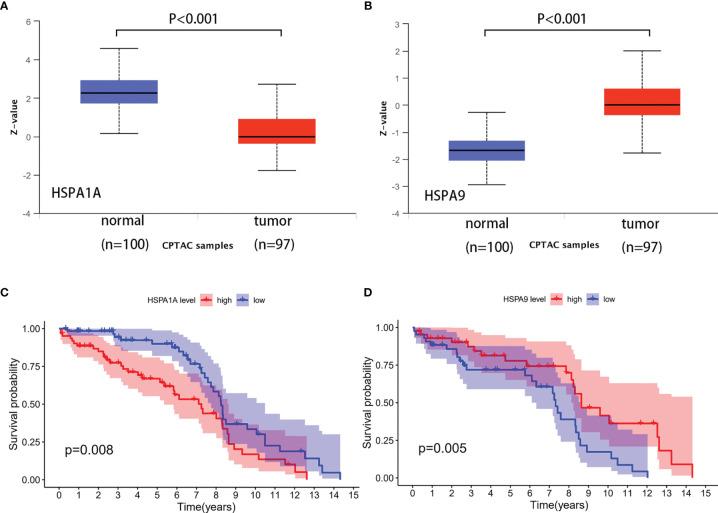
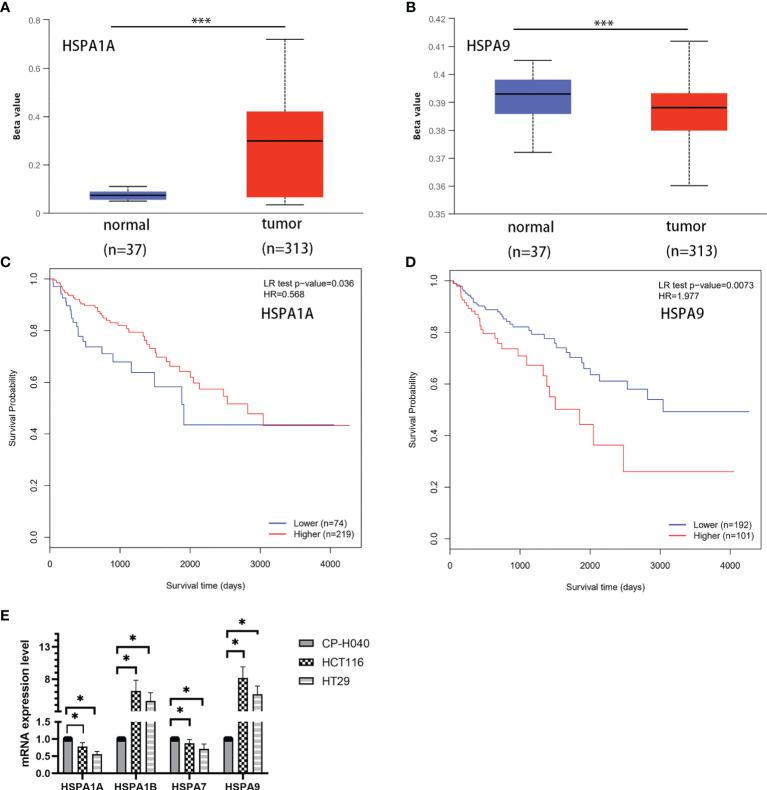
The human HSP70 family is a type of heat shock protein (HSP), consisting of 13 members encoded by the HSPA genes. HSPs play important roles in regulating cellular responses and functions during carcinogenesis, but their relationship with colon cancer is unclear. In our study, we found that the expressions of HSPA1B, HSPA4, HSPA5, HSPA6, HSPA8, HSPA9, HSPA13, and HSPA14 were significantly increased, while those of HSPA1A, HSPA2, HSPA7, and HSPA12B were significantly decreased in colon cancer tissues. The expression of HSPA gene family members was associated with some clinicopathological characteristics, including age, gender, TNM stage, pathological stage, and CEA level. Furthermore, the Kaplan-Meier method and Cox regression analysis showed that high HSPA1A, HSPA1B, and HSPA7 expressions were related to unfavorable survival, and high HSPA9 was associated with favorable survival. The relationships between HSPA1A and HSPA9 expression and survival were validated in the GEO dataset, and the HSPA1A and HSPA9 protein expression differences between colon cancer tissues and normal tissues were validated in the UALCAN database. Methylation of HSPA1A and HSPA9 was also analyzed, and it was found that the methylation of the HSPA1A promoter was significantly increased, and the methylation of the HSPA9 promoter was significantly decreased in colon cancer tissues. Increasing the methylation level of the HSPA1A gene and decreasing the methylation level of HSPA9 were related to favorable prognosis. The expression difference of HSPA1A/HSPA1B/HSPA7/HSPA9 was verified in colon cancer cell lines and colonic epithelial cells. Gene ontology analysis was used to screen signal pathways related to HSPA1A-, HSPA1B-, HSPA7-, and HSPA9- high phenotype. In summary, the increased expressions of HSPA1A1, HSPA1B, and HSPA7 were associated with poor prognosis, while that of HSPA9 was related to favorable prognosis for colon cancer patients.
人类HSP70家族是一种热休克蛋白(HSP),由HSPA基因编码的13个成员组成。HSP在癌症发生过程中调节细胞反应和功能方面发挥重要作用,但其与结肠癌的关系尚不清楚。在我们的研究中,我们发现HSPA1B、HSPA4、HSPA5、HSPA6、HSPA8、HSPA9、HSPA13和HSPA14在结肠癌组织中的表达显著增加,而HSPA1A、HSPA2、HSPA7和HSPA12B的表达显著降低。HSPA基因家族成员的表达与一些临床病理特征相关,包括年龄、性别、TNM分期、病理分期和癌胚抗原水平。此外,Kaplan-Meier法和Cox回归分析表明,HSPA1A、HSPA1B和HSPA7高表达与不良生存相关,而HSPA9高表达与良好生存相关。HSPA1A和HSPA9表达与生存之间的关系在GEO数据集中得到验证,结肠癌组织和正常组织之间的HSPA1A和HSPA9蛋白表达差异在UALCAN数据库中得到验证。还分析了HSPA1A和HSPA9的甲基化情况,发现结肠癌组织中HSPA1A启动子的甲基化显著增加,而HSPA9启动子的甲基化显著降低。HSPA1A基因甲基化水平增加和HSPA9甲基化水平降低与良好预后相关。HSPA1A/HSPA1B/HSPA7/HSPA9在结肠癌细胞系和结肠上皮细胞中的表达差异得到验证。基因本体分析用于筛选与HSPA1A、HSPA1B、HSPA7和HSPA9高表型相关的信号通路。总之,HSPA1A1、HSPA1B和HSPA7表达增加与结肠癌患者预后不良相关,而HSPA9表达与良好预后相关。
 Zotero 插件