
中性粒细胞胞外陷阱抑制增强结直肠癌的PD-1阻断免疫疗法
Neutrophils Extracellular Traps Inhibition Improves PD-1 Blockade Immunotherapy in Colorectal Cancer.
作者信息
Zhang Hongji, Wang Yu, Onuma Amblessed, He Jiayi, Wang Han, Xia Yujia, Lal Rhea, Cheng Xiang, Kasumova Gyulnara, Hu Zhiwei, Deng Meihong, Beane Joal D, Kim Alex C, Huang Hai, Tsung Allan
机构信息
Division of Surgical Oncology, Department of Surgery, The Ohio State University, Wexner Medical Center, Columbus, OH 43210, USA.
Institute of Pathology, Tongji Hospital, Tongji Medical College, Huazhong University of Science and Technology, Wuhan 430030, China.
出版信息
Cancers (Basel). 2021 Oct 23;13(21):5333. doi: 10.3390/cancers13215333.
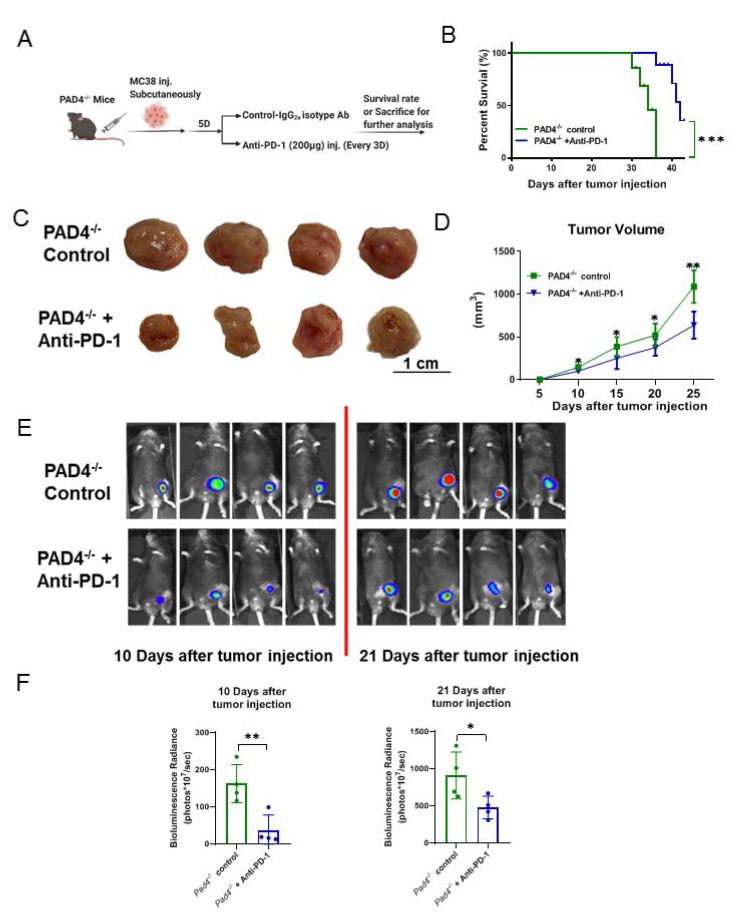
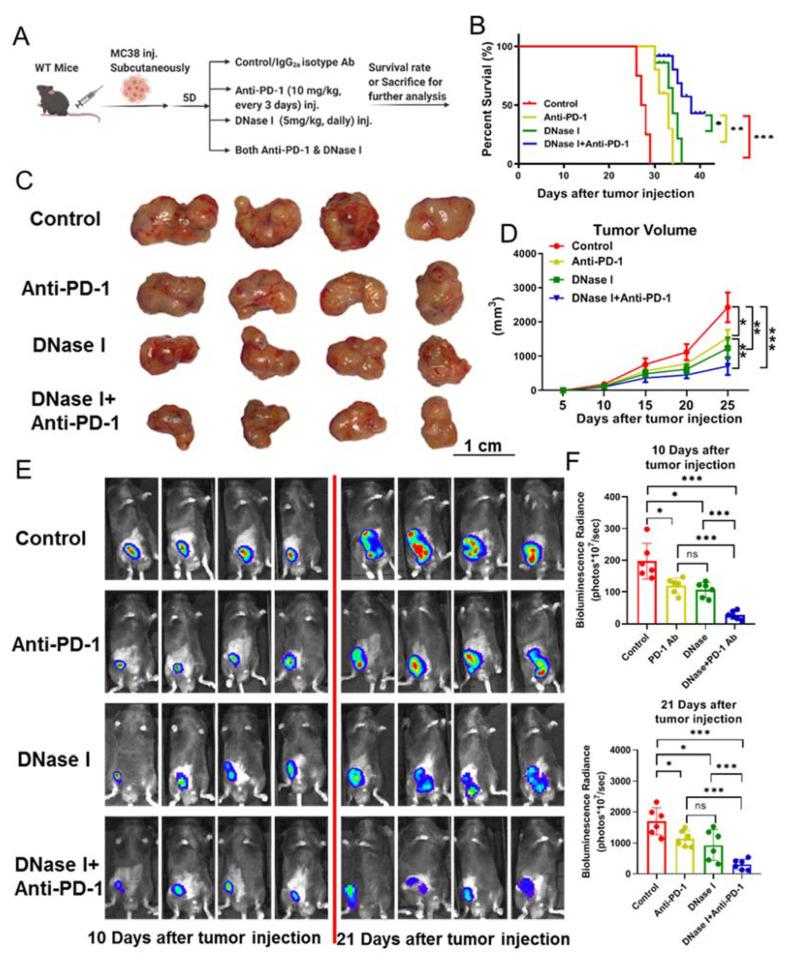
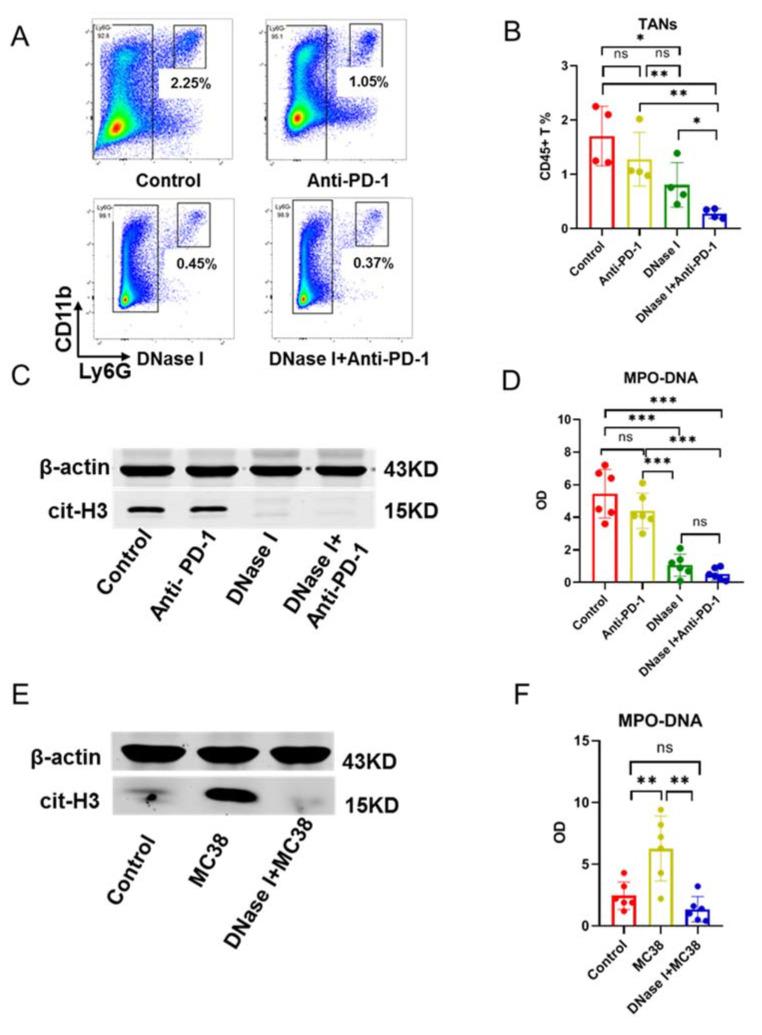
Immune checkpoint inhibitors can improve the prognosis of patients with advanced malignancy; however, only a small subset of advanced colorectal cancer patients in microsatellite-instability-high or mismatch-repair-deficient colorectal cancer can benefit from immunotherapy. Unfortunately, the mechanism behind this ineffectiveness is unclear. The tumor microenvironment plays a critical role in cancer immunity, and may contribute to the inhibition of immune checkpoint inhibitors and other novel immunotherapies in patients with advanced cancer. Herein, we demonstrate that the DNase I enzyme plays a pivotal role in the degradation of NETs, significantly dampening the resistance to anti-PD-1 blockade in a mouse colorectal cancer model by attenuating tumor growth. Remarkably, DNase I decreases tumor-associated neutrophils and the formation of MC38 tumor cell-induced neutrophil extracellular trap formation in vivo. Mechanistically, the inhibition of neutrophil extracellular traps with DNase I results in the reversal of anti-PD-1 blockade resistance through increasing CD8+ T cell infiltration and cytotoxicity. These findings signify a novel approach to targeting the tumor microenvironment using DNase I alone or in combination with immune checkpoint inhibitors.
免疫检查点抑制剂可改善晚期恶性肿瘤患者的预后;然而,只有一小部分微卫星高度不稳定或错配修复缺陷的晚期结直肠癌患者能从免疫治疗中获益。不幸的是,这种无效背后的机制尚不清楚。肿瘤微环境在癌症免疫中起关键作用,可能导致晚期癌症患者对免疫检查点抑制剂和其他新型免疫疗法产生抑制作用。在此,我们证明脱氧核糖核酸酶I(DNase I)在中性粒细胞胞外诱捕网(NETs)的降解中起关键作用,通过减缓肿瘤生长,在小鼠结直肠癌模型中显著减轻对抗程序性死亡蛋白1(PD-1)阻断的抗性。值得注意的是,DNase I在体内可减少肿瘤相关中性粒细胞以及MC38肿瘤细胞诱导的中性粒细胞胞外诱捕网的形成。从机制上讲,用DNase I抑制中性粒细胞胞外诱捕网可通过增加CD8 + T细胞浸润和细胞毒性来逆转抗PD-1阻断抗性。这些发现表明了一种单独使用DNase I或与免疫检查点抑制剂联合使用来靶向肿瘤微环境的新方法。


 Zotero 插件