
非洲热带无刺蜂物种(蜜蜂科:无刺蜂亚科)肠道细菌系统型共生体的增减
Loss and Gain of Gut Bacterial Phylotype Symbionts in Afrotropical Stingless Bee Species (Apidae: Meliponinae).
作者信息
Tola Yosef Hamba, Waweru Jacqueline Wahura, Ndungu Nelly N, Nkoba Kiatoko, Slippers Bernard, Paredes Juan C
机构信息
International Centre of Insect Physiology and Ecology, Nairobi 30772-00100, Kenya.
Department of Biochemistry, Genetics and Microbiology, Forestry and Agricultural Biotechnology Institute (FABI), University of Pretoria, Pretoria 0002, South Africa.
出版信息
Microorganisms. 2021 Nov 24;9(12):2420. doi: 10.3390/microorganisms9122420.
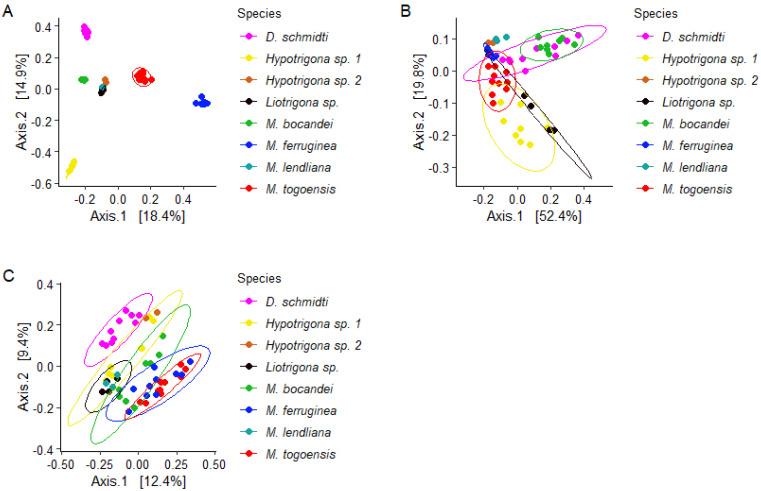
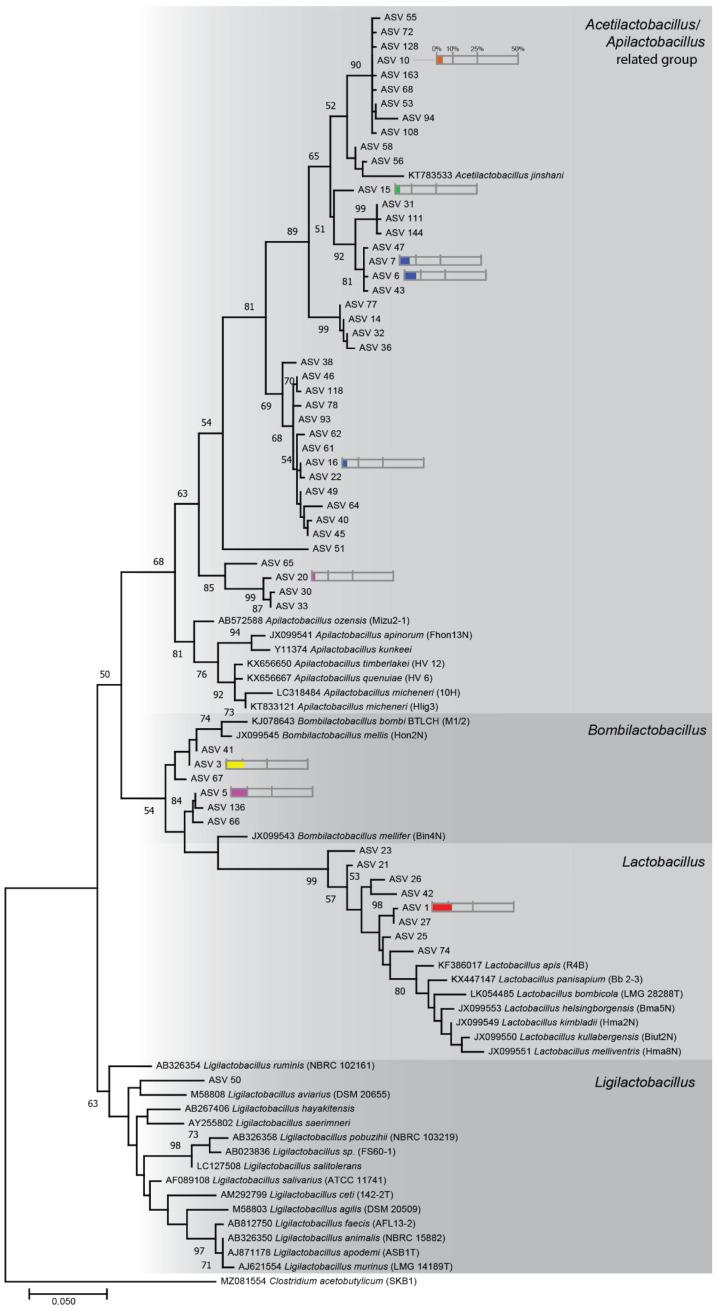
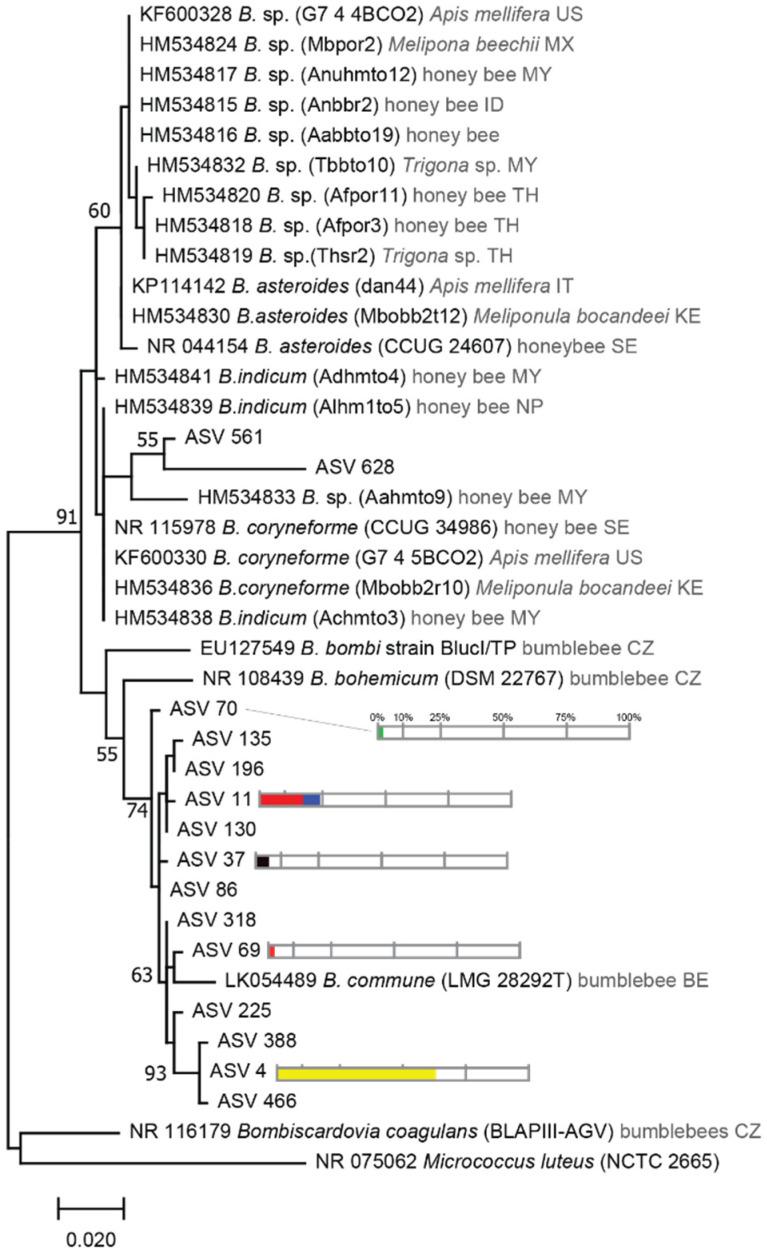
Stingless bees (Apidae: Meliponini) are the most diverse group of corbiculate bees and are important managed and wild pollinators distributed in the tropical and subtropical regions of the globe. However, little is known about their associated beneficial microbes that play major roles in host nutrition, detoxification, growth, activation of immune responses, and protection against pathogens in their sister groups, honeybees and bumble bees. Here, we provide an initial characterization of the gut bacterial microbiota of eight stingless bee species from sub-Saharan Africa using 16S rRNA amplicon sequencing. Our findings revealed that Firmicutes, Actinobacteria, and Proteobacteria were the dominant and conserved phyla across the eight stingless bee species. Additionally, we found significant geographical and host intra-species-specific bacterial diversity. Notably, African strains showed significant phylogenetic clustering when compared with strains from other continents, and each stingless bee species has its own microbial composition with its own dominant bacterial genus. Our results suggest host selective mechanisms maintain distinct gut communities among sympatric species and thus constitute an important resource for future studies on bee health management and host-microbe co-evolution and adaptation.
无刺蜂(蜜蜂科:无刺蜂族)是群居性蜜蜂中种类最多的群体,是分布于全球热带和亚热带地区的重要的人工养殖和野生传粉者。然而,对于它们相关的有益微生物,人们却知之甚少,这些微生物在其姐妹群体蜜蜂和熊蜂的宿主营养、解毒、生长、免疫反应激活以及抵御病原体方面发挥着重要作用。在此,我们利用16S rRNA扩增子测序技术,对来自撒哈拉以南非洲的8种无刺蜂的肠道细菌微生物群进行了初步表征。我们的研究结果表明,厚壁菌门、放线菌门和变形菌门是这8种无刺蜂中占主导地位且保守的门类。此外,我们发现了显著的地理和宿主种内特异性细菌多样性。值得注意的是,与来自其他大陆的菌株相比,非洲菌株显示出显著的系统发育聚类,并且每种无刺蜂都有其独特的微生物组成和占主导地位的细菌属。我们的研究结果表明,宿主选择机制维持着同域物种间不同的肠道群落,因此构成了未来蜜蜂健康管理以及宿主 - 微生物共同进化与适应研究的重要资源。


 Zotero 插件