
肠共生菌的深度分歧与基因多样化:新热带无刺蜂研究
Deep Divergence and Genomic Diversification of Gut Symbionts of Neotropical Stingless Bees.
机构信息
Department of Fundamental Microbiology, University of Lausanne, Lausanne, Switzerland.
Department of Morphology, Instituto de Ciências Biológicas, Federal University of Amazonas, Manaus, Brazil.
出版信息
mBio. 2023 Apr 25;14(2):e0353822. doi: 10.1128/mbio.03538-22. Epub 2023 Mar 20.
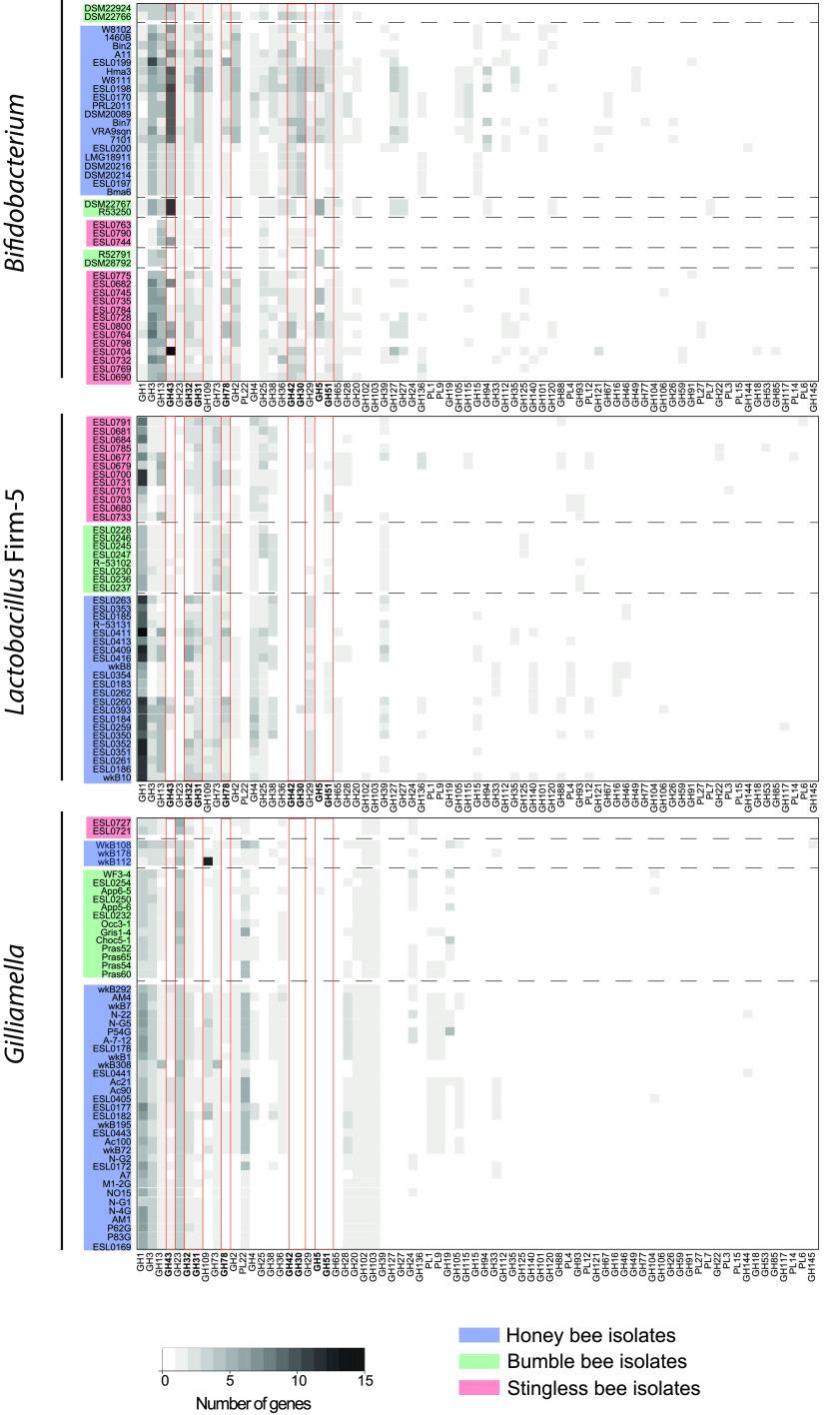
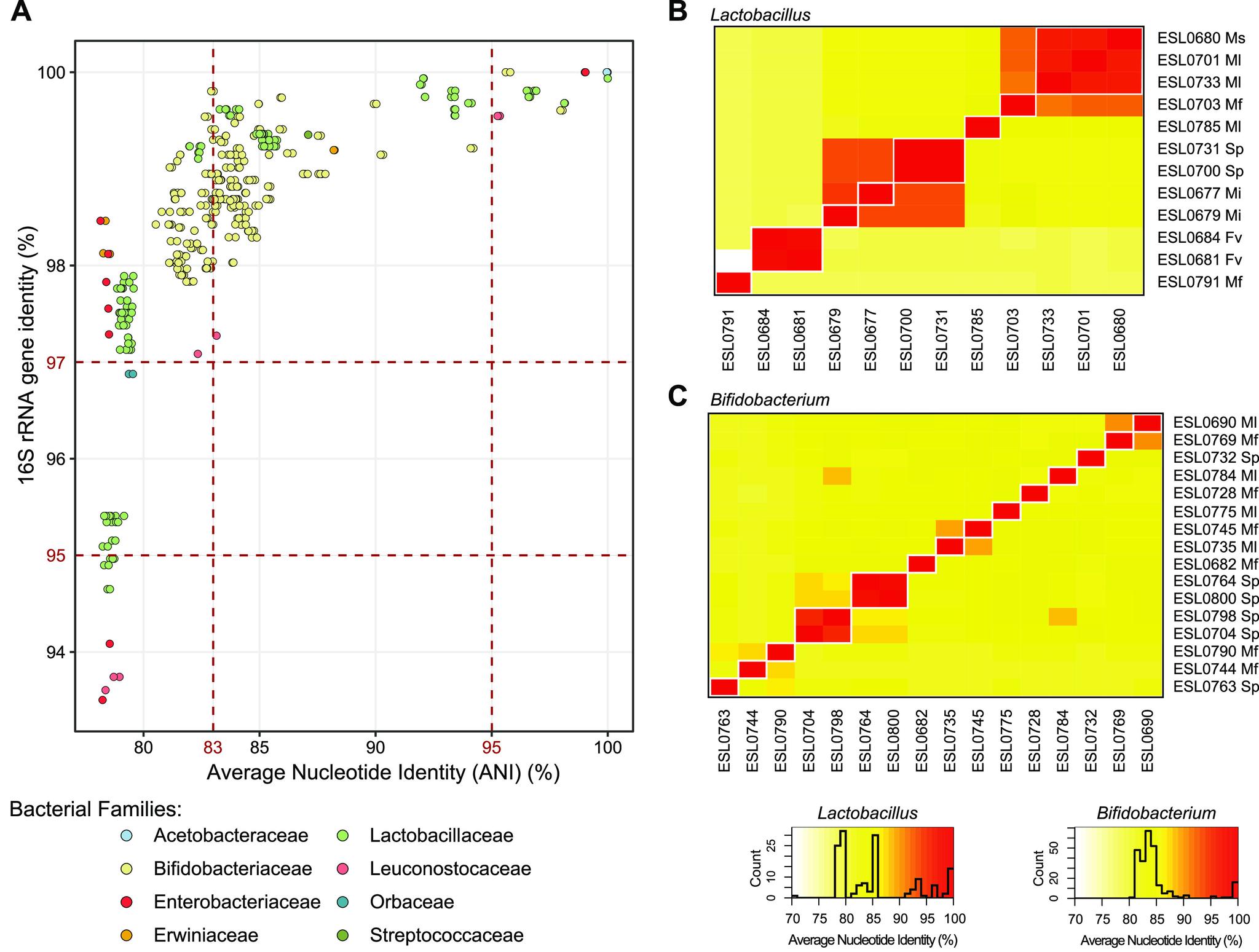
Social bees harbor conserved gut microbiotas that may have been acquired in a common ancestor of social bees and subsequently codiversified with their hosts. However, most of this knowledge is based on studies on the gut microbiotas of honey bees and bumblebees. Much less is known about the gut microbiotas of the third and most diverse group of social bees, the stingless bees. Specifically, the absence of genomic data from their microbiotas presents an important knowledge gap in understanding the evolution and functional diversity of the social bee microbiota. Here, we combined community profiling with culturing and genome sequencing of gut bacteria from six neotropical stingless bee species from Brazil. Phylogenomic analyses show that most stingless bee gut isolates form deep-branching sister clades of core members of the honey bee and bumblebee gut microbiota with conserved functional capabilities, confirming the common ancestry and ecology of their microbiota. However, our bacterial phylogenies were not congruent with those of the host, indicating that the evolution of the social bee gut microbiota was not driven by strict codiversification but included host switches and independent symbiont gain and losses. Finally, as reported for the honey bee and bumblebee microbiotas, we found substantial genomic divergence among strains of stingless bee gut bacteria, suggesting adaptation to different host species and glycan niches. Our study offers first insights into the genomic diversity of the stingless bee microbiota and highlights the need for broader samplings to understand the evolution of the social bee gut microbiota. Stingless bees are the most diverse group of the corbiculate bees and represent important pollinator species throughout the tropics and subtropics. They harbor specialized microbial communities in their gut that are related to those found in honey bees and bumblebees and that are likely important for bee health. Few bacteria have been cultured from the gut of stingless bees, which has prevented characterization of their genomic diversity and functional potential. Here, we established cultures of major members of the gut microbiotas of six stingless bee species and sequenced their genomes. We found that most stingless bee isolates belong to novel bacterial species distantly related to those found in honey bees and bumblebees and encoding similar functional capabilities. Our study offers a new perspective on the evolution of the social bee gut microbiota and presents a basis for characterizing the symbiotic relationships between gut bacteria and stingless bees.
社会性蜜蜂体内拥有保守的肠道微生物群,这些微生物可能是在社会性蜜蜂及其宿主的共同祖先中获得的,随后与宿主共同进化。然而,这些知识大部分都是基于对蜜蜂和熊蜂肠道微生物群的研究。关于第三大也是最多样化的社会性蜜蜂——无刺蜜蜂的肠道微生物群,我们知之甚少。具体来说,缺乏它们微生物群的基因组数据是理解社会性蜜蜂微生物群进化和功能多样性的一个重要知识空白。在这里,我们结合了群落分析、培养和从来自巴西的六种新热带无刺蜜蜂物种的肠道细菌进行基因组测序。系统发育基因组分析表明,大多数无刺蜜蜂肠道分离株与蜜蜂和熊蜂肠道微生物群的核心成员形成深分支姐妹群,具有保守的功能能力,证实了它们微生物群的共同起源和生态。然而,我们的细菌系统发育与宿主不一致,表明社会性蜜蜂肠道微生物群的进化不是由严格的共进化驱动的,而是包括宿主转换以及独立的共生体获得和丧失。最后,与蜜蜂和熊蜂微生物群的报道一样,我们发现无刺蜜蜂肠道细菌菌株之间存在大量的基因组差异,这表明它们适应不同的宿主物种和糖基生态位。我们的研究首次揭示了无刺蜜蜂微生物群的基因组多样性,并强调需要更广泛的采样来理解社会性蜜蜂肠道微生物群的进化。 无刺蜜蜂是螯蜂科中最多样化的群体,是整个热带和亚热带地区重要的传粉者。它们的肠道中存在特殊的微生物群落,与蜜蜂和熊蜂的微生物群落有关,这些微生物群落可能对蜜蜂的健康很重要。从无刺蜜蜂的肠道中很少有细菌被培养出来,这阻碍了对它们基因组多样性和功能潜力的描述。在这里,我们建立了六种无刺蜜蜂物种肠道微生物群主要成员的培养物,并对其基因组进行了测序。我们发现,大多数无刺蜜蜂分离株属于与蜜蜂和熊蜂中发现的细菌远系相关的新型细菌物种,编码相似的功能能力。我们的研究为社会性蜜蜂肠道微生物群的进化提供了新的视角,并为描述肠道细菌与无刺蜜蜂之间的共生关系提供了基础。



 Zotero 插件