
你是我的母亲吗?当宿主遗传学和肠道微生物群在非洲化蜜蜂杂交种(× sspp.)中讲述不同的系统发育故事时。
Are you my mother? When host genetics and gut microbiota tell different phylogenetic stories in the Africanized honey bee hybrid ( × sspp.).
作者信息
Soares Kilmer Oliveira, de Oliveira Celso José Bruno, Martínez Villegas Luis Eduardo, Vasconcelos Priscylla Carvalho, Rodrigues Adriana Evangelista, Madden Christopher, Hale Vanessa L
机构信息
Department of Animal Science, College of Agricultural Sciences, Federal University of Paraiba, Areia, Paraíba, Brazil.
Global One Health Initiative (GOHi), Ohio State University, Columbus, Ohio, USA.
出版信息
Microbiol Spectr. 2025 Jul;13(7):e0247524. doi: 10.1128/spectrum.02475-24. Epub 2025 May 28.
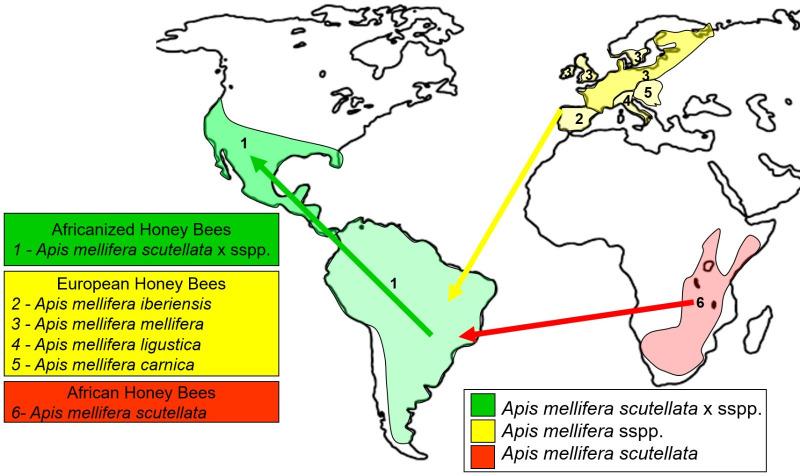
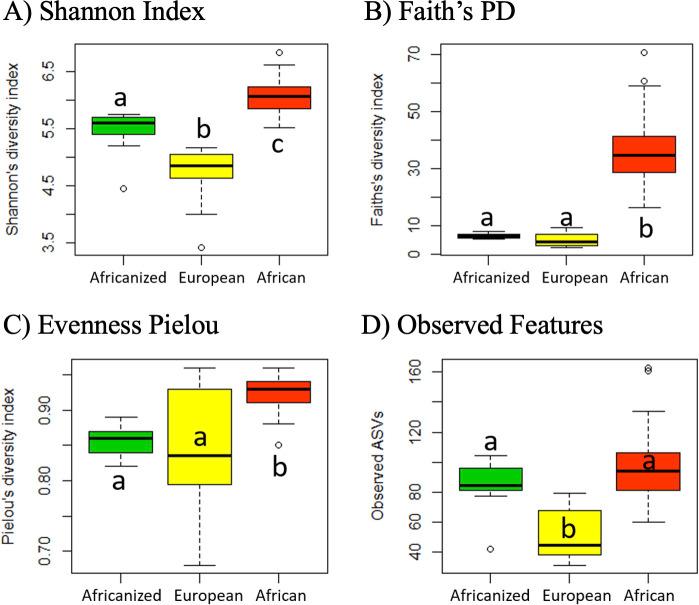
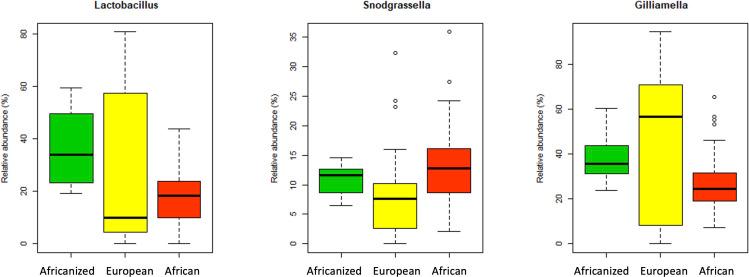
Africanized honey bees ( × sspp.) originated in Brazil through the crossbreeding of African () and European ( sspp.) honey bee subspecies. African genes came to dominate in these hybrid honey bees over time. Gut microbiota co-evolve with their hosts and generally reflect host phylogeny. To examine if this was true in Africanized honey bee hybrids (also known as -European hybrids), we compared the gut microbiota (16S rRNA) of three honey bee subspecies: African, European, and Africanized bees. Publicly available sequencing data from five honey bee studies were downloaded from the National Center for Biotechnology Information (NCBI). European bee samples ( = 42) came from the United Kingdom, Switzerland, and the United States. African bee samples ( = 82) came from Kenya. Africanized bee samples ( = 10) came from Brazil. Unexpectedly, Africanized honey bee gut microbiota was far more similar to European bees than to African bees despite the closer host genetic relationship between African and Africanized bees. All three subspecies shared similar relative abundances of core taxa. We posit that the similarity in gut microbiota between Africanized and European honey bees arose from the nature of the crossbreeding and the social/environmental transmission of gut microbiota within hives. Namely, African queens took over European hives. However, the hybrid offspring acquired their gut microbiota from European nurse bees and European hive materials, resulting in the stable transmission of European gut microbiota across generations. Our results provide an intriguing insight into the potential ecological, social, and environmental factors that shape the gut microbiota of the Africanized honey bee hybrid.IMPORTANCEAfricanized honey bee hybrids originated in Brazil through the crossbreeding of African and European honey bee subspecies. In this study, we examined the gut microbiota of all three honey bee subspecies (African, European, Africanized). A few core microbiota were shared across all subspecies. Interestingly, while African honey bee genes dominated in the Africanized honey bee hybrids, their gut microbial composition was most similar to European bees. This is likely related to the way these bees were crossbred-with African queens taking over European hives, while gut microbial inoculation of hybrids came from European nurse bees and European hive materials. Gut microbiota are critical to honey bee health, and studying the gut microbiota of closely related honey bee subspecies helps understand the factors that influence gut microbial composition. This is important for our broader understanding of honey bee health, conservation, and evolution.
非洲化蜜蜂(× sspp.)起源于巴西,是非洲()和欧洲(sspp.)蜜蜂亚种杂交的产物。随着时间的推移,非洲基因在这些杂交蜜蜂中占据了主导地位。肠道微生物群与其宿主共同进化,通常反映宿主的系统发育。为了检验这在非洲化蜜蜂杂交种(也称为 -欧洲杂交种)中是否属实,我们比较了三种蜜蜂亚种的肠道微生物群(16S rRNA):非洲蜜蜂、欧洲蜜蜂和非洲化蜜蜂。从美国国家生物技术信息中心(NCBI)下载了五项蜜蜂研究中公开可用的测序数据。欧洲蜜蜂样本( = 42)来自英国、瑞士和美国。非洲蜜蜂样本( = 82)来自肯尼亚。非洲化蜜蜂样本( = 10)来自巴西。出乎意料的是,尽管非洲蜜蜂和非洲化蜜蜂在宿主遗传关系上更为密切,但非洲化蜜蜂的肠道微生物群与欧洲蜜蜂的更为相似,而不是与非洲蜜蜂的相似。所有三个亚种的核心类群相对丰度相似。我们认为,非洲化蜜蜂和欧洲蜜蜂肠道微生物群的相似性源于杂交的性质以及蜂巢内肠道微生物群的社会/环境传播。也就是说,非洲蜂王接管了欧洲蜂巢。然而,杂交后代从欧洲保育蜂和欧洲蜂巢材料中获得了它们的肠道微生物群,导致欧洲肠道微生物群在世代间稳定传播。我们的研究结果为塑造非洲化蜜蜂杂交种肠道微生物群的潜在生态、社会和环境因素提供了饶有趣味的见解。
重要性
非洲化蜜蜂杂交种起源于巴西,是非洲和欧洲蜜蜂亚种杂交的产物。在这项研究中,我们检查了所有三种蜜蜂亚种(非洲蜜蜂、欧洲蜜蜂、非洲化蜜蜂)的肠道微生物群。所有亚种都共享一些核心微生物群。有趣的是,虽然非洲蜜蜂的基因在非洲化蜜蜂杂交种中占主导地位,但其肠道微生物组成与欧洲蜜蜂最为相似。这可能与这些蜜蜂的杂交方式有关——非洲蜂王接管欧洲蜂巢,而杂交种的肠道微生物接种来自欧洲保育蜂和欧洲蜂巢材料。肠道微生物群对蜜蜂健康至关重要,研究亲缘关系密切的蜜蜂亚种的肠道微生物群有助于了解影响肠道微生物组成的因素。这对于我们更广泛地理解蜜蜂健康、保护和进化很重要。



 Zotero 插件