
p53信号通路在癌症进展与治疗中的作用
p53 signaling in cancer progression and therapy.
作者信息
Marei Hany E, Althani Asmaa, Afifi Nahla, Hasan Anwarul, Caceci Thomas, Pozzoli Giacomo, Morrione Andrea, Giordano Antonio, Cenciarelli Carlo
机构信息
Department of Cytology and Histology, Faculty of Veterinary Medicine, Mansoura University, Mansoura, 35116, Egypt.
Biomedical Research Center, Qatar University, Doha, Qatar.
出版信息
Cancer Cell Int. 2021 Dec 24;21(1):703. doi: 10.1186/s12935-021-02396-8.
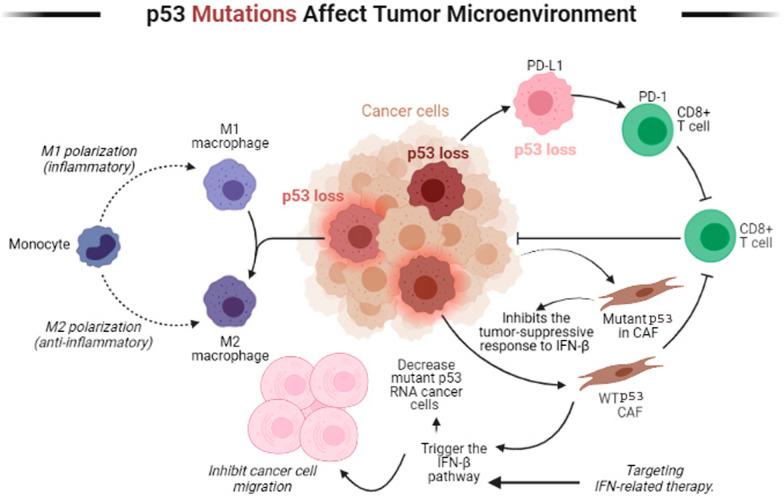
The p53 protein is a transcription factor known as the "guardian of the genome" because of its critical function in preserving genomic integrity. The TP53 gene is mutated in approximately half of all human malignancies, including those of the breast, colon, lung, liver, prostate, bladder, and skin. When DNA damage occurs, the TP53 gene on human chromosome 17 stops the cell cycle. If p53 protein is mutated, the cell cycle is unrestricted and the damaged DNA is replicated, resulting in uncontrolled cell proliferation and cancer tumours. Tumor-associated p53 mutations are usually associated with phenotypes distinct from those caused by the loss of the tumor-suppressing function exerted by wild-type p53protein. Many of these mutant p53 proteins have oncogenic characteristics, and therefore modulate the ability of cancer cells to proliferate, escape apoptosis, invade and metastasize. Because p53 deficiency is so common in human cancer, this protein is an excellent option for cancer treatment. In this review, we will discuss some of the molecular pathways by which mutant p53 proteins might perform their oncogenic activities, as well as prospective treatment methods based on restoring tumor suppressive p53 functions.
p53蛋白是一种转录因子,因其在维护基因组完整性方面的关键作用而被称为“基因组守护者”。TP53基因在大约一半的人类恶性肿瘤中发生突变,包括乳腺癌、结肠癌、肺癌、肝癌、前列腺癌、膀胱癌和皮肤癌。当DNA损伤发生时,人类17号染色体上的TP53基因会使细胞周期停止。如果p53蛋白发生突变,细胞周期将不受限制,受损的DNA会被复制,导致细胞不受控制地增殖并形成肿瘤。肿瘤相关的p53突变通常与野生型p53蛋白发挥的肿瘤抑制功能丧失所导致的表型不同。许多这些突变的p53蛋白具有致癌特性,因此会调节癌细胞增殖、逃避凋亡、侵袭和转移的能力。由于p53缺陷在人类癌症中非常普遍,这种蛋白是癌症治疗的一个极佳选择。在这篇综述中,我们将讨论突变p53蛋白可能发挥其致癌活性的一些分子途径,以及基于恢复肿瘤抑制性p53功能的前瞻性治疗方法。


 Zotero 插件