
维生素D3通过靶向miRNA - 145和ADAM17预防睾丸扭转对睾丸的有害影响:计算机模拟和体内研究
Vitamin D3 Prevents the Deleterious Effects of Testicular Torsion on Testis by Targeting miRNA-145 and ADAM17: In Silico and In Vivo Study.
作者信息
Mohamed Doaa I, Abou-Bakr Doaa A, Ezzat Samar F, El-Kareem Hanaa F Abd, Nahas Hebatallah H Abo, Saad Hosam A, Mehana Amir E, Saied Essa M
机构信息
Department of Clinical Pharmacology and Therapeutics, Faculty of Medicine, Ain Shams University, Cairo 11566, Egypt.
Department of Physiology, Faculty of Medicine, Ain Shams University, Cairo 11566, Egypt.
出版信息
Pharmaceuticals (Basel). 2021 Nov 25;14(12):1222. doi: 10.3390/ph14121222.
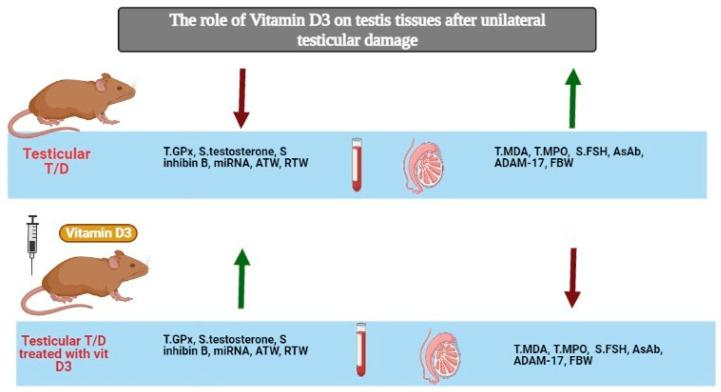
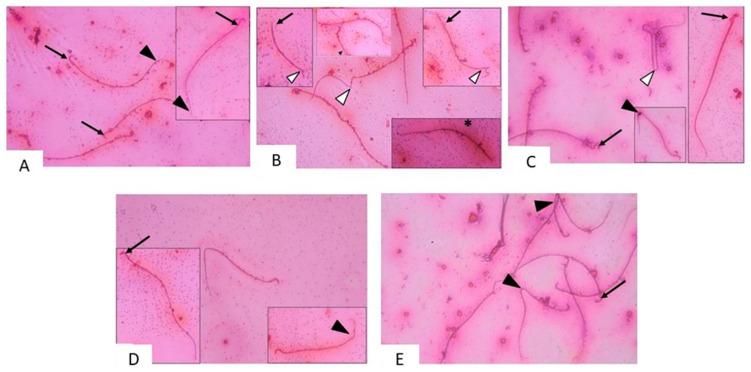
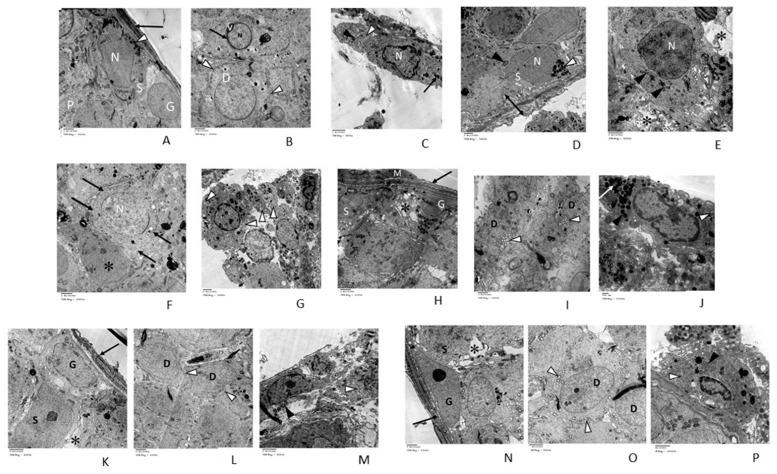
Testicular torsion (TT) is the most common urological emergency in children and young adults that can lead to infertility in many cases. The ischemia-reperfusion (IR) injury due to TT has been implicated in the pathogenesis of testicular damage. The main pathological mechanisms of contralateral injury after ipsilateral TT are not fully understood. In the presented study, we investigated the molecular and microscopic basis of ipsilateral and contralateral testicular injury following ipsilateral testicular torsion detorsion (T/D) and explored the possible protective role of vitamin D3. The biochemical analysis indicated that IR injury following T/D significantly decreased the activity of testicular glutathione peroxidase (GPx) enzyme, level of serum testosterone, serum inhibin B, and expression of testicular miRNA145, while increased the activity of testicular myeloperoxidase (MPO) enzyme, level of testicular malondialdehyde (MDA), level of serum antisperm-antibody (AsAb), and expression of ADAM-17. The histological and semen analysis revealed that torsion of the testis caused damages on different tissues in testis. Interestingly, administration of vitamin D3 prior to the IR injury reversed the deterioration effect of IR injury on the testicular tissues as indicated by biochemical and histological analysis which revealed normal appearance of the seminiferous tubules with an apparent decrease in collagen fiber deposition in both ipsilateral and contralateral testes. Our results revealed that the protective effect of vitamin D3 treatment could be attributed to target miRNA145 and ADAM17 protein. To further investigate these findings, we performed a detailed molecular modelling study in order to explore the binding affinity of vitamin D3 toward ADAM17 protein. Our results revealed that vitamin D3 has the ability to bind to the active site of ADAM17 protein via a set of hydrophobic and hydrophilic interactions with high docking score. In conclusion, this study highlights the protective pharmacological application of vitamin D3 to ameliorate the damages of testicular T/D on the testicular tissues via targeting miRNA145 and ADAM17 protein.
睾丸扭转(TT)是儿童和青年中最常见的泌尿外科急症,在许多情况下可导致不育。TT所致的缺血再灌注(IR)损伤与睾丸损伤的发病机制有关。同侧TT后对侧损伤的主要病理机制尚未完全明确。在本研究中,我们调查了同侧睾丸扭转复位(T/D)后同侧和对侧睾丸损伤的分子和微观基础,并探讨了维生素D3可能的保护作用。生化分析表明,T/D后的IR损伤显著降低了睾丸谷胱甘肽过氧化物酶(GPx)的活性、血清睾酮水平、血清抑制素B水平以及睾丸miRNA145的表达,同时增加了睾丸髓过氧化物酶(MPO)的活性、睾丸丙二醛(MDA)水平、血清抗精子抗体(AsAb)水平以及ADAM-17的表达。组织学和精液分析显示,睾丸扭转对睾丸的不同组织造成了损伤。有趣的是,生化和组织学分析表明,在IR损伤前给予维生素D3可逆转IR损伤对睾丸组织的恶化作用,其显示生精小管外观正常,同侧和对侧睾丸中的胶原纤维沉积明显减少。我们的结果表明,维生素D3治疗的保护作用可能归因于靶向miRNA145和ADAM17蛋白。为了进一步研究这些发现,我们进行了详细的分子建模研究,以探索维生素D3与ADAM17蛋白的结合亲和力。我们的结果显示,维生素D3能够通过一系列疏水和亲水相互作用与ADAM17蛋白的活性位点结合,对接分数很高。总之,本研究强调了维生素D3的保护性药理学应用,通过靶向miRNA145和ADAM17蛋白来减轻睾丸T/D对睾丸组织的损伤。



 Zotero 插件