
巨噬细胞极化及其在肝脏疾病中的作用。
Macrophage Polarization and Its Role in Liver Disease.
机构信息
State Key Laboratory of Southwestern Chinese Medicine Resources, Key Laboratory of Standardization for Chinese Herbal Medicine, Ministry of Education, School of Pharmacy, Chengdu University of Traditional Chinese Medicine, Chengdu, China.
出版信息
Front Immunol. 2021 Dec 14;12:803037. doi: 10.3389/fimmu.2021.803037. eCollection 2021.
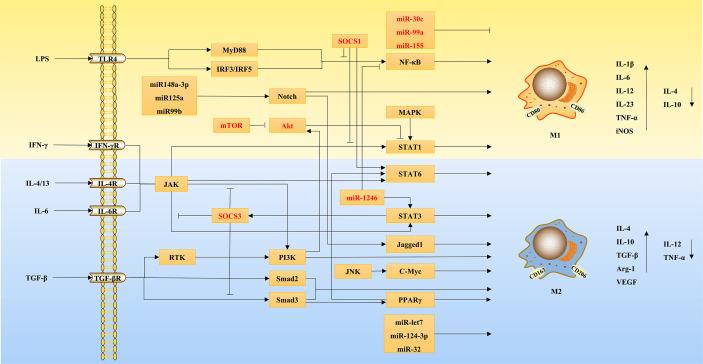
Macrophages are important immune cells in innate immunity, and have remarkable heterogeneity and polarization. Under pathological conditions, in addition to the resident macrophages, other macrophages are also recruited to the diseased tissues, and polarize to various phenotypes (mainly M1 and M2) under the stimulation of various factors in the microenvironment, thus playing different roles and functions. Liver diseases are hepatic pathological changes caused by a variety of pathogenic factors (viruses, alcohol, drugs, etc.), including acute liver injury, viral hepatitis, alcoholic liver disease, metabolic-associated fatty liver disease, liver fibrosis, and hepatocellular carcinoma. Recent studies have shown that macrophage polarization plays an important role in the initiation and development of liver diseases. However, because both macrophage polarization and the pathogenesis of liver diseases are complex, the role and mechanism of macrophage polarization in liver diseases need to be further clarified. Therefore, the origin of hepatic macrophages, and the phenotypes and mechanisms of macrophage polarization are reviewed first in this paper. It is found that macrophage polarization involves several molecular mechanisms, mainly including TLR4/NF-κB, JAK/STATs, TGF-β/Smads, PPARγ, Notch, and miRNA signaling pathways. In addition, this paper also expounds the role and mechanism of macrophage polarization in various liver diseases, which aims to provide references for further research of macrophage polarization in liver diseases, contributing to the therapeutic strategy of ameliorating liver diseases by modulating macrophage polarization.
巨噬细胞是先天免疫中的重要免疫细胞,具有显著的异质性和极化性。在病理条件下,除了固有巨噬细胞外,其他巨噬细胞也被招募到病变组织中,并在微环境中各种因素的刺激下,极化为各种表型(主要是 M1 和 M2),从而发挥不同的作用和功能。肝脏疾病是由多种致病因素(病毒、酒精、药物等)引起的肝脏病理变化,包括急性肝损伤、病毒性肝炎、酒精性肝病、代谢相关脂肪性肝病、肝纤维化和肝细胞癌。最近的研究表明,巨噬细胞极化在肝脏疾病的发生和发展中起重要作用。然而,由于巨噬细胞极化和肝脏疾病的发病机制都很复杂,因此需要进一步阐明巨噬细胞极化在肝脏疾病中的作用和机制。因此,本文首先综述了肝巨噬细胞的起源、巨噬细胞极化的表型和机制。研究发现,巨噬细胞极化涉及几个分子机制,主要包括 TLR4/NF-κB、JAK/STATs、TGF-β/Smads、PPARγ、Notch 和 miRNA 信号通路。此外,本文还阐述了巨噬细胞极化在各种肝脏疾病中的作用和机制,旨在为进一步研究巨噬细胞极化在肝脏疾病中的作用提供参考,为通过调节巨噬细胞极化改善肝脏疾病的治疗策略做出贡献。


 Zotero 插件