
结合多基因风险评分和语音特征来检测重度抑郁症
Combining Polygenic Risk Score and Voice Features to Detect Major Depressive Disorders.
作者信息
Di Yazheng, Wang Jingying, Liu Xiaoqian, Zhu Tingshao
机构信息
Key Laboratory of Behavioral Science, Institute of Psychology, Chinese Academy of Sciences, Beijing, China.
Department of Psychology, University of Chinese Academy of Sciences, Beijing, China.
出版信息
Front Genet. 2021 Dec 20;12:761141. doi: 10.3389/fgene.2021.761141. eCollection 2021.
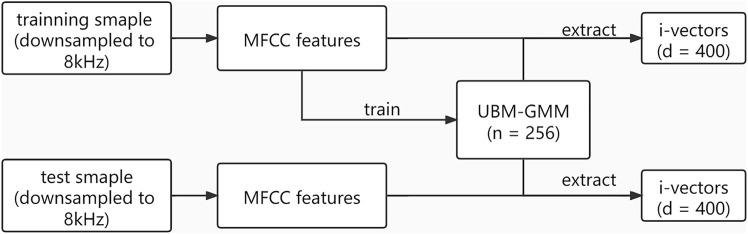
The application of polygenic risk scores (PRSs) in major depressive disorder (MDD) detection is constrained by its simplicity and uncertainty. One promising way to further extend its usability is fusion with other biomarkers. This study constructed an MDD biomarker by combining the PRS and voice features and evaluated their ability based on large clinical samples. We collected genome-wide sequences and utterances edited from clinical interview speech records from 3,580 women with recurrent MDD and 4,016 healthy people. Then, we constructed PRS as a gene biomarker by value-based clumping and thresholding and extracted voice features using the i-vector method. Using logistic regression, we compared the ability of gene or voice biomarkers with the ability of both in combination for MDD detection. We also tested more machine learning models to further improve the detection capability. With a -value threshold of 0.005, the combined biomarker improved the area under the receiver operating characteristic curve (AUC) by 9.09% compared to that of genes only and 6.73% compared to that of voice only. Multilayer perceptron can further heighten the AUC by 3.6% compared to logistic regression, while support vector machine and random forests showed no better performance. The addition of voice biomarkers to genes can effectively improve the ability to detect MDD. The combination of PRS and voice biomarkers in MDD detection is feasible. This study provides a foundation for exploring the clinical application of genetic and voice biomarkers in the diagnosis of MDD.
多基因风险评分(PRSs)在重度抑郁症(MDD)检测中的应用受到其简单性和不确定性的限制。进一步扩展其可用性的一种有前景的方法是与其他生物标志物融合。本研究通过结合PRS和语音特征构建了一种MDD生物标志物,并基于大型临床样本评估了它们的能力。我们收集了3580名复发性MDD女性和4016名健康人的全基因组序列以及从临床访谈语音记录中编辑的话语。然后,我们通过基于值的聚类和阈值设定构建PRS作为基因生物标志物,并使用i-vector方法提取语音特征。使用逻辑回归,我们比较了基因或语音生物标志物与两者结合用于MDD检测的能力。我们还测试了更多机器学习模型以进一步提高检测能力。在0.005的P值阈值下,与仅基因相比,联合生物标志物使受试者工作特征曲线下面积(AUC)提高了9.09%,与仅语音相比提高了6.73%。与逻辑回归相比,多层感知器可使AUC进一步提高3.6%,而支持向量机和随机森林表现不佳。在基因中添加语音生物标志物可有效提高检测MDD的能力。PRS和语音生物标志物在MDD检测中的联合是可行的。本研究为探索基因和语音生物标志物在MDD诊断中的临床应用提供了基础。




 Zotero 插件