
脂多糖转运跨膜机制成分的降解揭示了脂多糖依赖性脂多糖转运复合体在……中的稳定性
Degradation of Components of the Lpt Transenvelope Machinery Reveals LPS-Dependent Lpt Complex Stability in .
作者信息
Martorana Alessandra M, Moura Elisabete C C M, Sperandeo Paola, Di Vincenzo Flavia, Liang Xiaofei, Toone Eric, Zhou Pei, Polissi Alessandra
机构信息
Dipartimento di Scienze Farmacologiche e Biomolecolari, Università Degli Studi di Milano, Milan, Italy.
Department of Chemistry, Duke University, Durham, NC, United States.
出版信息
Front Mol Biosci. 2021 Dec 22;8:758228. doi: 10.3389/fmolb.2021.758228. eCollection 2021.
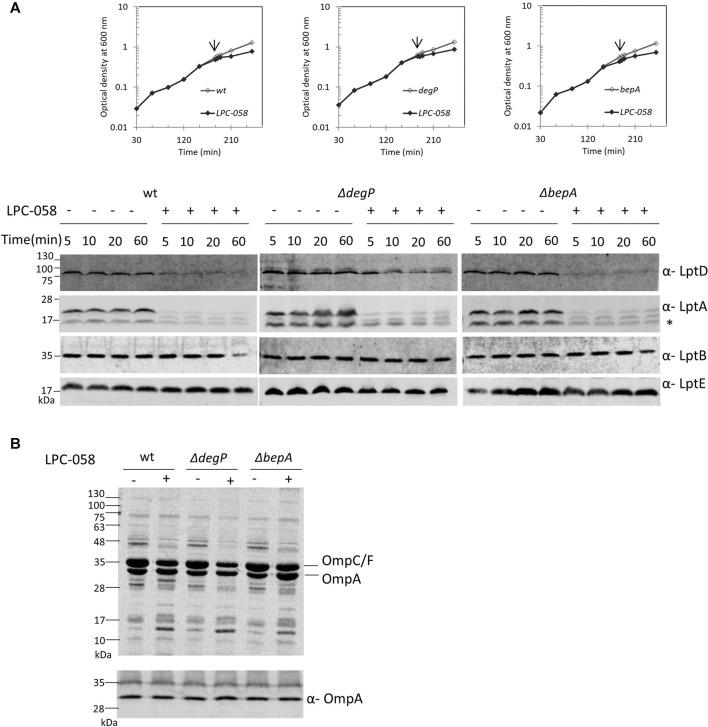
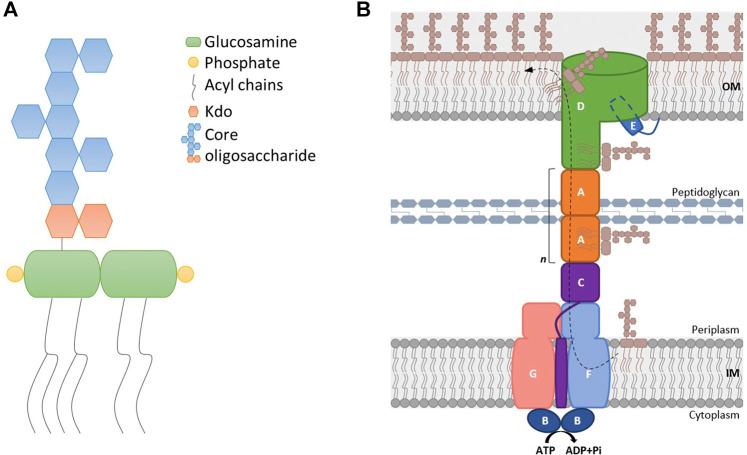
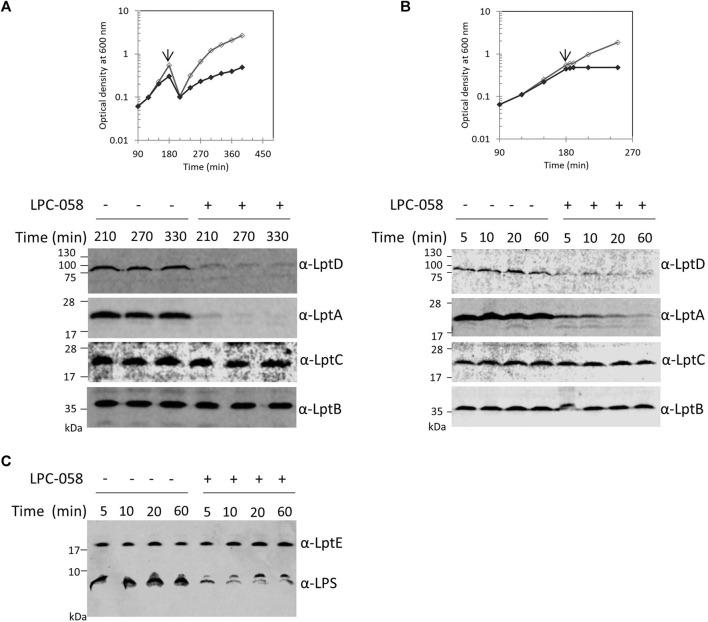
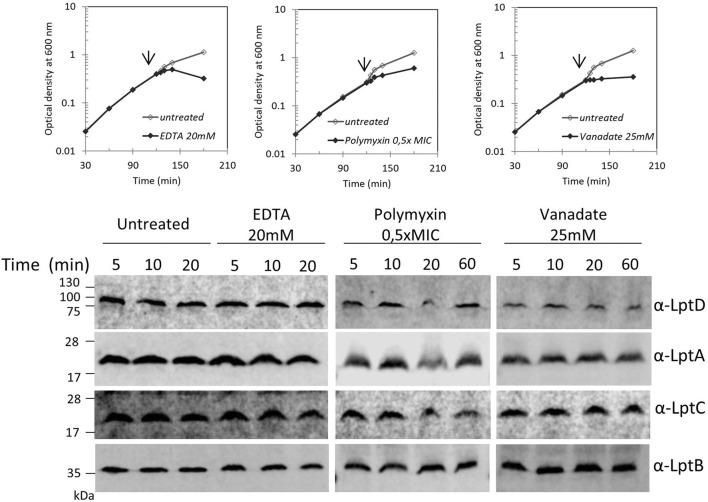
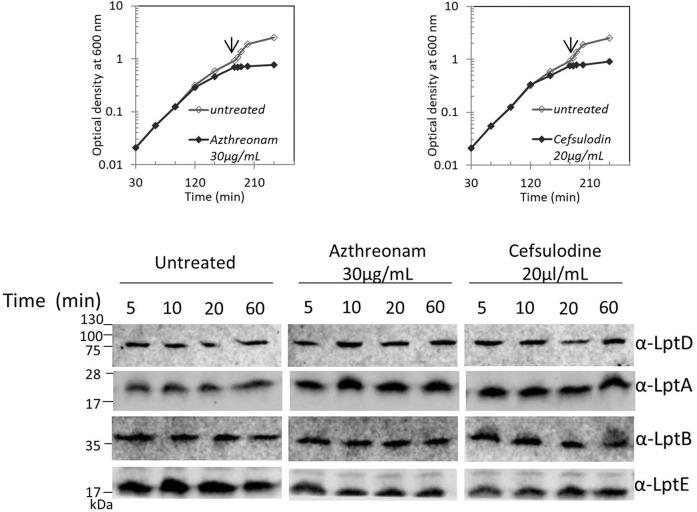
Lipopolysaccharide (LPS) is a peculiar component of the outer membrane (OM) of many Gram-negative bacteria that renders these bacteria highly impermeable to many toxic molecules, including antibiotics. LPS is assembled at the OM by a dedicated intermembrane transport system, the Lpt (LPS transport) machinery, composed of seven essential proteins located in the inner membrane (IM) (LptBCFG), periplasm (LptA), and OM (LptDE). Defects in LPS transport compromise LPS insertion and assembly at the OM and result in an overall modification of the cell envelope and its permeability barrier properties. LptA is a key component of the Lpt machine. It connects the IM and OM sub-complexes by interacting with the IM protein LptC and the OM protein LptD, thus enabling the LPS transport across the periplasm. Defects in Lpt system assembly result in LptA degradation whose stability can be considered a marker of an improperly assembled Lpt system. Indeed, LptA recruitment by its IM and OM docking sites requires correct maturation of the LptBCFG and LptDE sub-complexes, respectively. These quality control checkpoints are crucial to avoid LPS mistargeting. To further dissect the requirements for the complete Lpt transenvelope bridge assembly, we explored the importance of LPS presence by blocking its synthesis using an inhibitor compound. Here, we found that the interruption of LPS synthesis results in the degradation of both LptA and LptD, suggesting that, in the absence of the LPS substrate, the stability of the Lpt complex is compromised. Under these conditions, DegP, a major chaperone-protease in , is responsible for LptD but not LptA degradation. Importantly, LptD and LptA stability is not affected by stressors disturbing the integrity of LPS or peptidoglycan layers, further supporting the notion that the LPS substrate is fundamental to keeping the Lpt transenvelope complex assembled and that LptA and LptD play a major role in the stability of the Lpt system.
脂多糖(LPS)是许多革兰氏阴性菌外膜(OM)的一种特殊成分,它使这些细菌对包括抗生素在内的许多有毒分子具有高度不渗透性。LPS通过一个专门的跨膜转运系统——Lpt(LPS转运)机制,在内膜(IM)(LptBCFG)、周质(LptA)和外膜(LptDE)中由七种必需蛋白组成,在OM处组装。LPS转运缺陷会损害LPS在OM处的插入和组装,并导致细胞包膜及其通透性屏障特性的整体改变。LptA是Lpt机制的关键组成部分。它通过与IM蛋白LptC和OM蛋白LptD相互作用,连接IM和OM亚复合体,从而使LPS能够穿过周质进行转运。Lpt系统组装缺陷会导致LptA降解,其稳定性可被视为Lpt系统组装不当的一个标志。事实上,LptA通过其IM和OM对接位点的募集分别需要LptBCFG和LptDE亚复合体的正确成熟。这些质量控制检查点对于避免LPS错误靶向至关重要。为了进一步剖析完整的Lpt跨包膜桥组装的要求,我们通过使用抑制剂化合物阻断其合成来探索LPS存在的重要性。在这里,我们发现LPS合成的中断会导致LptA和LptD的降解,这表明在没有LPS底物的情况下,Lpt复合体的稳定性受到损害。在这些条件下,DegP(一种主要的伴侣蛋白酶)负责LptD但不负责LptA的降解。重要的是,LptD和LptA的稳定性不受干扰LPS或肽聚糖层完整性的应激源的影响,这进一步支持了LPS底物对于维持Lpt跨包膜复合体组装至关重要的观点,并且LptA和LptD在Lpt系统的稳定性中起主要作用。

 Zotero 插件