
Thanatin通过靶向LptC-LptA相互作用并降低LptA稳定性来损害脂多糖转运复合物组装。
Thanatin Impairs Lipopolysaccharide Transport Complex Assembly by Targeting LptC-LptA Interaction and Decreasing LptA Stability.
作者信息
Moura Elisabete C C M, Baeta Tiago, Romanelli Alessandra, Laguri Cedric, Martorana Alessandra M, Erba Emanuela, Simorre Jean-Pierre, Sperandeo Paola, Polissi Alessandra
机构信息
Dipartimento di Scienze Farmacologiche e Biomolecolari, Università degli Studi di Milano, Milan, Italy.
Université Grenoble Alpes, CNRS, CEA, IBS, Grenoble, France.
出版信息
Front Microbiol. 2020 May 13;11:909. doi: 10.3389/fmicb.2020.00909. eCollection 2020.
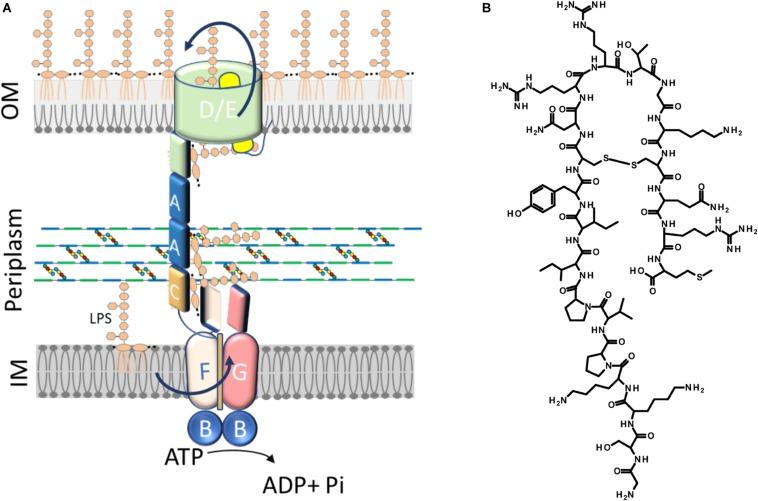
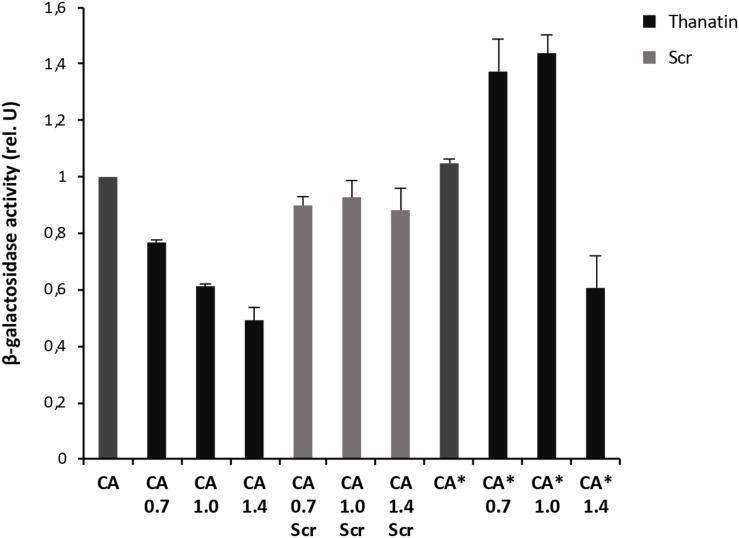
The outer membrane (OM) of Gram-negative bacteria is a highly selective permeability barrier due to its asymmetric structure with lipopolysaccharide (LPS) in the outer leaflet. In , LPS is transported to the cell surface by the LPS transport (Lpt) system composed of seven essential proteins forming a transenvelope bridge. Transport is powered by the ABC transporter LptBFGC, which extracts LPS from the inner membrane (IM) and transfers it, through LptC protein, to the periplasmic protein LptA. Then, LptA delivers LPS to the OM LptDE translocon for final assembly at the cell surface. The Lpt protein machinery operates as a single device, since depletion of any component leads to the accumulation of a modified LPS decorated with repeating units of colanic acid at the IM outer leaflet. Moreover, correct machine assembly is essential for LPS transit and disruption of the Lpt complex results in LptA degradation. Due to its vital role in cell physiology, the Lpt system represents a good target for antimicrobial drugs. Thanatin is a naturally occurring antimicrobial peptide reported to cause defects in membrane assembly and demonstrated to bind to the N-terminal β-strand of LptA. Since this region is involved in both LptA dimerization and interaction with LptC, we wanted to elucidate the mechanism of inhibition of thanatin and discriminate whether its antibacterial effect is exerted by the disruption of the interaction of LptA with itself or with LptC. For this purpose, we here implemented the Bacterial Adenylate Cyclase Two-Hybrid (BACTH) system to probe the Lpt interactome in the periplasm. With this system, we found that thanatin targets both LptC-LptA and LptA-LptA interactions, with a greater inhibitory effect on the former. We confirmed the disruption of LptC-LptA interaction using two different biophysical techniques. Finally, we observed that in cells treated with thanatin, LptA undergoes degradation and LPS decorated with colanic acid accumulates. These data further support inhibition or disruption of Lpt complex assembly as the main killing mechanism of thanatin against Gram-negative bacteria.
革兰氏阴性菌的外膜(OM)是一种高度选择性的渗透屏障,这归因于其外小叶中含有脂多糖(LPS)的不对称结构。在细胞内,LPS通过由七种必需蛋白组成的LPS转运(Lpt)系统转运至细胞表面,这些蛋白形成了一个跨包膜桥。转运由ABC转运蛋白LptBFGC提供动力,它从内膜(IM)中提取LPS,并通过LptC蛋白将其转移至周质蛋白LptA。然后,LptA将LPS递送至OM LptDE转运体,以便在细胞表面进行最终组装。Lpt蛋白机制作为一个整体发挥作用,因为任何一个组分的缺失都会导致在IM外小叶积累带有柯烷酸重复单元修饰的LPS。此外,正确的机制组装对于LPS转运至关重要,Lpt复合物的破坏会导致LptA降解。由于其在细胞生理学中的重要作用,Lpt系统是抗菌药物的一个良好靶点。Thanatin是一种天然存在的抗菌肽,据报道它会导致膜组装缺陷,并已证明其与LptA的N端β链结合。由于该区域参与LptA二聚化以及与LptC的相互作用,我们想要阐明thanatin的抑制机制,并区分其抗菌作用是通过破坏LptA自身相互作用还是与LptC的相互作用来实现的。为此,我们在此采用细菌腺苷酸环化酶双杂交(BACTH)系统来探测周质中的Lpt相互作用组。利用该系统,我们发现thanatin靶向LptC-LptA和LptA-LptA相互作用,对前者的抑制作用更强。我们使用两种不同的生物物理技术证实了LptC-LptA相互作用的破坏。最后,我们观察到在用thanatin处理的细胞中,LptA会发生降解,并且带有柯烷酸修饰的LPS会积累。这些数据进一步支持Lpt复合物组装的抑制或破坏是thanatin对革兰氏阴性菌的主要杀伤机制。




 Zotero 插件