
血液来源的细胞外囊泡相关miR-3182可检测非小细胞肺癌患者。
Blood-Derived Extracellular Vesicle-Associated miR-3182 Detects Non-Small Cell Lung Cancer Patients.
作者信息
Visan Kekoolani S, Lobb Richard J, Wen Shu Wen, Bedo Justin, Lima Luize G, Krumeich Sophie, Palma Carlos, Ferguson Kaltin, Green Ben, Niland Colleen, Cloonan Nicole, Simpson Peter T, McCart Reed Amy E, Everitt Sarah J, MacManus Michael P, Hartel Gunter, Salomon Carlos, Lakhani Sunil R, Fielding David, Möller Andreas
机构信息
Tumour Microenvironment Laboratory, QIMR Berghofer Medical Research Institute, Herston, QLD 4006, Australia.
School of Medicine, The University of Queensland, Brisbane, QLD 4006, Australia.
出版信息
Cancers (Basel). 2022 Jan 5;14(1):257. doi: 10.3390/cancers14010257.
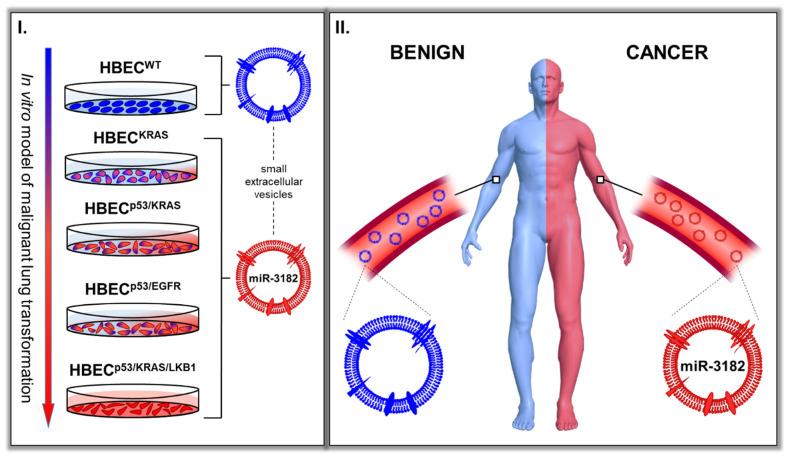
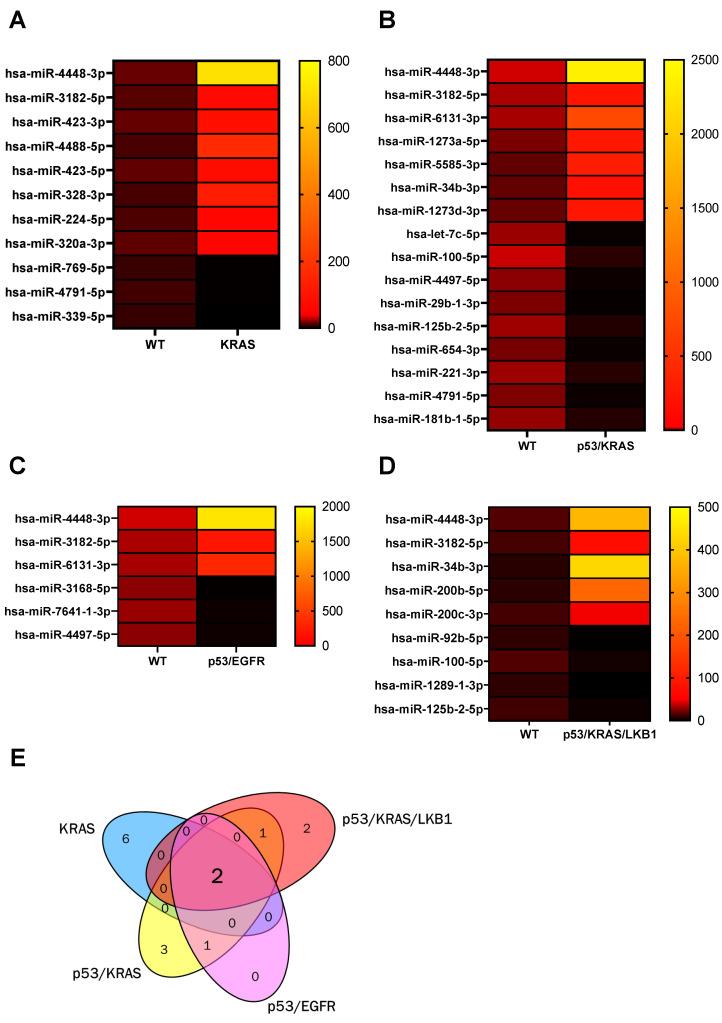
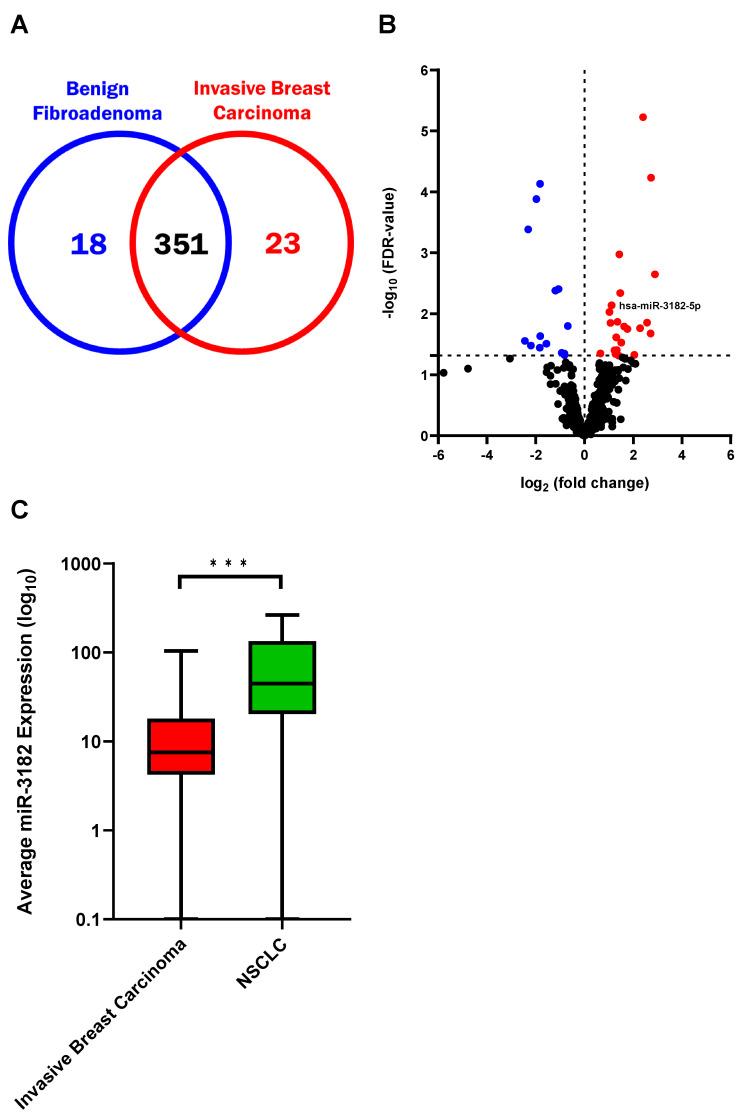
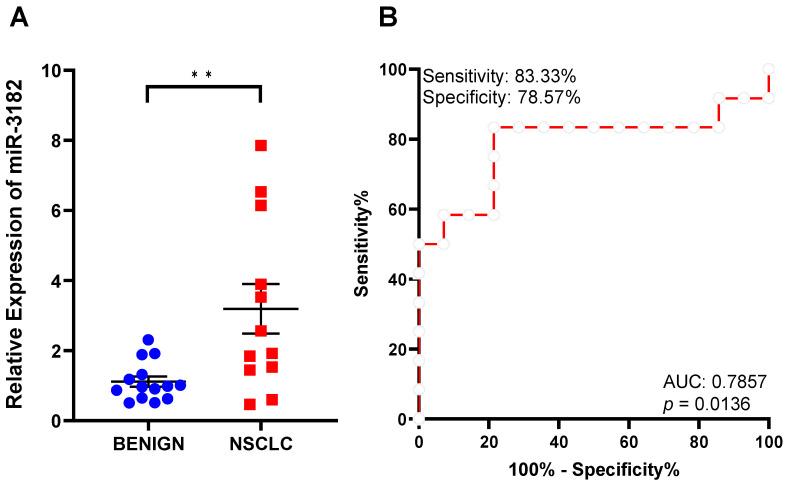
With five-year survival rates as low as 3%, lung cancer is the most common cause of cancer-related mortality worldwide. The severity of the disease at presentation is accredited to the lack of early detection capacities, resulting in the reliance on low-throughput diagnostic measures, such as tissue biopsy and imaging. Interest in the development and use of liquid biopsies has risen, due to non-invasive sample collection, and the depth of information it can provide on a disease. Small extracellular vesicles (sEVs) as viable liquid biopsies are of particular interest due to their potential as cancer biomarkers. To validate the use of sEVs as cancer biomarkers, we characterised cancer sEVs using miRNA sequencing analysis. We found that miRNA-3182 was highly enriched in sEVs derived from the blood of patients with invasive breast carcinoma and NSCLC. The enrichment of sEV miR-3182 was confirmed in oncogenic, transformed lung cells in comparison to isogenic, untransformed lung cells. Most importantly, miR-3182 can successfully distinguish early-stage NSCLC patients from those with benign lung conditions. Therefore, miR-3182 provides potential to be used for the detection of NSCLC in blood samples, which could result in earlier therapy and thus improved outcomes and survival for patients.
肺癌的五年生存率低至3%,是全球癌症相关死亡的最常见原因。该疾病在初诊时的严重程度归因于缺乏早期检测能力,导致依赖低通量诊断措施,如组织活检和成像。由于样本采集非侵入性以及能提供疾病深度信息,对液体活检技术的开发和应用兴趣日益增加。作为可行的液体活检手段,小细胞外囊泡(sEVs)因其作为癌症生物标志物的潜力而备受关注。为验证sEVs作为癌症生物标志物的用途,我们通过miRNA测序分析对癌症sEVs进行了表征。我们发现miRNA-3182在源自浸润性乳腺癌和非小细胞肺癌(NSCLC)患者血液的sEVs中高度富集。与同基因未转化的肺细胞相比,致癌的、转化的肺细胞中sEV miR-3182的富集得到了证实。最重要的是,miR-3182能够成功区分早期NSCLC患者与良性肺部疾病患者。因此,miR-3182有潜力用于检测血液样本中的NSCLC,这可能带来更早的治疗,从而改善患者的治疗效果和生存率。

 Zotero 插件