
塑料消费品中化学物质的成脂活性。
Adipogenic Activity of Chemicals Used in Plastic Consumer Products.
机构信息
Department of Biology, Norwegian University of Science and Technology (NTNU), 7491 Trondheim, Norway.
Department of Aquatic Ecotoxicology, Goethe University Frankfurt am Main, 60438 Frankfurt am Main, Germany.
出版信息
Environ Sci Technol. 2022 Feb 15;56(4):2487-2496. doi: 10.1021/acs.est.1c06316. Epub 2022 Jan 26.
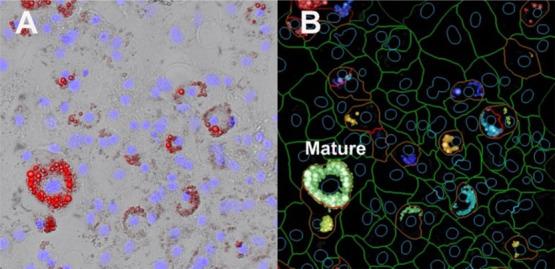
Bisphenols and phthalates, chemicals frequently used in plastic products, promote obesity in cell and animal models. However, these well-known metabolism-disrupting chemicals (MDCs) represent only a minute fraction of all compounds found in plastics. To gain a comprehensive understanding of plastics as a source of exposure to MDCs, we characterized the chemicals present in 34 everyday products using nontarget high-resolution mass spectrometry and analyzed their joint adipogenic activities by high-content imaging. We detected 55,300 chemical features and tentatively identified 629 unique compounds, including 11 known MDCs. Importantly, the chemicals extracted from one-third of the products caused murine 3T3-L1 preadipocytes to proliferate, and differentiate into adipocytes, which were larger and contained more triglycerides than those treated with the reference compound rosiglitazone. Because the majority of plastic extracts did not activate the peroxisome proliferator-activated receptor γ and the glucocorticoid receptor, the adipogenic effects are mediated via other mechanisms and, thus, likely to be caused by unknown MDCs. Our study demonstrates that daily-use plastics contain potent mixtures of MDCs and can, therefore, be a relevant yet underestimated environmental factor contributing to obesity.
双酚类和邻苯二甲酸酯类是常用于塑料制品的化学物质,它们在细胞和动物模型中促进肥胖。然而,这些众所周知的代谢干扰化学物质(MDCs)仅代表塑料中所有化合物的一小部分。为了全面了解塑料作为 MDCs 暴露源,我们使用非靶向高分辨率质谱对 34 种日常产品中的化学物质进行了表征,并通过高内涵成像分析了它们的联合成脂活性。我们检测到 55300 种化学特征,并初步鉴定了 629 种独特的化合物,其中包括 11 种已知的 MDCs。重要的是,三分之一产品中提取的化学物质导致小鼠 3T3-L1 前脂肪细胞增殖,并分化为脂肪细胞,与用参比化合物罗格列酮处理的细胞相比,这些脂肪细胞更大,含有更多的甘油三酯。由于大多数塑料提取物不能激活过氧化物酶体增殖物激活受体 γ 和糖皮质激素受体,因此成脂作用是通过其他机制介导的,因此可能是由未知的 MDCs 引起的。我们的研究表明,日常使用的塑料含有有效的 MDCs 混合物,因此可能是导致肥胖的一个相关但被低估的环境因素。



 Zotero 插件