
头颈部鳞状细胞癌缺氧相关lncRNA生物标志物特征的鉴定
Identification of a Hypoxia-Related lncRNA Biomarker Signature for Head and Neck Squamous Cell Carcinoma.
作者信息
Yang Cuifang, Zheng Xiang
机构信息
Department of Otorhinolaryngology Head and Neck Surgery, Sir Run Run Hospital, Nanjing Medical University, Nanjing 211166, Jiangsu, China.
出版信息
J Oncol. 2022 Jan 19;2022:6775496. doi: 10.1155/2022/6775496. eCollection 2022.
PURPOSE
Hypoxia is a leading hallmark of tumors, which is associated with carcinogenicity and dismal patient outcome. In this project, we tended to detect the prognostic value of hypoxic lncRNA and further generate a hypoxic lncRNA-based model in head and neck squamous cell carcinoma (HNSCC).
METHODS
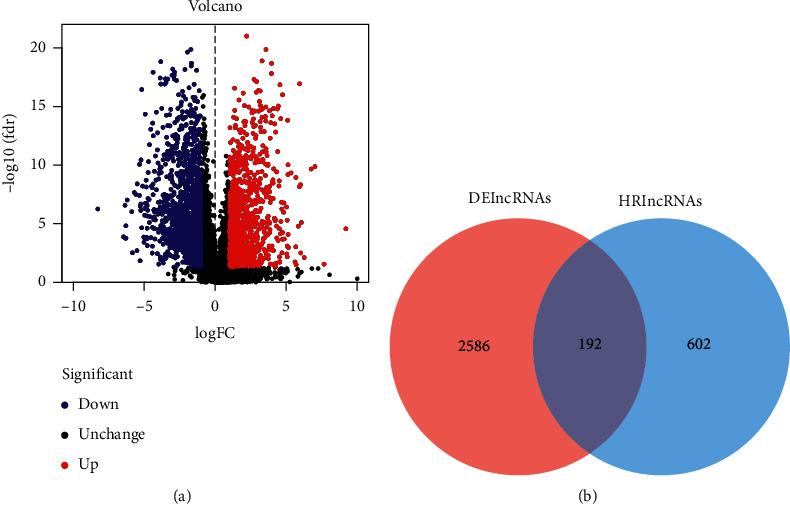
We integrated the transcriptome and clinical information of HNSCC based on TCGA dataset. Univariate-multivariate Cox analysis was implemented to develop the signature according to hypoxia-related lncRNAs (HRlncRNAs) with greatly prognostic power in HNSCC. Next, the biomarker signature was tested using survival analysis and ROC plots. Moreover, we used GSEA to uncover the potential pathways of HRlncRNAs, and CIBERSORT and ssGSEA tools were applied to mirror the immune status of HNSCC patients.
RESULTS
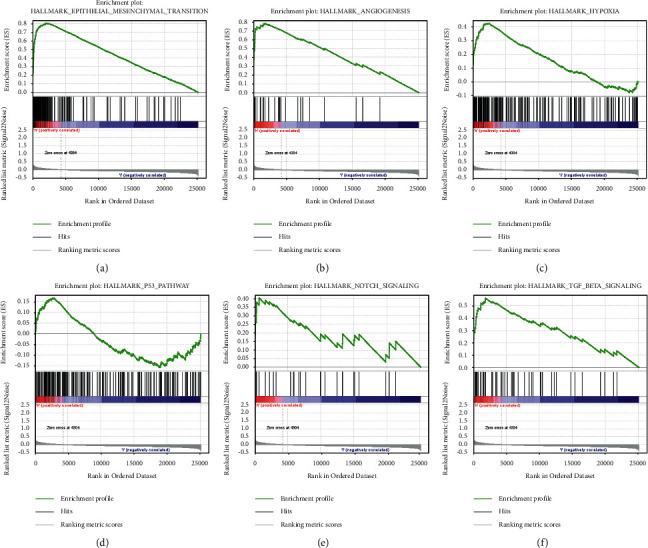
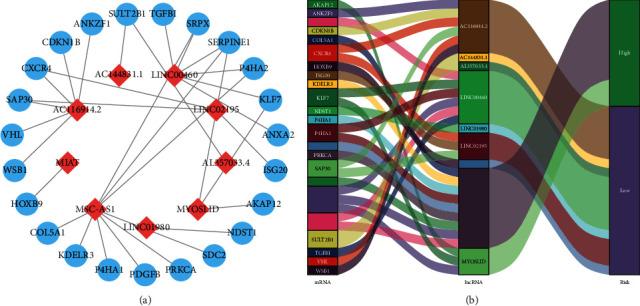
Nine HRlncRNAs (LINC00460, AC144831.1, AC116914.2, MIAT, MSC-AS1, LINC01980, MYOSLID, AL357033.4, and LINC02195) were determined to develop a HRlncRNA-related signature (HRLS). High-HRLS group was associated with dismal patient outcome using survival analysis. Moreover, the HRLS was superior to classical clinical traits in forecasting survival rate of samples with HNSCC. GSEA unearthed the top six hallmarks in the HRLS-high group individuals. In addition, the HRLS was also bound up with the infiltration of macrophages, CD8 T cells, and activated mast cells.
CONCLUSION
Our nominated nine-HRlncRNA risk model is robust and valuable tool for forecasting patient outcome in HNSCC.
目的
缺氧是肿瘤的一个主要特征,与致癌性和患者预后不良相关。在本项目中,我们试图检测缺氧相关长链非编码RNA(lncRNA)的预后价值,并进一步构建基于缺氧lncRNA的头颈部鳞状细胞癌(HNSCC)模型。
方法
我们基于TCGA数据集整合了HNSCC的转录组和临床信息。根据在HNSCC中具有显著预后能力的缺氧相关lncRNA(HRlncRNA),进行单变量-多变量Cox分析以建立特征。接下来,使用生存分析和ROC曲线对生物标志物特征进行检验。此外,我们使用基因集富集分析(GSEA)来揭示HRlncRNA的潜在通路,并应用CIBERSORT和单样本基因集富集分析(ssGSEA)工具来反映HNSCC患者的免疫状态。
结果
确定了9个HRlncRNA(LINC00460、AC144831.1、AC116914.2、MIAT、MSC-AS1、LINC01980、MYOSLID、AL357033.4和LINC02195)以建立HRlncRNA相关特征(HRLS)。通过生存分析发现高HRLS组与患者预后不良相关。此外,在预测HNSCC样本的生存率方面,HRLS优于经典临床特征。GSEA揭示了HRLS高分组个体的前六个特征。此外,HRLS还与巨噬细胞、CD8 T细胞和活化肥大细胞的浸润有关。
结论
我们提出的九HRlncRNA风险模型是预测HNSCC患者预后的强大且有价值的工具。


 Zotero 插件