
滴答滴答:通过表观遗传时钟捕捉到的老鼠培养物和组织衰老。
Tick tock, tick tock: Mouse culture and tissue aging captured by an epigenetic clock.
机构信息
Department of Pathology, Yale School of Medicine, New Haven, Connecticut, USA.
Department of Molecular, Cell, and Developmental Biology, University of California Los Angeles, Los Angeles, California, USA.
出版信息
Aging Cell. 2022 Feb;21(2):e13553. doi: 10.1111/acel.13553. Epub 2022 Feb 1.
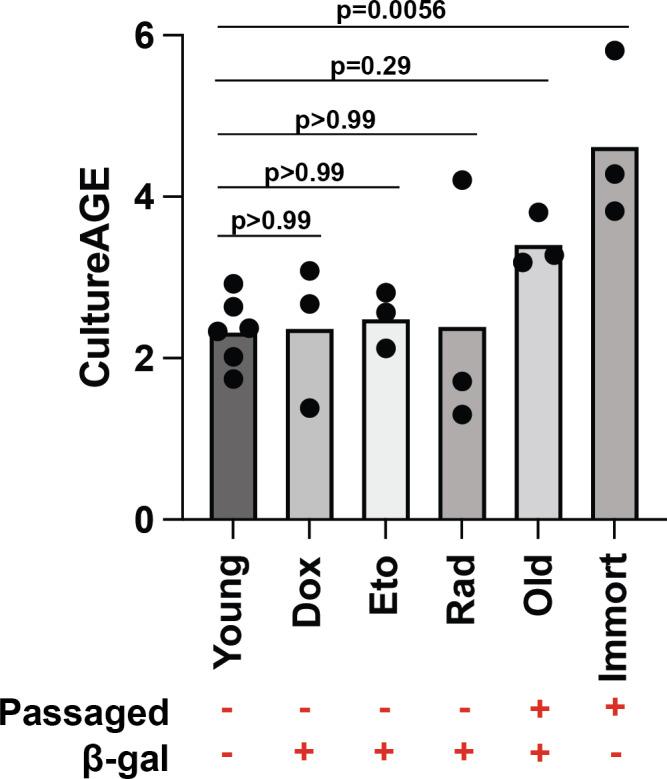
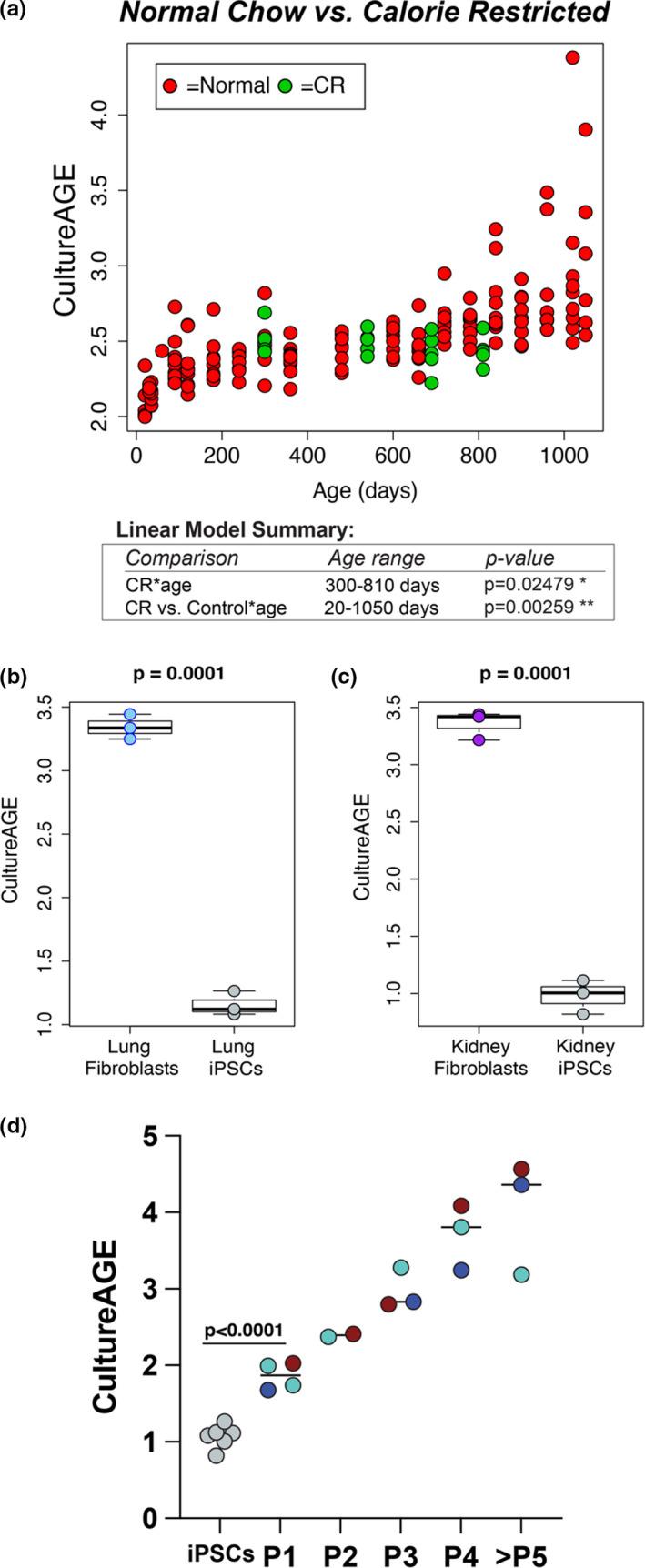
Aging is associated with dramatic changes to DNA methylation (DNAm), although the causes and consequences of such alterations are unknown. Our ability to experimentally uncover mechanisms of epigenetic aging will be greatly enhanced by our ability to study and manipulate these changes using in vitro models. However, it remains unclear whether the changes elicited by cells in culture can serve as a model of what is observed in aging tissues in vivo. To test this, we serially passaged mouse embryonic fibroblasts (MEFs) and assessed changes in DNAm at each time point via reduced representation bisulfite sequencing. By developing a measure that tracked cellular aging in vitro, we tested whether it tracked physiological aging in various mouse tissues and whether anti-aging interventions modulate this measure. Our measure, termed CultureAGE, was shown to strongly increase with age when examined in multiple tissues (liver, lung, kidney, blood, and adipose). As a control, we confirmed that the measure was not a marker of cellular senescence, suggesting that it reflects a distinct yet progressive cellular aging phenomena that can be induced in vitro. Furthermore, we demonstrated slower epigenetic aging in animals undergoing caloric restriction and a resetting of our measure in lung and kidney fibroblasts when re-programmed to iPSCs. Enrichment and clustering analysis implicated EED and Polycomb group (PcG) factors as potentially important chromatin regulators in translational culture aging phenotypes. Overall, this study supports the concept that physiologically relevant aging changes can be induced in vitro and used to uncover mechanistic insights into epigenetic aging.
衰老与 DNA 甲基化(DNAm)的显著变化有关,尽管这些改变的原因和后果尚不清楚。我们能够通过体外模型来研究和操纵这些变化,从而极大地提高我们揭示表观遗传衰老机制的能力。然而,细胞培养中引起的变化是否可以作为体内衰老组织中观察到的变化的模型仍然不清楚。为了检验这一点,我们连续传代培养了小鼠胚胎成纤维细胞(MEFs),并通过简化重亚硫酸盐测序在每个时间点评估 DNAm 的变化。通过开发一种可在体外跟踪细胞衰老的测量方法,我们测试了它是否可以在各种小鼠组织中跟踪生理衰老,以及抗衰干预是否可以调节这种测量方法。我们的测量方法称为 CultureAGE,当在多个组织(肝脏、肺、肾脏、血液和脂肪)中进行检查时,它显示出与年龄的强烈相关性。作为对照,我们证实该测量方法不是细胞衰老的标志物,这表明它反映了一种独特但渐进的细胞衰老现象,可以在体外诱导。此外,我们还证明了在经历热量限制的动物中,表观遗传衰老速度较慢,并且在肺和肾成纤维细胞重新编程为 iPSCs 时,我们的测量方法得到重置。富集和聚类分析表明,EED 和 Polycomb 组(PcG)因子可能是翻译培养衰老表型中重要的染色质调节因子。总体而言,这项研究支持了这样一种概念,即生理相关的衰老变化可以在体外诱导,并用于揭示表观遗传衰老的机制见解。



 Zotero 插件