
前鼻拭子和咽拭子在核酸、核衣壳和刺突抗原检测中的性能,以检测 SARS-CoV-2 与鼻咽 PCR 和病毒培养相比。
Performance of anterior nares and tongue swabs for nucleic acid, Nucleocapsid, and Spike antigen testing for detecting SARS-CoV-2 against nasopharyngeal PCR and viral culture.
机构信息
Department of Global Health, School of Public Health, University of Washington, Seattle, WA.
Department of Global Health, School of Public Health, University of Washington, Seattle, WA.
出版信息
Int J Infect Dis. 2022 Apr;117:287-294. doi: 10.1016/j.ijid.2022.02.009. Epub 2022 Feb 9.
OBJECTIVES
This study assesses and compares the performance of different swab types and specimen collection sites for SARS-CoV-2 testing, to reference standard real-time reverse transcriptase-polymerase chain reaction (RT-PCR) and viral culture.
METHODS
Symptomatic adults with COVID-19 who visited routine COVID-19 testing sites used spun polyester and FLOQSwabs to self-collect specimens from the anterior nares and tongue. We evaluated the self-collected specimen from anterior nares and tongue swabs for the nucleocapsid (N) or spike (S) antigen of SARS-CoV-2 by RT-PCR and then compared these results with results from RT-PCR and viral cultures from nurse-collected nasopharyngeal swabs.
RESULTS
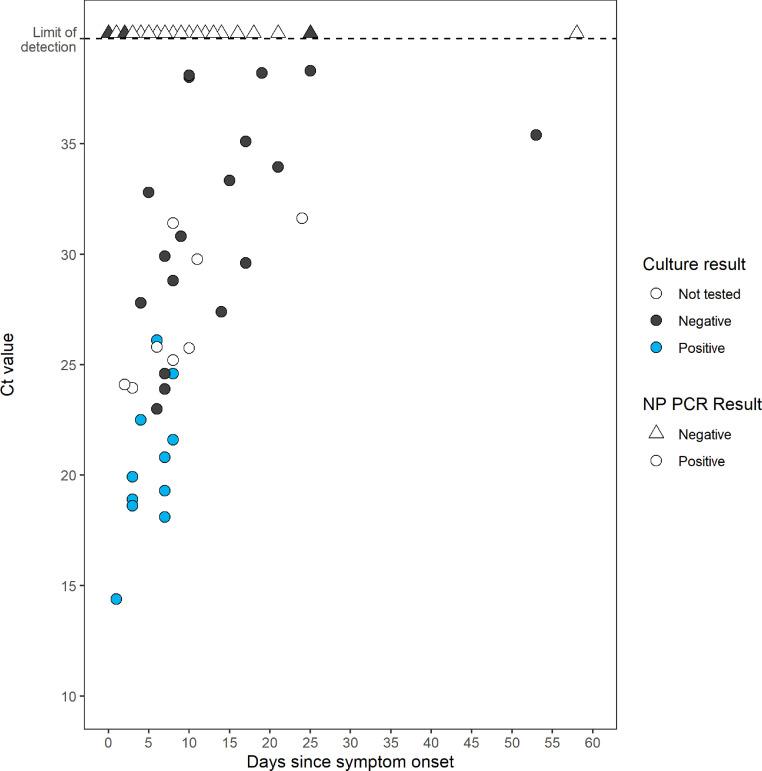
Diagnostic sensitivity was highest for RT-PCR testing conducted using specimens from the anterior nares collected on FLOQSwabs (84%; 95% CI 68-94%) and spun polyester swabs (82%; 95% CI 66-92%), compared to RT-PCR tests conducted using specimens from nasopharyngeal swabs. Relative to viral culture from nasopharyngeal swabs, diagnostic sensitivities were higher for RT-PCR and antigen testing of anterior nares swabs (91-100%) than that of tongue swabs (18-81%). Antigen testing of anterior nares swabs had higher sensitivities against viral culture (91%) than against nasopharyngeal RT-PCR (38-70%). All investigational tests had high specificity compared with nasopharyngeal RT-PCR. Spun polyester swabs are equally effective as FLOQSwabs for anterior nasal RT-PCR testing.
CONCLUSIONS
We found that anterior nares specimens were more sensitive than tongue swab specimens or antigen testing for detecting SARS-CoV-2 by RT-PCR. Thus, self-collected anterior nares specimens may represent an alternative method for diagnostic SARS-CoV-2 testing in some settings.
目的
本研究评估并比较了不同拭子类型和采集部位在 SARS-CoV-2 检测中的表现,以参考实时逆转录聚合酶链反应(RT-PCR)和病毒培养的标准。
方法
患有 COVID-19 的有症状成年人在常规 COVID-19 检测点使用纺聚酯和 FLOQ 拭子自行从前鼻和舌采集标本。我们通过 RT-PCR 评估了来自前鼻和舌拭子的自采集标本的 SARS-CoV-2 核衣壳(N)或刺突(S)抗原,并将这些结果与护士采集的鼻咽拭子的 RT-PCR 和病毒培养结果进行比较。
结果
使用 FLOQ 拭子(84%;95%CI 68-94%)和纺聚酯拭子(82%;95%CI 66-92%)采集的前鼻拭子标本进行的 RT-PCR 检测的诊断灵敏度最高,与鼻咽拭子进行的 RT-PCR 检测相比。与鼻咽拭子的病毒培养相比,前鼻拭子的 RT-PCR 和抗原检测的诊断灵敏度较高(91-100%),而舌拭子的灵敏度较低(18-81%)。前鼻拭子的抗原检测对病毒培养的灵敏度(91%)高于对鼻咽 RT-PCR(38-70%)。所有研究性检测与鼻咽 RT-PCR 相比特异性均较高。纺聚酯拭子在前鼻 RT-PCR 检测中的效果与 FLOQ 拭子相当。
结论
我们发现,在前鼻拭子标本中,通过 RT-PCR 检测 SARS-CoV-2 的灵敏度高于舌拭子标本或抗原检测。因此,在某些情况下,自我采集的前鼻标本可能代表一种替代的 SARS-CoV-2 诊断检测方法。

 Zotero 插件