
扩展 miRNA 组中的 microRNA 的发育调控和功能预测。
Developmental Regulation and Functional Prediction of microRNAs in an Expanded miRNome.
机构信息
School of Biological Sciences, Queen's University Belfast, Belfast, United Kingdom.
出版信息
Front Cell Infect Microbiol. 2022 Feb 10;12:811123. doi: 10.3389/fcimb.2022.811123. eCollection 2022.
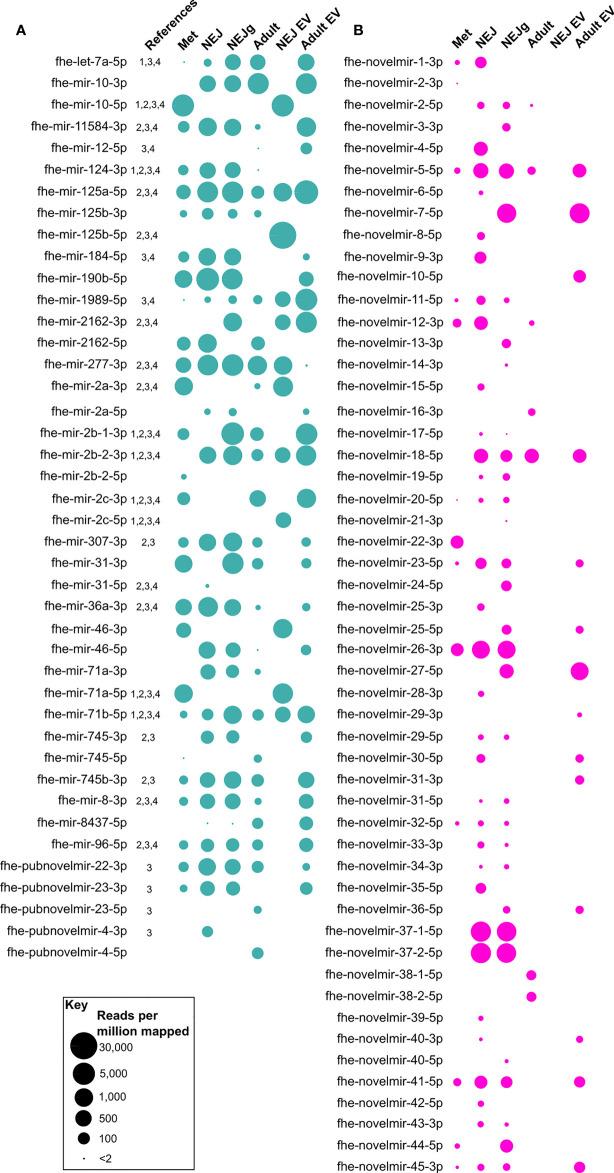
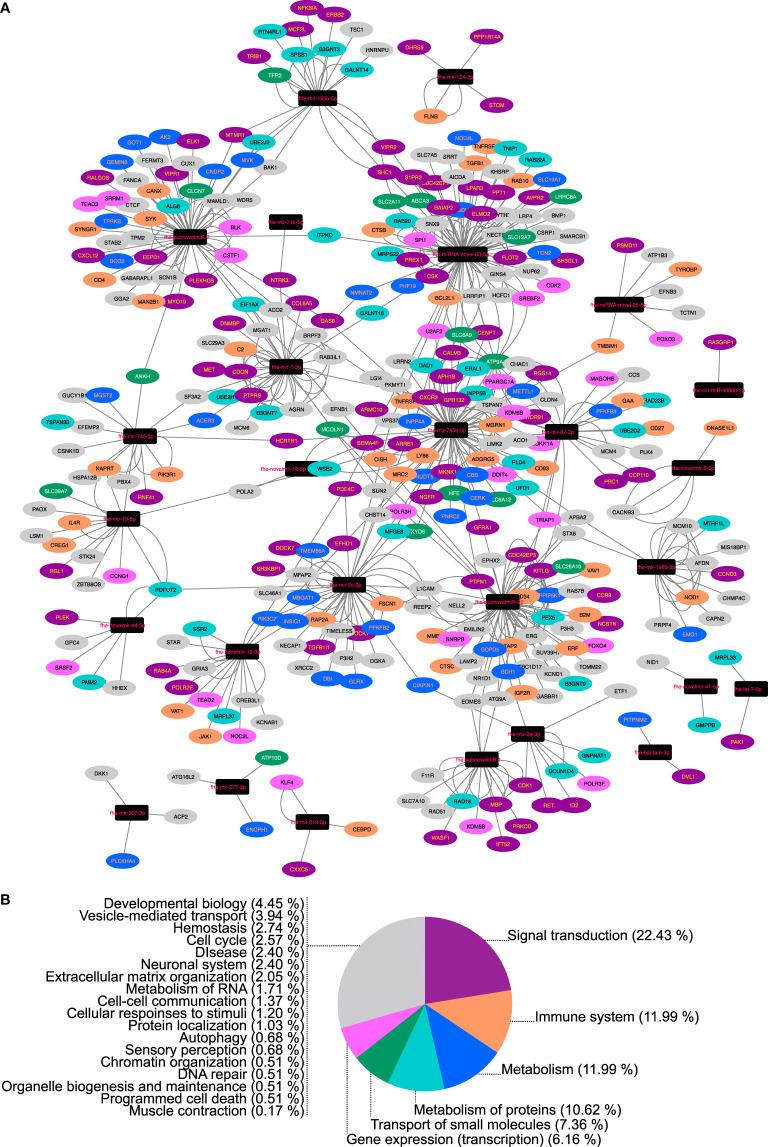
The liver fluke, , is a global burden on the wellbeing and productivity of farmed ruminants, and a zoonotic threat to human health. Despite the clear need for accelerated discovery of new drug and vaccine treatments for this pathogen, we still have a relatively limited understanding of liver fluke biology and host interactions. Noncoding RNAs, including micro (mi)RNAs, are key to transcriptional regulation in all eukaryotes, such that an understanding of miRNA biology can shed light on organismal function at a systems level. Four previous publications have reported up to 89 mature miRNA sequences from , but our data show that this does not represent a full account of this species miRNome. We have expanded on previous studies by sequencing, for the first time, miRNAs from multiple life stages (adult, newly excysted juvenile (NEJ), metacercariae and adult-derived extracellular vesicles (EVs)). These experiments detected an additional 61 high-confidence miRNAs, most of which have not been described in any other species, expanding the miRNome to 150 mature sequences. We used quantitative (q)PCR assays to provide the first developmental profile of miRNA expression across metacercariae, NEJ, adult and adult-derived Evs. The majority of miRNAs were expressed most highly in metacercariae, with at least six distinct expression clusters apparent across life stages. Intracellular miRNAs were functionally analyzed to identify target mRNAs with inversely correlated expression in tissue transcriptomes, highlighting regulatory interactions with key virulence transcripts including cathepsin proteases, and neuromuscular genes that control parasite growth, development and motility. We also linked 28 adult-derived EV miRNAs with downregulation of 397 host genes in -infected transcriptomes from ruminant lymph node, peripheral blood mononuclear cell (PBMC) and liver tissue transcriptomes. These included genes involved in signal transduction, immune and metabolic pathways, adding to the evidence for miRNA-based immunosuppression during fasciolosis. These data expand our understanding of the miRNome, provide the first data on developmental miRNA regulation in this species, and provide a set of testable hypotheses for functional genomics interrogations of liver fluke miRNA biology.
肝片形吸虫 ,是全球养殖反刍动物福利和生产力的负担,也是人类健康的人畜共患病威胁。尽管显然需要加速发现针对这种病原体的新药和疫苗治疗方法,但我们对肝片形吸虫的生物学和宿主相互作用仍然只有相对有限的了解。非编码 RNA,包括 micro (mi)RNAs,是所有真核生物转录调控的关键,因此对 miRNA 生物学的理解可以在系统水平上揭示生物体的功能。以前有四篇出版物报道了多达 89 个成熟的 序列,但我们的数据表明,这并不能代表该物种全部的 miRNome。我们通过首次对多个生命阶段(成虫、刚孵出的幼体(NEJ)、囊蚴和成虫衍生的细胞外囊泡(EVs))的 miRNA 进行测序,扩展了之前的研究。这些实验检测到了另外 61 个高可信度 miRNA,其中大多数在其他物种中没有描述,将 miRNome 扩展到 150 个成熟序列。我们使用定量 (q)PCR 测定法提供了 miRNA 表达在囊蚴、NEJ、成虫和成虫衍生的 EV 中的第一个发育谱。大多数 miRNA 在囊蚴中表达最高,至少有六个不同的表达簇在生命阶段中出现。对细胞内 miRNA 进行功能分析,以鉴定与组织转录组中表达呈负相关的靶 mRNA,突出了与关键毒力转录物的调控相互作用,包括组织蛋白酶蛋白酶和控制寄生虫生长、发育和运动的神经肌肉基因。我们还将 28 个成虫衍生的 EV miRNA 与感染反刍动物淋巴结、外周血单核细胞 (PBMC) 和肝组织转录组中的 397 个宿主基因的下调联系起来。这些基因涉及信号转导、免疫和代谢途径,进一步证明了 fasciolosis 期间基于 miRNA 的免疫抑制。这些数据扩展了我们对 miRNome 的理解,提供了该物种中 miRNA 发育调控的第一个数据,并为肝片形吸虫 miRNA 生物学的功能基因组学研究提供了一组可检验的假设。

 Zotero 插件