
了解印度古吉拉特邦民众对 COVID-19 疫苗接种的接受因素。
Understanding Factors to COVID-19 Vaccine Adoption in Gujarat, India.
机构信息
Post Graduate Department of Business Management, Sardar Patel University, Anand 388120, Gujarat, India.
Shanti Business School, Ahmedabad 380058, Gujarat, India.
出版信息
Int J Environ Res Public Health. 2022 Feb 25;19(5):2707. doi: 10.3390/ijerph19052707.
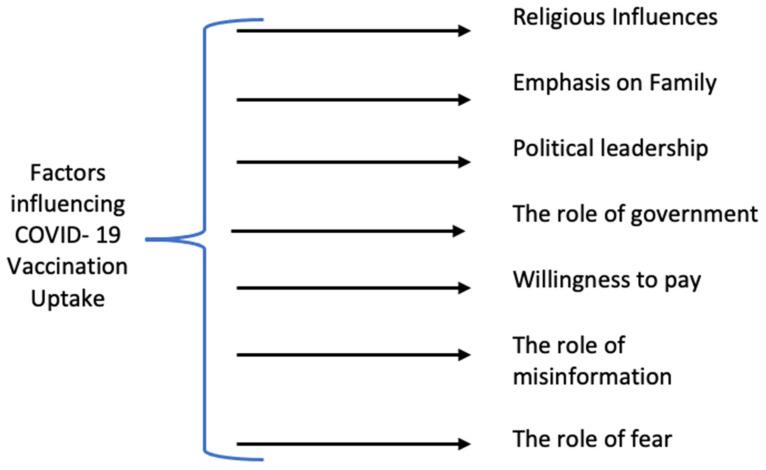
The COVID-19 pandemic has posed threats to human life across the globe, including India. Vaccinating is an effective means of addressing the pandemic threat. The government of India has implemented a massive vaccination drive to save its citizens from the deadly virus. However, the effort has faced multiple challenges, including vaccine hesitancy. This research understands respondents' perspectives on factors contributing to the lower vaccination uptake in Gujarat, India. Forty-four semi-structured interviews were conducted through convenience sampling representing different demographic backgrounds. Factors influencing vaccine adoption included religious leadership, political leadership and the government, and fear of side effects, especially among children and those with co-morbidities, resulting primarily from fake news and misinformation circulated through social media. Compared with nine countries from across the world, the study found similarities to vaccine hesitancy from misinformation and the fear of side effects among children. In contrast, the role of government and the influence of religious and political leaders was considered positive. The study recommends strategies to overcome people's apprehensions about the adoption of vaccination. These include offering incentives, providing positive peer-to-peer communication, recruiting influencers such as religious and community leaders and early adopters such as the elderly population to endorse vaccination, targeting youth through social media, and reaching rural sections by involving NGOs and social service groups.
新冠疫情在全球范围内对人类生命构成了威胁,包括印度。接种疫苗是应对疫情威胁的有效手段。印度政府实施了大规模的疫苗接种运动,以保护其公民免受致命病毒的侵害。然而,这项工作面临着多种挑战,包括疫苗犹豫。本研究旨在了解受访者对印度古吉拉特邦疫苗接种率较低的原因的看法。通过便利抽样法,共进行了 44 次半结构化访谈,代表了不同的人口统计学背景。影响疫苗接种的因素包括宗教领袖、政治领袖和政府,以及对副作用的恐惧,特别是儿童和患有合并症的人,这主要是由于社交媒体上传播的虚假新闻和错误信息。与来自世界各地的九个国家相比,该研究发现,在儿童中对错误信息和副作用的恐惧导致疫苗犹豫存在相似之处。相比之下,政府的作用和宗教及政治领袖的影响被认为是积极的。该研究建议采取策略来克服人们对接种疫苗的担忧。这些策略包括提供激励措施、提供积极的同伴间沟通、招募宗教和社区领袖等有影响力的人以及老年人等早期接种者来支持疫苗接种、通过社交媒体针对年轻人、并通过非政府组织和社会服务团体接触农村地区。
 Zotero 插件