
CRISPR/Cas:端粒和端粒酶研究的新工具以及一种新型的癌症治疗方法。
CRISPR/Cas: A New Tool in the Research of Telomeres and Telomerase as Well as a Novel Form of Cancer Therapy.
机构信息
Department of Biotechnology, Kakatiya University, Warangal 506009, Telangana, India.
Biosciences Institute, Campus for Ageing and Vitality, Newcastle University, Newcastle upon Tyne NE4 5PL, UK.
出版信息
Int J Mol Sci. 2022 Mar 10;23(6):3002. doi: 10.3390/ijms23063002.
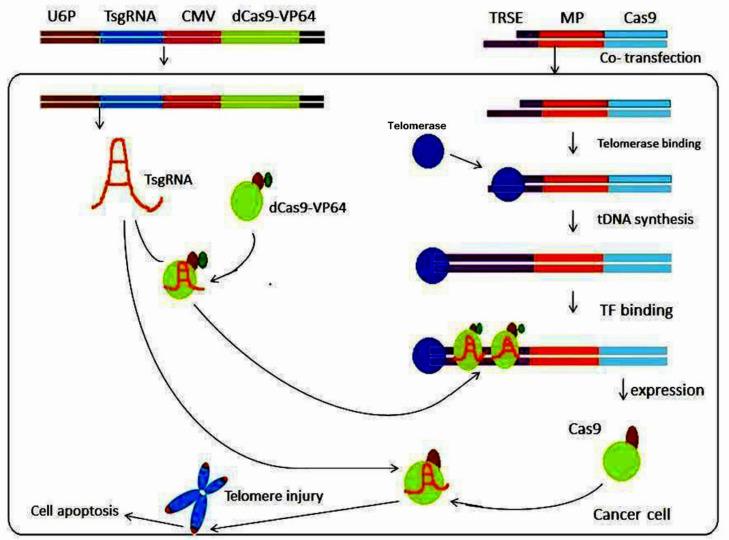
Due to their close connection with senescence, aging, and disease, telomeres and telomerase provide a unique and vital research route for boosting longevity and health span. Despite significant advances during the last three decades, earlier studies into these two biological players were impeded by the difficulty of achieving real-time changes inside living cells. As a result of the clustered regularly interspaced short palindromic repeats (CRISPR)-associated system's (Cas) method, targeted genetic studies are now underway to change telomerase, the genes that govern it as well as telomeres. This review will discuss studies that have utilized CRISPR-related technologies to target and modify genes relevant to telomeres and telomerase as well as to develop targeted anti-cancer therapies. These studies greatly improve our knowledge and understanding of cellular and molecular mechanisms that underlie cancer development and aging.
由于端粒和端粒酶与衰老、疾病密切相关,它们为延长寿命和健康寿命提供了一条独特而重要的研究途径。尽管在过去三十年中取得了重大进展,但由于难以在活细胞内实现实时变化,早期对这两种生物标志物的研究受到了阻碍。由于成簇规律间隔短回文重复序列(CRISPR)相关系统(Cas)方法的出现,现在可以进行靶向基因研究来改变端粒酶、控制端粒酶的基因以及端粒。本综述将讨论利用 CRISPR 相关技术靶向和修饰与端粒和端粒酶相关的基因以及开发靶向抗癌疗法的研究。这些研究极大地提高了我们对癌症发展和衰老的细胞和分子机制的认识和理解。

 Zotero 插件