
抗菌肽作为根除多重耐药菌生物被膜的替代方案
Antimicrobial Peptides as an Alternative for the Eradication of Bacterial Biofilms of Multi-Drug Resistant Bacteria.
作者信息
Pontes Janaína Teixeira Costa de, Toledo Borges Anna Beatriz, Roque-Borda Cesar Augusto, Pavan Fernando Rogério
机构信息
Tuberculosis Research Laboratory, School of Pharmaceutical Science, São Paulo State University (UNESP), Araraquara 14800-903, Brazil.
Vicerrectorado de Investigación, Universidad Católica de Santa María, Arequipa 04013, Peru.
出版信息
Pharmaceutics. 2022 Mar 15;14(3):642. doi: 10.3390/pharmaceutics14030642.
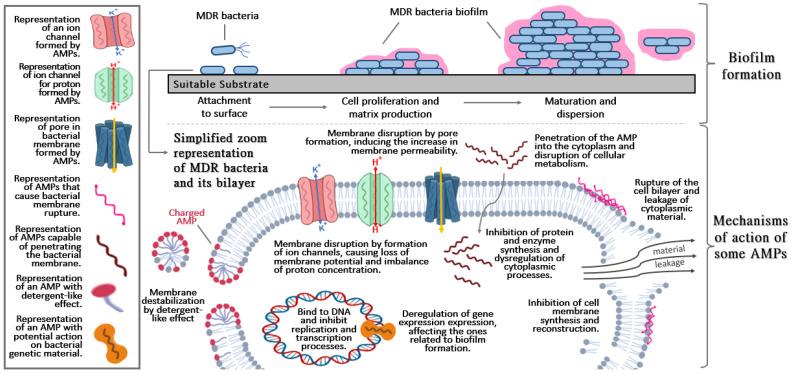
Bacterial resistance is an emergency public health problem worldwide, compounded by the ability of bacteria to form biofilms, mainly in seriously ill hospitalized patients. The World Health Organization has published a list of priority bacteria that should be studied and, in turn, has encouraged the development of new drugs. Herein, we explain the importance of studying new molecules such as antimicrobial peptides (AMPs) with potential against multi-drug resistant (MDR) and extensively drug-resistant (XDR) bacteria and focus on the inhibition of biofilm formation. This review describes the main causes of antimicrobial resistance and biofilm formation, as well as the main and potential AMP applications against these bacteria. Our results suggest that the new biomacromolecules to be discovered and studied should focus on this group of dangerous and highly infectious bacteria. Alternative molecules such as AMPs could contribute to eradicating biofilm proliferation by MDR/XDR bacteria; this is a challenging undertaking with promising prospects.
细菌耐药性是一个全球性的紧急公共卫生问题,细菌形成生物膜的能力使这一问题更加复杂,这一现象主要发生在重症住院患者中。世界卫生组织已公布了一份应开展研究的重点细菌清单,进而鼓励研发新药。在此,我们阐述了研究新型分子(如具有抗多重耐药菌(MDR)和广泛耐药菌(XDR)潜力的抗菌肽(AMP))的重要性,并着重探讨对生物膜形成的抑制作用。本综述描述了抗菌耐药性和生物膜形成的主要原因,以及针对这些细菌的主要和潜在的AMP应用。我们的结果表明,有待发现和研究的新型生物大分子应聚焦于这类危险且具有高度传染性的细菌。诸如AMP之类的替代分子可能有助于根除MDR/XDR细菌的生物膜增殖;这是一项具有挑战性但前景广阔的工作。
 Zotero 插件