
左侧结直肠癌患者淋巴细胞与单核细胞比值(LMR)、中性粒细胞与淋巴细胞比值(NLR)、血小板与淋巴细胞比值(PLR)与肿瘤浸润淋巴细胞(TILs)之间的相关性
Correlation between Lymphocyte-to-Monocyte Ratio (LMR), Neutrophil-to-Lymphocyte Ratio (NLR), Platelet-to-Lymphocyte Ratio (PLR) and Tumor-Infiltrating Lymphocytes (TILs) in Left-Sided Colorectal Cancer Patients.
作者信息
Gawiński Cieszymierz, Michalski Wojciech, Mróz Andrzej, Wyrwicz Lucjan
机构信息
M. Skłodowska-Curie National Research Institute of Oncology, ul. Wawelska 15, 02-034 Warsaw, Poland.
出版信息
Biology (Basel). 2022 Feb 28;11(3):385. doi: 10.3390/biology11030385.
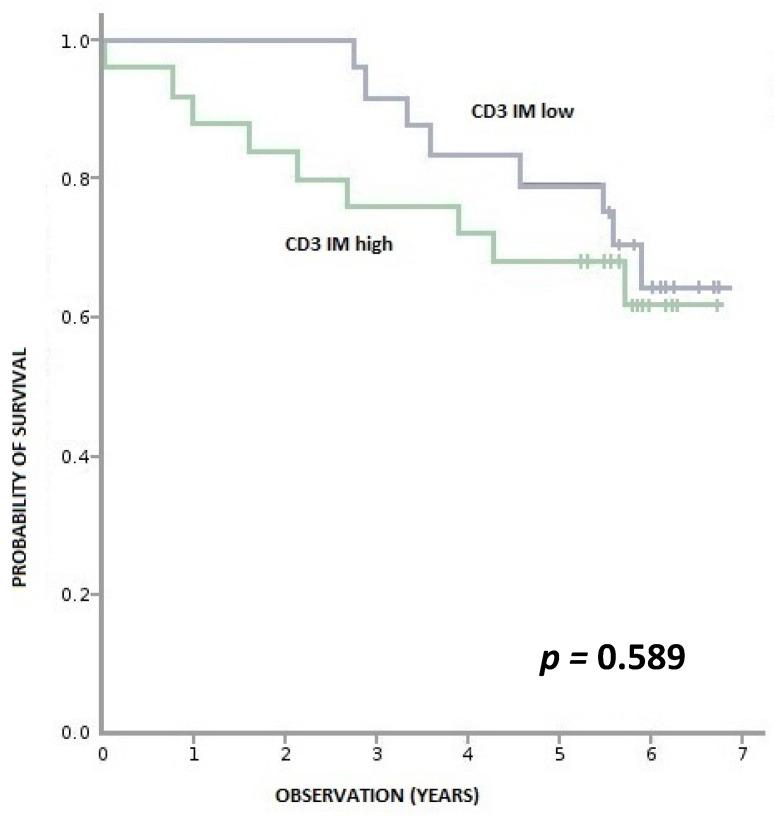
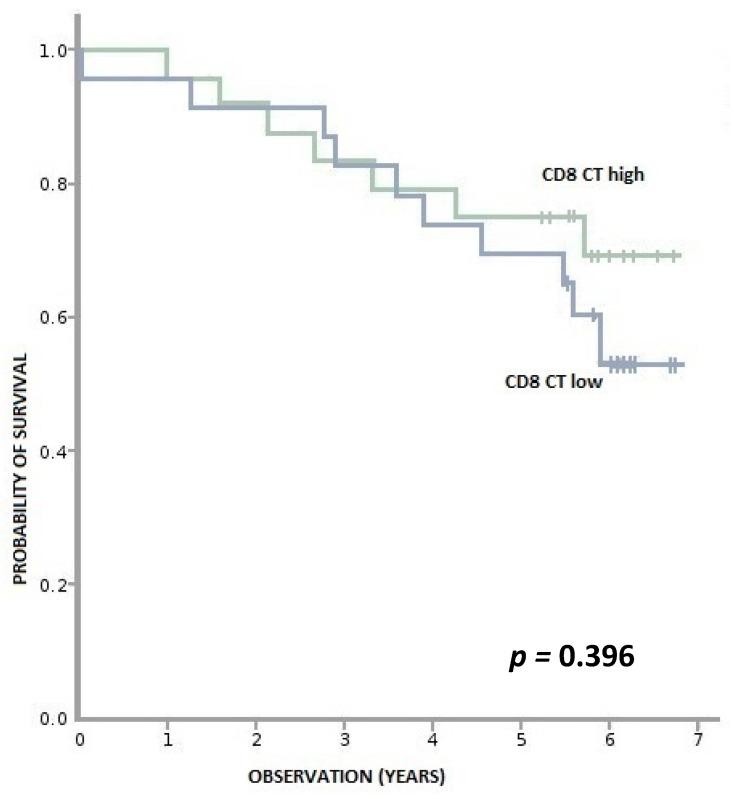
Colorectal cancer (CRC) is one of the leading causes of cancer-related mortality worldwide. Novel markers are required in order to select high-risk patients and better adjust the treatment. Both peripheral and local markers of cancer-related inflammation (CRI) such as lymphocyte-to-monocyte ratio (LMR), neutrophil-to-lymphocyte ratio (NLR) or platelet-to-lymphocyte ratio (PLR) and tumor-infiltrating lymphocytes (TILs) have been thoroughly investigated in recent years and deemed to be highly prognostic. We hypothesized that there is an association between local and peripheral CRI indices and that blood-based biomarkers may serve as a surrogate of TILs. We retrospectively analyzed 87 patients with locally advanced left-sided CRC treated with radical-intent surgery in the Maria Skłodowska-Curie National Research Institute of Oncology in Warsaw, Poland, between January 2014 and December 2015. Fifty patients were found eligible for the study. The patients were divided in terms of pre-treatment values of systemic inflammatory response (SIR) markers into LMR/NLR/PLR-high and low groups. We evaluated the resected specimens by immunohistochemistry in order to assess the densities of CD3+ and CD8+ lymphocytes in the center of the tumor and in the invasive margin. We found that the level of CD3+ lymphocytes in the center of the tumor was statistically significantly higher in patients with low pre-treatment NLR (p = 0.044); however, no correlation between any of the SIR markers and CD3+ or CD8+ TILs was observed. Five-year overall survival (OS) was longer in patients with high LMR (p < 0.001), low NLR (p = 0.001) and low PLR (p = 0.095). No correlation between the density of TILs and OS was demonstrated. In conclusion, based on our study, peripheral blood-based markers and CD3+ and CD8+ TILs are not interrelated.
结直肠癌(CRC)是全球癌症相关死亡的主要原因之一。为了筛选出高危患者并更好地调整治疗方案,需要新型标志物。近年来,癌症相关炎症(CRI)的外周和局部标志物,如淋巴细胞与单核细胞比值(LMR)、中性粒细胞与淋巴细胞比值(NLR)或血小板与淋巴细胞比值(PLR)以及肿瘤浸润淋巴细胞(TILs),都得到了深入研究,并被认为具有高度预后价值。我们假设局部和外周CRI指标之间存在关联,并且基于血液的生物标志物可能是TILs的替代指标。我们回顾性分析了2014年1月至2015年12月期间在波兰华沙玛丽亚·斯克洛多夫斯卡-居里国家肿瘤研究所接受根治性手术治疗的87例局部晚期左侧CRC患者。发现50例患者符合研究条件。根据全身炎症反应(SIR)标志物的治疗前值,将患者分为LMR/NLR/PLR高分组和低分组。我们通过免疫组织化学评估切除标本,以评估肿瘤中心和浸润边缘CD3 +和CD8 +淋巴细胞的密度。我们发现,治疗前NLR低的患者肿瘤中心CD3 +淋巴细胞水平在统计学上显著更高(p = 0.044);然而,未观察到任何SIR标志物与CD3 +或CD8 + TILs之间存在相关性。LMR高(p < 0.001)、NLR低(p = 0.001)和PLR低(p = 0.095)的患者5年总生存率(OS)更长。未证明TILs密度与OS之间存在相关性。总之,基于我们的研究,外周血标志物与CD3 +和CD8 + TILs不相关。





 Zotero 插件