
废物管理、COVID-19 和职业安全与健康:挑战、见解和证据。
Waste management, COVID-19 and occupational safety and health: Challenges, insights and evidence.
机构信息
State University of Santa Catarina (UDESC), Civil Engineering Master Program.
State University of Santa Catarina (UDESC), Center of Technological Sciences Department of Civil Engineering Laboratory of Hydrology, Risk and Disaster Management Coordinated Group (CEPED), 200, Paulo Malschitzki Street, 89219-710 Joinville, SC, Brazil.
出版信息
Sci Total Environ. 2022 Jul 20;831:154862. doi: 10.1016/j.scitotenv.2022.154862. Epub 2022 Mar 28.
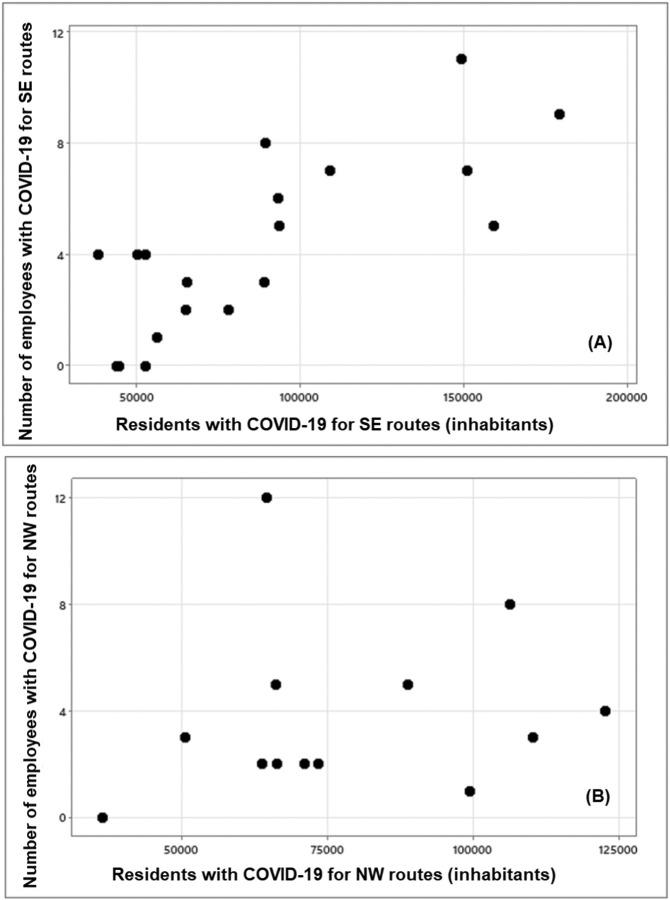
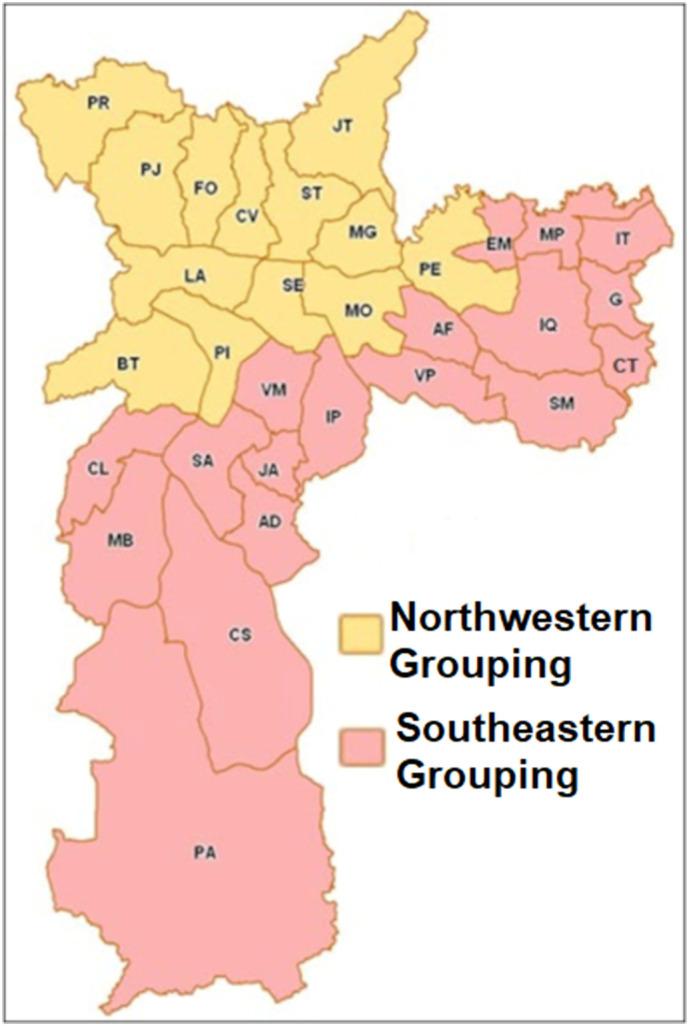
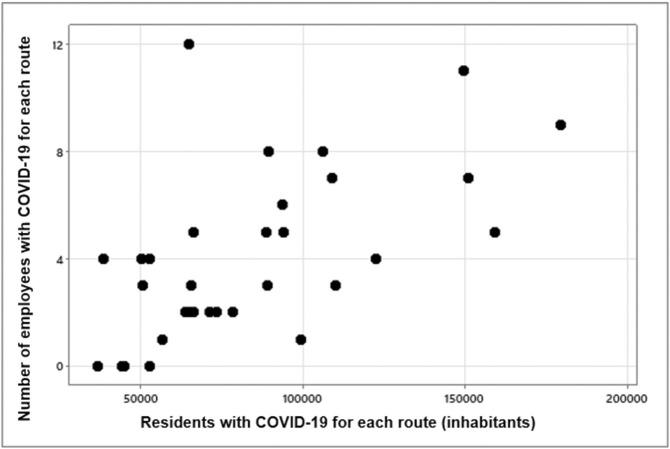
Different fields of knowledge have faced challenges due to the COVID-19 pandemic. Essential public services serving the population's needs were maintained. Previous studies have addressed the possibility of health hazards from handling solid waste (SW) among trash collection service workers, without introducing any data proving or dismissing those risks. Occupational health is stated in at least 2 of the 17 Sustainable Development Goals. Pearson Coefficient (r) was employed to analyze the correlation between the number of cases of COVID-19 in SW collection workers in the city of São Paulo, considering the district city halls where the COVID-19 patients live and the SW collection workers' route, from March 2020 to March 2021. Employees who collected wastes with COVID-19: 2% collected healthcare SD, 4% worked at the waste transshipment stations, 10% household variable route collection, and 83% in defined routes collecting household wastes. Positive and moderate correlation was confirmed (r = 0.59) between the total number of COVID-19 cases and the trash collection routes, and the number of contaminated COVID-19 workers from their trash collection routes. Considering concessionary companies separately, the correlation found in the Southeastern grouping is 0.77 (positive and high correlation), and the correlation found in the Northwestern grouping is 0.18 (positive but insignificant correlation). The Northwestern grouping's concessionary had implemented more effective occupational health and safety management policies and disclosed them among their stakeholders. Results suggest concern related to occupational health and safety for SW collection workers and substantiating the vulnerability of this essential activity during the pandemic.
不同领域的知识都受到了 COVID-19 大流行的挑战。为了满足人们的需求,基本公共服务得以维持。以前的研究已经探讨了垃圾收集服务工人在处理固体废物(SW)时可能面临的健康危害,但没有引入任何数据来证明或否认这些风险。职业健康是 17 个可持续发展目标中的至少 2 个目标的内容。采用皮尔逊系数(r)分析了 2020 年 3 月至 2021 年 3 月期间,圣保罗市 SW 收集工人的 COVID-19 病例数量与城市区政府(COVID-19 患者居住的区政府)和 SW 收集工人路线之间的相关性,考虑了与 COVID-19 患者一起收集废物的员工:2%收集医疗保健 SD,4%在废物转运站工作,10%的家庭可变路线收集,83%在规定路线中收集家庭废物。确认了 COVID-19 患者总数与垃圾收集路线之间存在正中和中度相关性(r = 0.59),并且从其垃圾收集路线中发现了受污染的 COVID-19 工人的数量。分别考虑特许权公司,东南组的相关性为 0.77(正且高度相关),西北组的相关性为 0.18(正但不显著相关)。西北组的特许权公司实施了更有效的职业健康和安全管理政策,并在其利益相关者中进行了披露。结果表明,对 SW 收集工人的职业健康和安全表示关注,并证实了在大流行期间这项基本活动的脆弱性。
 Zotero 插件