
细胞外cAMP-腺苷信号通路:慢性炎症性气道疾病的潜在治疗靶点。
Extracellular cAMP-Adenosine Pathway Signaling: A Potential Therapeutic Target in Chronic Inflammatory Airway Diseases.
作者信息
Pacini Enio Setsuo Arakaki, Satori Naiara Ayako, Jackson Edwin Kerry, Godinho Rosely Oliveira
机构信息
Division of Cellular Pharmacology, Department of Pharmacology, Universidade Federal de São Paulo, São Paulo, Brazil.
Department of Pharmacology and Chemical Biology, University of Pittsburgh School of Medicine, Pittsburgh, PA, United States.
出版信息
Front Immunol. 2022 Apr 11;13:866097. doi: 10.3389/fimmu.2022.866097. eCollection 2022.
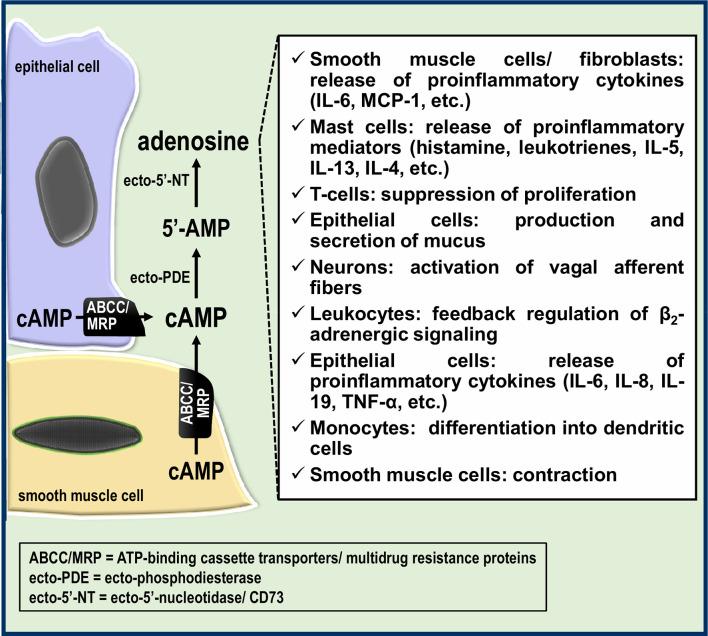
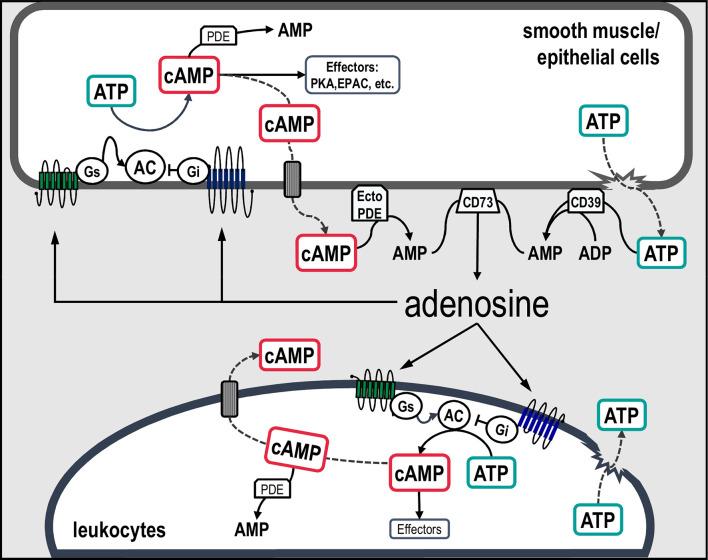
Adenosine is a purine nucleoside that, activation of distinct G protein-coupled receptors, modulates inflammation and immune responses. Under pathological conditions and in response to inflammatory stimuli, extracellular ATP is released from damaged cells and is metabolized to extracellular adenosine. However, studies over the past 30 years provide strong evidence for another source of extracellular adenosine, namely the "cAMP-adenosine pathway." The cAMP-adenosine pathway is a biochemical mechanism mediated by ATP-binding cassette transporters that facilitate cAMP efflux and by specific ectoenzymes that convert cAMP to AMP (ecto-PDEs) and AMP to adenosine (ecto-nucleotidases such as CD73). Importantly, the cAMP-adenosine pathway is operative in many cell types, including those of the airways. In airways, β-adrenoceptor agonists, which are used as bronchodilators for treatment of asthma and chronic respiratory diseases, stimulate cAMP efflux and thus trigger the extracellular cAMP-adenosine pathway leading to increased concentrations of extracellular adenosine in airways. In the airways, extracellular adenosine exerts pro-inflammatory effects and induces bronchoconstriction in patients with asthma and chronic obstructive pulmonary diseases. These considerations lead to the hypothesis that the cAMP-adenosine pathway attenuates the efficacy of β-adrenoceptor agonists. Indeed, our recent findings support this view. In this mini-review, we will highlight the potential role of the extracellular cAMP-adenosine pathway in chronic respiratory inflammatory disorders, and we will explore how extracellular cAMP could interfere with the regulatory effects of intracellular cAMP on airway smooth muscle and innate immune cell function. Finally, we will discuss therapeutic possibilities targeting the extracellular cAMP-adenosine pathway for treatment of these respiratory diseases.
腺苷是一种嘌呤核苷,通过激活不同的G蛋白偶联受体来调节炎症和免疫反应。在病理条件下以及对炎症刺激的反应中,细胞外ATP从受损细胞中释放出来,并代谢为细胞外腺苷。然而,过去30年的研究为细胞外腺苷的另一个来源提供了有力证据,即“cAMP - 腺苷途径”。cAMP - 腺苷途径是一种生化机制,由促进cAMP外流的ATP结合盒转运蛋白以及将cAMP转化为AMP(胞外磷酸二酯酶)和将AMP转化为腺苷(胞外核苷酸酶如CD73)的特定胞外酶介导。重要的是,cAMP - 腺苷途径在许多细胞类型中都起作用,包括气道细胞。在气道中,用作治疗哮喘和慢性呼吸道疾病的支气管扩张剂的β - 肾上腺素能受体激动剂会刺激cAMP外流,从而触发细胞外cAMP - 腺苷途径,导致气道中细胞外腺苷浓度升高。在气道中,细胞外腺苷具有促炎作用,并在哮喘和慢性阻塞性肺疾病患者中诱导支气管收缩。这些考虑因素引出了一个假设,即cAMP - 腺苷途径会削弱β - 肾上腺素能受体激动剂的疗效。事实上,我们最近的研究结果支持了这一观点。在本综述中,我们将强调细胞外cAMP - 腺苷途径在慢性呼吸道炎症性疾病中的潜在作用,并探讨细胞外cAMP如何干扰细胞内cAMP对气道平滑肌和固有免疫细胞功能的调节作用。最后,我们将讨论针对细胞外cAMP - 腺苷途径治疗这些呼吸道疾病的治疗可能性。
 Zotero 插件