
外泌体长链非编码 RNA RP5-977B1 作为一种新型微创生物标志物用于非小细胞肺癌的诊断和预后评估。
Exosomal LncRNA RP5-977B1 as a novel minimally invasive biomarker for diagnosis and prognosis in non-small cell lung cancer.
机构信息
Laboratory Medicine Center, Nanfang Hospital, Southern Medical University, No. 1838 Guangzhouda Road, Guangzhou, 510515, Guangdong, China.
Department of Laboratory Medicine, Affiliated Cancer Hospital and Institute of Guangzhou Medical University, Guangzhou, 510095, Guangdong, China.
出版信息
Int J Clin Oncol. 2022 Jun;27(6):1013-1024. doi: 10.1007/s10147-022-02129-5. Epub 2022 Apr 28.
BACKGROUND
Lung cancer is the leading cause of cancer-related deaths in the world. Non-small cell lung cancer (NSCLC) accounts for 85% of all lung cancer cases. For lack of conveniently sensitive and specific biomarkers, the majority of patients are in the late stage at initial diagnosis. Long non-coding RNAs (LncRNAs), a novel type of non-coding RNA, have recently been recognized as critical factors in tumor initiation and progression, but the role of exosomal LncRNAs has not been thoroughly excavated in NSCLC yet.
METHODS
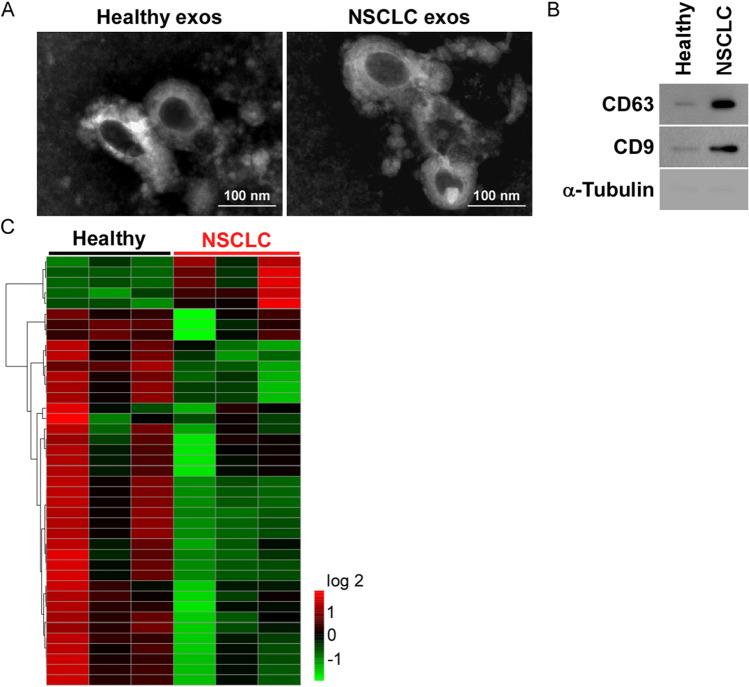
We isolated exosomes from the serum of patients with NSCLC and healthy controls. Exosome RNA deep sequencing was subsequently performed to detect differentially expressed exosomal LncRNAs. qRT-PCR assay was then utilized to validate dysregulated LncRNAs in both testing and multicentric validation cohort. Receiver operating characteristic (ROC) curve was used to detect the diagnostic capability of exosomal biomarkers. Furthermore, Kaplan-Meier analysis was applied to evaluate the prognostic values of these molecules.
RESULTS
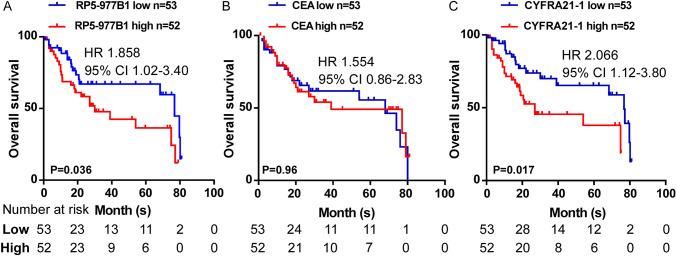
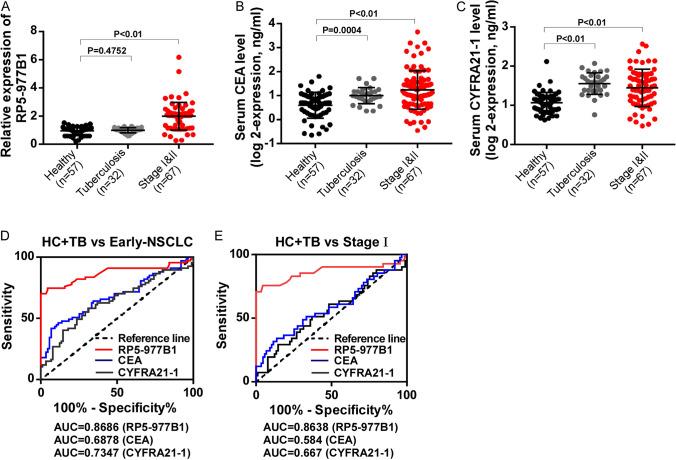
On the basis of analysis, we found that novel exosomal LncRNA RP5-977B1 exhibited higher levels in NSCLC than that in the healthy controls. The area under the curve (AUC) value of exosomal RP5-977B1 was 0.8899 and superior to conventional biomarkers CEA and CYFRA21-1 both in testing and multicentric validation cohort. Interestingly, the diagnostic capability of exosomal RP5-977B1 was also validated in early-stage patients with NSCLC. Furthermore, high expression of exosomal RP5-977B1was closely related with worse prognosis in NSCLC (P = 0.036).
CONCLUSIONS
Our results suggested that exosomal RP5-977B1 might serve as a novel "liquid biopsy" diagnostic and prognostic biomarker to monitor NSCLC and improve possible therapy.
背景
肺癌是全球癌症相关死亡的主要原因。非小细胞肺癌(NSCLC)占所有肺癌病例的 85%。由于缺乏方便、敏感和特异的生物标志物,大多数患者在初始诊断时已处于晚期。长链非编码 RNA(lncRNAs)作为一种新型非编码 RNA,最近被认为是肿瘤发生和进展的关键因素,但外泌体 lncRNAs 在 NSCLC 中的作用尚未被彻底挖掘。
方法
我们从 NSCLC 患者和健康对照者的血清中分离出外泌体。随后进行外泌体 RNA 深度测序,以检测差异表达的外泌体 lncRNAs。qRT-PCR 检测用于验证检测和多中心验证队列中失调的 lncRNAs。采用受试者工作特征(ROC)曲线检测外泌体标志物的诊断能力。此外,Kaplan-Meier 分析用于评估这些分子的预后价值。
结果
基于分析,我们发现新型外泌体 lncRNA RP5-977B1 在 NSCLC 中的水平高于健康对照组。外泌体 RP5-977B1 的曲线下面积(AUC)值为 0.8899,在检测和多中心验证队列中均优于传统标志物 CEA 和 CYFRA21-1。有趣的是,外泌体 RP5-977B1 的诊断能力在 NSCLC 早期患者中也得到了验证。此外,外泌体 RP5-977B1 的高表达与 NSCLC 患者的预后不良密切相关(P=0.036)。
结论
我们的研究结果表明,外泌体 RP5-977B1 可能作为一种新的“液体活检”诊断和预后生物标志物,用于监测 NSCLC 并改善可能的治疗效果。


 Zotero 插件