
利用趋化因子系统将 CAR-T 细胞归巢到实体肿瘤中。
Harnessing the chemokine system to home CAR-T cells into solid tumors.
机构信息
Chemokine Biology Laboratory, Department of Molecular and Biomedical Science, School of Biological Sciences, The University of Adelaide, Adelaide, SA 5005, Australia.
Carina Biotech, Innovation and Collaboration Centre, The University of South Australia, Adelaide, SA 5000, Australia.
出版信息
Cell Rep Med. 2022 Feb 28;3(3):100543. doi: 10.1016/j.xcrm.2022.100543. eCollection 2022 Mar 15.
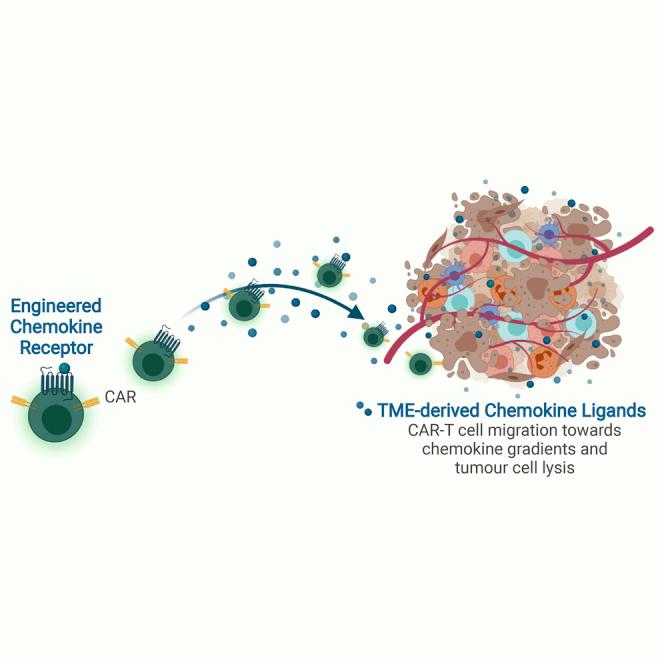
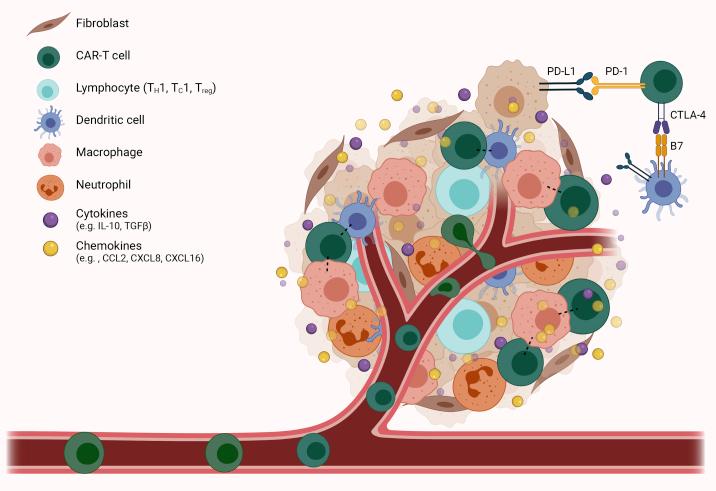
CAR-T cell therapy has been heralded as a breakthrough in the field of immunotherapy, but to date, this success has been limited to hematological malignancies. By harnessing the chemokine system and taking into consideration the chemokine expression profile in the tumor microenvironment, CAR-T cells may be homed into tumors to facilitate direct tumor cell cytolysis and overcome a major hurdle in generating effective CAR-T cell responses to solid cancers.
嵌合抗原受体 T 细胞疗法被誉为免疫疗法领域的一项突破,但迄今为止,这种成功仅限于血液系统恶性肿瘤。通过利用趋化因子系统并考虑肿瘤微环境中的趋化因子表达谱,CAR-T 细胞可能归巢到肿瘤中,以促进直接肿瘤细胞细胞溶解,并克服产生针对实体瘤的有效 CAR-T 细胞反应的主要障碍。

 Zotero 插件