
多组学揭示了肥胖相关免疫细胞表型在小鼠减肥和体重反弹过程中在脂肪组织中的持续存在。
Multiomics reveals persistence of obesity-associated immune cell phenotypes in adipose tissue during weight loss and weight regain in mice.
机构信息
Department of Molecular Physiology and Biophysics, Vanderbilt University School of Medicine, Nashville, TN, USA.
VA Tennessee Valley Healthcare System, Nashville, TN, USA.
出版信息
Nat Commun. 2022 May 26;13(1):2950. doi: 10.1038/s41467-022-30646-4.
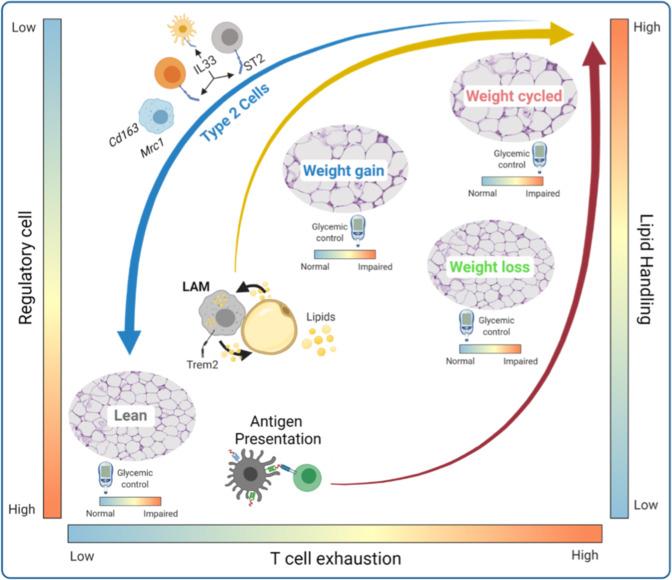
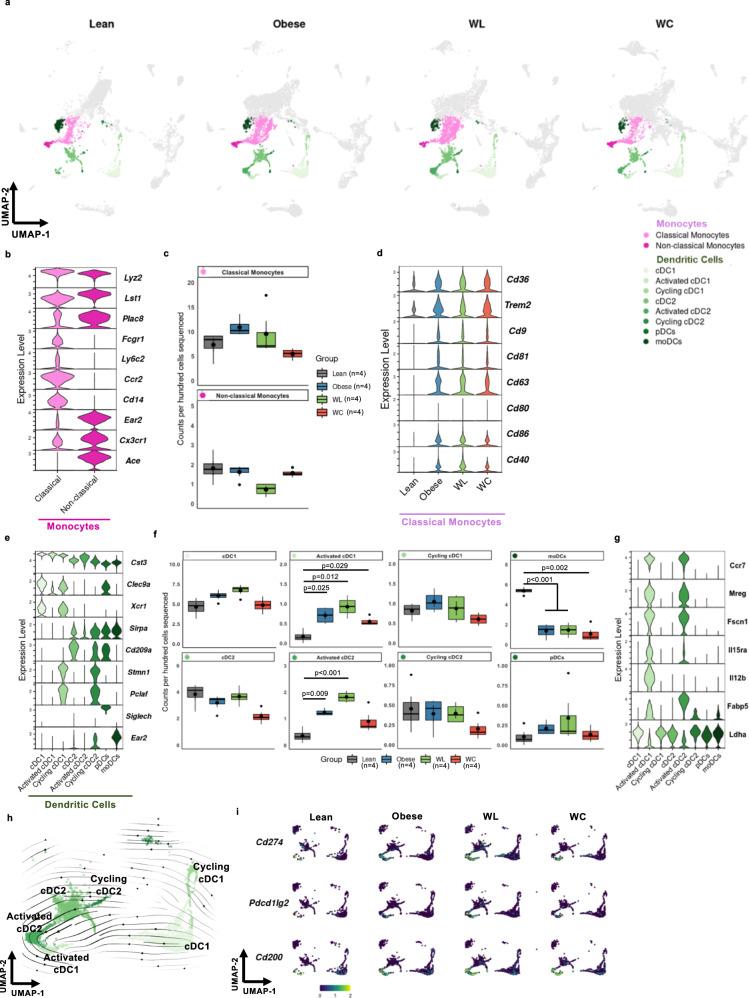
Within adipose tissue (AT), immune cells and parenchymal cells closely interact creating a complex microenvironment. In obesity, immune cell derived inflammation contributes to insulin resistance and glucose intolerance. Diet-induced weight loss improves glucose tolerance; however, weight regain further exacerbates the impairment in glucose homeostasis observed with obesity. To interrogate the immunometabolic adaptations that occur in AT during murine weight loss and weight regain, we utilized cellular indexing of transcriptomes and epitopes by sequencing (CITEseq) in male mice. Obesity-induced imprinting of AT immune cells persisted through weight-loss and progressively worsened with weight regain, ultimately leading to impaired recovery of type 2 regulatory cells, activation of antigen presenting cells, T cell exhaustion, and enhanced lipid handling in macrophages in weight cycled mice. This work provides critical groundwork for understanding the immunological causes of weight cycling-accelerated metabolic disease. For further discovery, we provide an open-access web portal of diet-induced AT immune cell imprinting: https://hastylab.shinyapps.io/MAIseq .
在脂肪组织 (AT) 中,免疫细胞和实质细胞密切相互作用,形成一个复杂的微环境。在肥胖中,免疫细胞来源的炎症导致胰岛素抵抗和葡萄糖耐量受损。饮食诱导的体重减轻改善了葡萄糖耐量;然而,体重反弹进一步加剧了肥胖时观察到的葡萄糖稳态受损。为了研究在雄性小鼠的体重减轻和体重反弹期间 AT 中发生的免疫代谢适应性,我们利用了细胞转录组和表位测序的细胞索引 (CITEseq)。肥胖诱导的 AT 免疫细胞印记在体重减轻期间持续存在,并随着体重反弹逐渐恶化,最终导致 2 型调节性细胞的恢复受损,抗原呈递细胞的激活,T 细胞耗竭,以及巨噬细胞中脂质处理能力增强。这项工作为理解体重反弹加速代谢性疾病的免疫学原因提供了重要的基础。为了进一步发现,我们提供了一个饮食诱导的 AT 免疫细胞印记的开放访问网络门户:https://hastylab.shinyapps.io/MAIseq。



 Zotero 插件