
限制检查点控制刚地弓形虫的缓殖子发育。
Restriction Checkpoint Controls Bradyzoite Development in Toxoplasma gondii.
机构信息
Department of Internal Medicine, Division of Infectious Diseases and International Medicine, Morsani College of Medicine, University of South Floridagrid.170693.a, Tampa, Florida, USA.
Center for Global Health and Infectious Diseases Research and USF Genomics Program, College of Public Health, University of South Floridagrid.170693.a, Tampa, Florida, USA.
出版信息
Microbiol Spectr. 2022 Jun 29;10(3):e0070222. doi: 10.1128/spectrum.00702-22. Epub 2022 Jun 2.
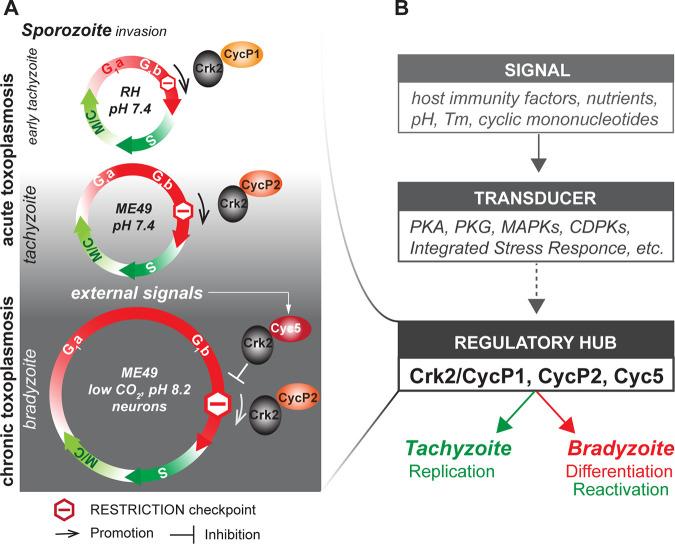
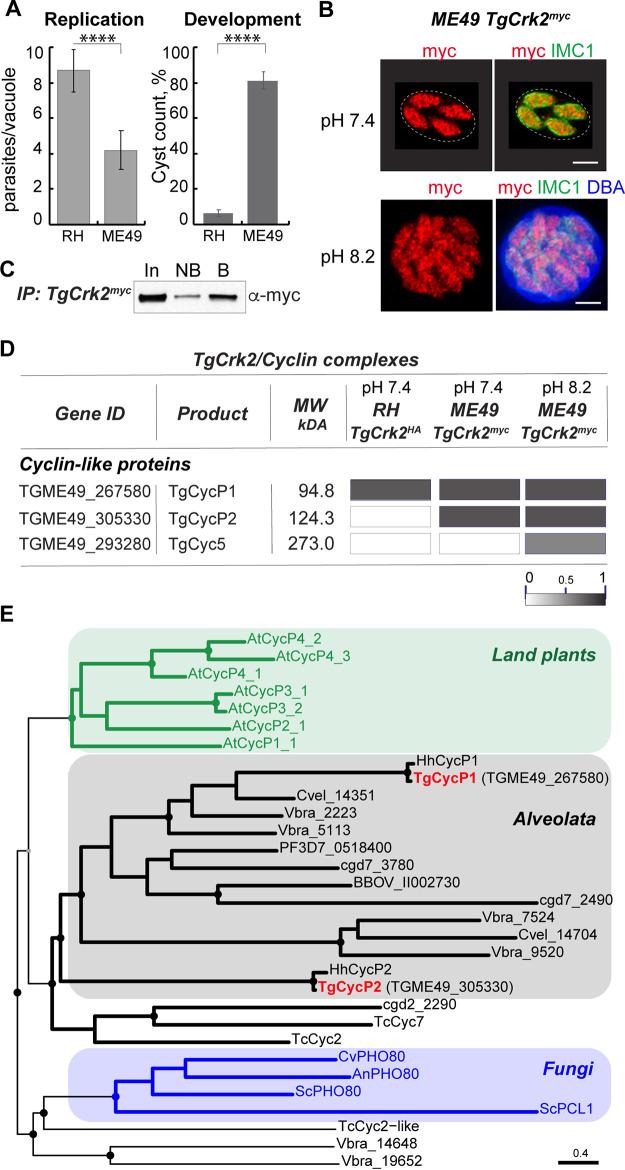
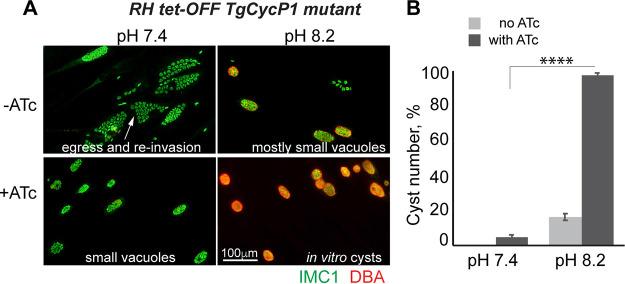
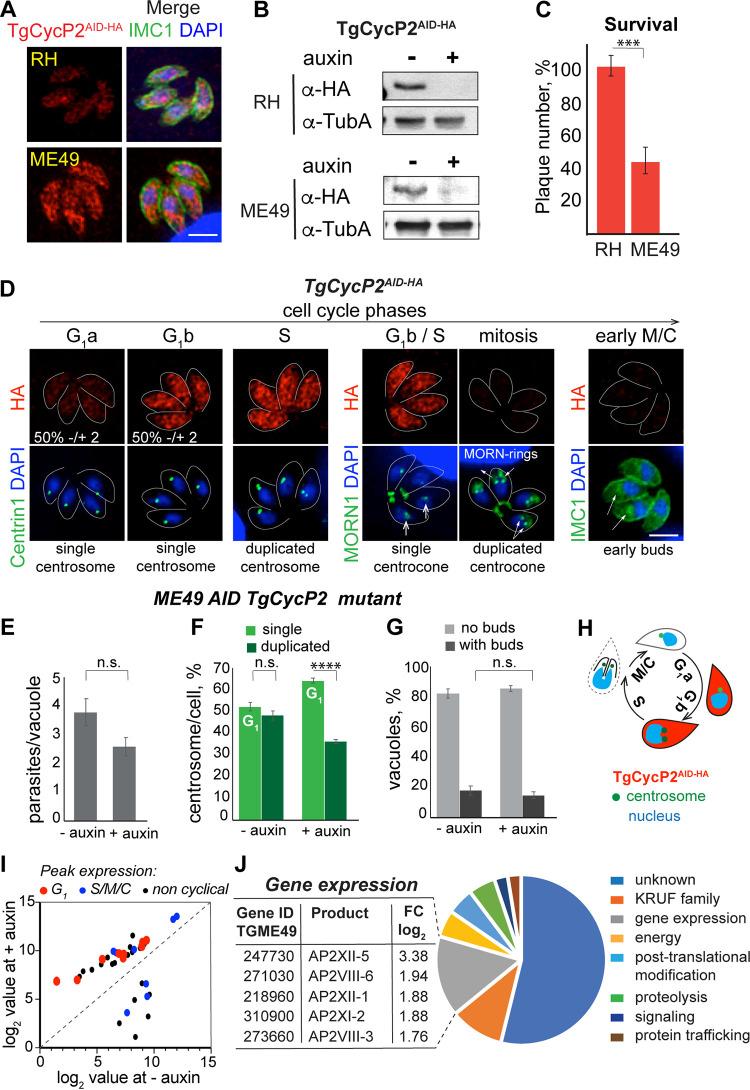
Human toxoplasmosis is a life-threatening disease caused by the apicomplexan parasite Toxoplasma gondii. Rapid replication of the tachyzoite is associated with symptomatic disease, while suppressed division of the bradyzoite is responsible for chronic disease. Here, we identified the T. gondii cell cycle mechanism, the G restriction checkpoint (R-point), that operates the switch between parasite growth and differentiation. Apicomplexans lack conventional R-point regulators, suggesting adaptation of alternative factors. We showed that Cdk-related G kinase TgCrk2 forms alternative complexes with atypical cyclins (TgCycP1, TgCycP2, and TgCyc5) in the rapidly dividing developmentally incompetent RH and slower dividing developmentally competent ME49 tachyzoites and bradyzoites. Examination of cyclins verified the correlation of cyclin expression with growth dependence and development capacity of RH and ME49 strains. We demonstrated that rapidly dividing RH tachyzoites were dependent on TgCycP1 expression, which interfered with bradyzoite differentiation. Using the conditional knockdown model, we established that TgCycP2 regulated G duration in the developmentally competent ME49 tachyzoites but not in the developmentally incompetent RH tachyzoites. We tested the functions of TgCycP2 and TgCyc5 in alkaline induced and spontaneous bradyzoite differentiation (rat embryonic brain cells) models. Based on functional and global gene expression analyses, we determined that TgCycP2 also regulated bradyzoite replication, while signal-induced TgCyc5 was critical for efficient tissue cyst maturation. In conclusion, we identified the central machinery of the T. gondii restriction checkpoint comprised of TgCrk2 kinase and three atypical T. gondii cyclins and demonstrated the independent roles of TgCycP1, TgCycP2, and TgCyc5 in parasite growth and development. Toxoplasma gondii is a virulent and abundant human pathogen that puts millions of silently infected people at risk of reactivation of the chronic disease. Encysted bradyzoites formed during the chronic stage are resistant to current therapies. Therefore, insights into the mechanism of tissue cyst formation and reactivation are major areas of investigation. The fact that rapidly dividing parasites differentiate poorly strongly suggests that there is a threshold of replication rate that must be crossed to be considered for differentiation. We discovered a cell cycle mechanism that controls the T. gondii growth-rest switch involved in the conversion of dividing tachyzoites into largely quiescent bradyzoites. This switch operates the T. gondii restriction checkpoint using a set of atypical and parasite-specific regulators. Importantly, the novel T. gondii R-point network was not present in the parasite's human and animal hosts, offering a wealth of new and parasite-specific drug targets to explore in the future.
人类弓形体病是一种由顶复门寄生虫刚地弓形虫引起的危及生命的疾病。速殖子的快速复制与有症状的疾病有关,而缓殖子的分裂受到抑制则与慢性疾病有关。在这里,我们确定了刚地弓形虫的细胞周期机制,即 G 限制检查点(R 点),它控制着寄生虫生长和分化之间的转换。顶复门生物缺乏传统的 R 点调节剂,这表明它们适应了替代因素。我们表明,与细胞周期蛋白相关的 G 激酶 TgCrk2 在快速分裂的发育无能 RH 和较慢分裂的发育能力 ME49 速殖体和缓殖体中与非典型细胞周期蛋白(TgCycP1、TgCycP2 和 TgCyc5)形成替代复合物。对细胞周期蛋白的检查证实了细胞周期蛋白表达与 RH 和 ME49 株的生长依赖性和发育能力的相关性。我们证明了快速分裂的 RH 速殖体依赖 TgCycP1 的表达,这干扰了缓殖体的分化。使用条件性敲低模型,我们建立了 TgCycP2 在发育能力强的 ME49 速殖体中调节 G 持续时间,但在发育能力弱的 RH 速殖体中不调节。我们测试了 TgCycP2 和 TgCyc5 在碱性诱导和自发的缓殖体分化(大鼠胚胎脑细胞)模型中的功能。基于功能和全基因表达分析,我们确定 TgCycP2 还调节缓殖体复制,而信号诱导的 TgCyc5 对于有效的组织包囊成熟至关重要。总之,我们确定了刚地弓形虫限制检查点的中心机制,包括 TgCrk2 激酶和三种非典型的刚地弓形虫细胞周期蛋白,并证明了 TgCycP1、TgCycP2 和 TgCyc5 在寄生虫生长和发育中的独立作用。刚地弓形虫是一种毒力强、数量多的人类病原体,使数百万沉默感染的人面临慢性疾病复发的风险。在慢性阶段形成的包囊缓殖体对目前的治疗具有抗性。因此,对组织包囊形成和再激活机制的深入了解是主要的研究领域。快速分裂的寄生虫分化不良的事实强烈表明,必须跨越一个复制率的阈值,才能被认为是分化的候选者。我们发现了一种控制 T. gondii 生长限制开关的细胞周期机制,该机制涉及将分裂的速殖子转化为基本静止的缓殖子。该开关使用一组非典型和寄生虫特异性调节剂来控制刚地弓形虫的 R 点检查点。重要的是,寄生虫的人类和动物宿主中不存在新型的刚地弓形虫 R 点网络,为未来探索提供了丰富的新的和寄生虫特异性的药物靶点。


 Zotero 插件