
跳出固有思维:多发性硬化症中的非经典靶点。
Thinking outside the box: non-canonical targets in multiple sclerosis.
机构信息
Department of Neurology, Institute of Translational Neurology, University Hospital Münster, Münster, Germany.
Department of Neurology, Medical Faculty, Heinrich Heine University Düsseldorf, Düsseldorf, Germany.
出版信息
Nat Rev Drug Discov. 2022 Aug;21(8):578-600. doi: 10.1038/s41573-022-00477-5. Epub 2022 Jun 6.
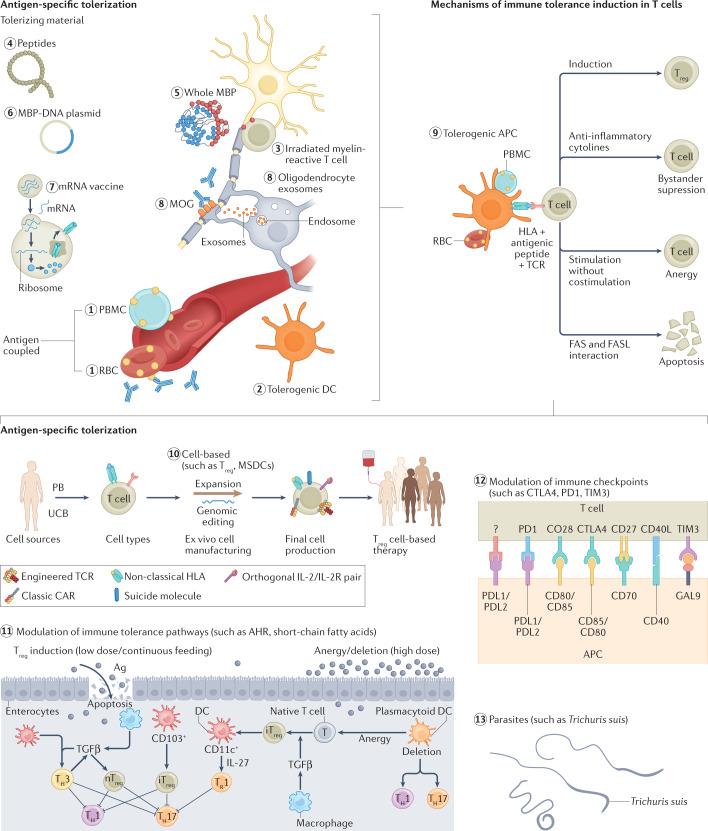
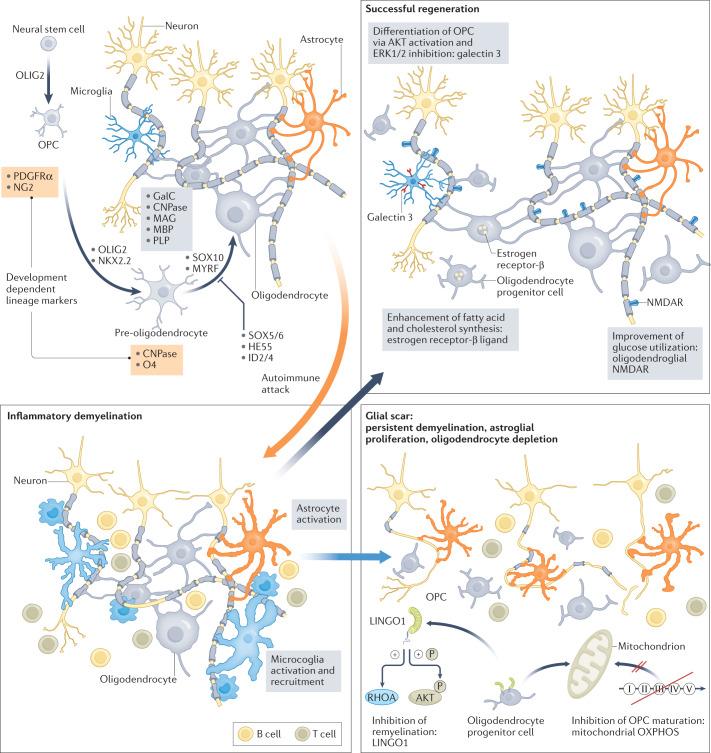
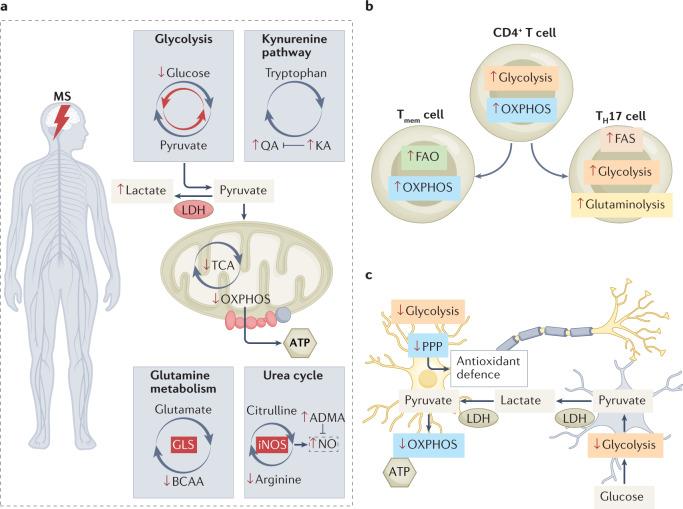
Multiple sclerosis (MS) is an immune-mediated disease of the central nervous system that causes demyelination, axonal degeneration and astrogliosis, resulting in progressive neurological disability. Fuelled by an evolving understanding of MS immunopathogenesis, the range of available immunotherapies for clinical use has expanded over the past two decades. However, MS remains an incurable disease and even targeted immunotherapies often fail to control insidious disease progression, indicating the need for new and exceptional therapeutic options beyond the established immunological landscape. In this Review, we highlight such non-canonical targets in preclinical MS research with a focus on five highly promising areas: oligodendrocytes; the blood-brain barrier; metabolites and cellular metabolism; the coagulation system; and tolerance induction. Recent findings in these areas may guide the field towards novel targets for future therapeutic approaches in MS.
多发性硬化症(MS)是一种中枢神经系统的免疫介导性疾病,可导致脱髓鞘、轴突变性和星形胶质细胞增生,从而导致进行性神经功能障碍。随着对 MS 免疫发病机制的不断深入了解,过去二十年中,可用于临床的免疫疗法的范围不断扩大。然而,MS 仍然是一种不可治愈的疾病,即使是靶向免疫疗法也常常无法控制隐匿性疾病进展,这表明需要超越既定免疫领域的新的、特殊的治疗选择。在这篇综述中,我们重点介绍了临床前 MS 研究中具有前景的五个非经典靶点:少突胶质细胞;血脑屏障;代谢物和细胞代谢;凝血系统;以及诱导耐受。这些领域的最新发现可能为 MS 的未来治疗方法提供新的靶点。



 Zotero 插件