
SARS-CoV-2 刺突蛋白的弗林蛋白酶裂解位点和 S2'碱性残基以宿主细胞依赖的方式调节进入过程。
SARS-CoV-2 Spike Furin Cleavage Site and S2' Basic Residues Modulate the Entry Process in a Host Cell-Dependent Manner.
机构信息
University of Lille, CNRS, Inserm, CHU Lille, Institut Pasteur de Lille, U1019 - UMR 9017 - CIIL - Center for Infection and Immunity of Lille, Lille, France.
出版信息
J Virol. 2022 Jul 13;96(13):e0047422. doi: 10.1128/jvi.00474-22. Epub 2022 Jun 9.
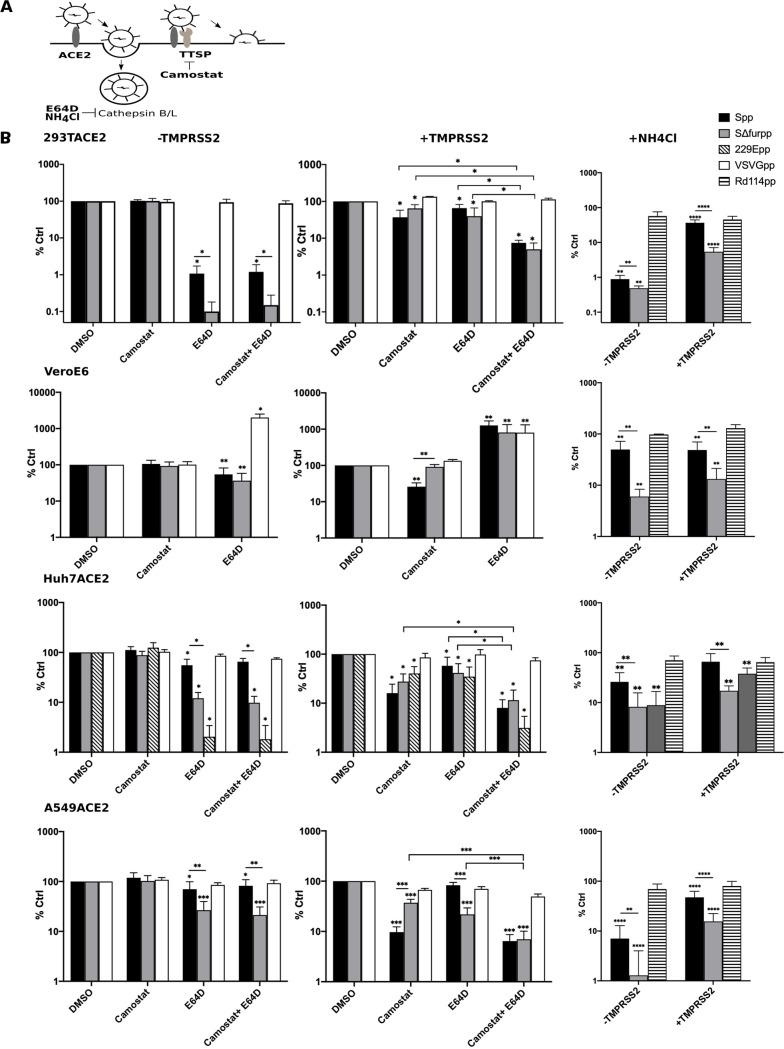
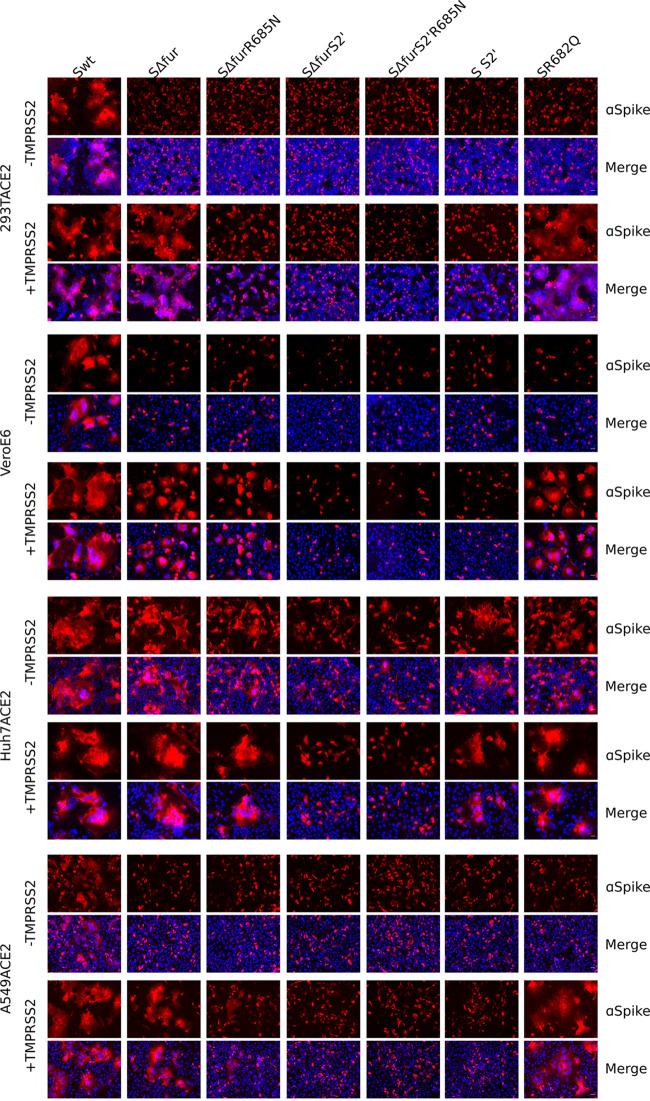
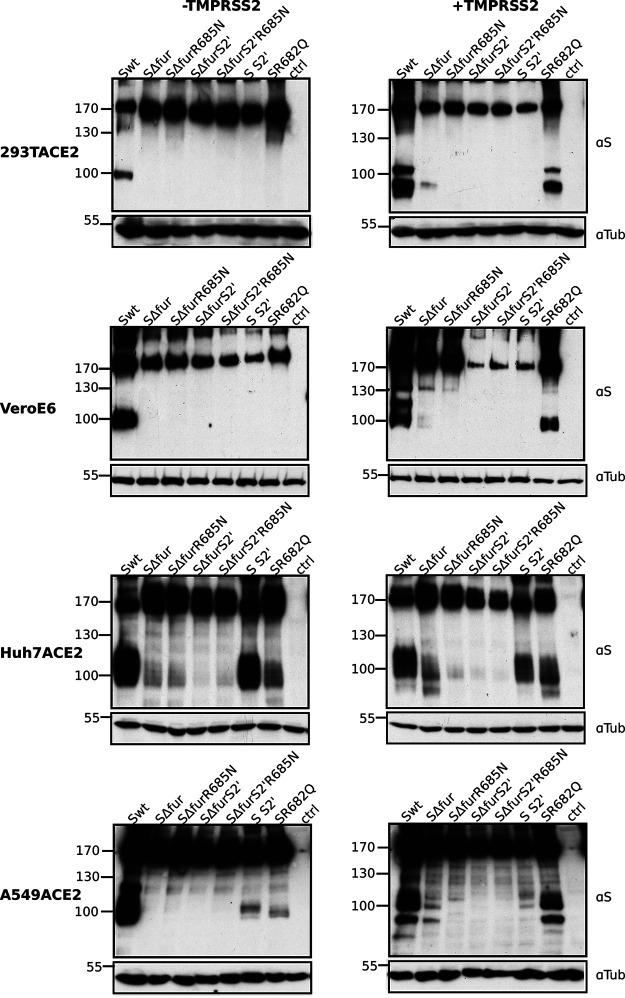
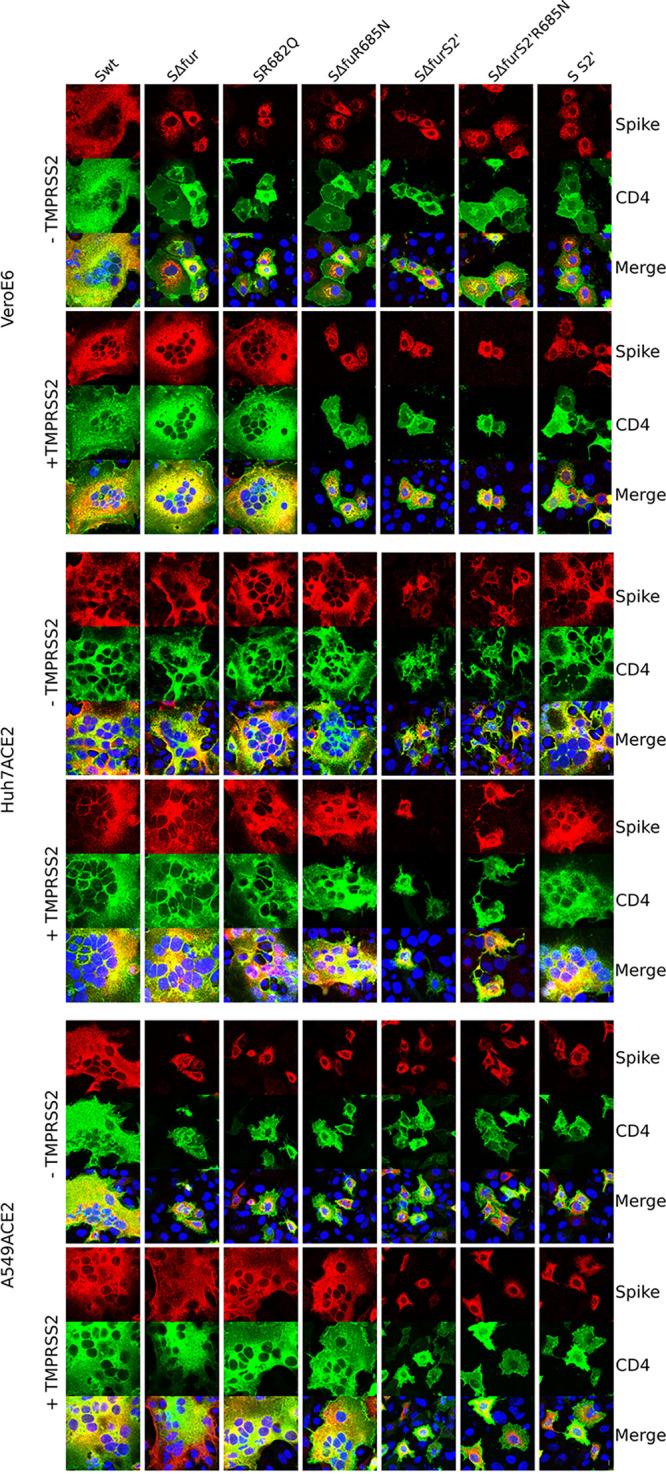
SARS-CoV-2 spike (S) envelope glycoprotein constitutes the main determinant of virus entry and the target of host immune response, thus being of great interest for antiviral research. It is constituted of S1 and S2 subunits, which are involved in ACE2 receptor binding and fusion between the viral envelope and host cell membrane, respectively. Induction of the fusion process requires S cleavage at the S1-S2 junction and the S2' site located upstream of the fusion peptide. Interestingly, the SARS-CoV-2 spike harbors a 4-residue insertion at the S1-S2 junction that is absent in its closest relatives and constitutes a polybasic motif recognized by furin-like proteases. In addition, the S2' site is characterized by the presence of conserved basic residues. Here, we sought to determine the importance of the furin cleavage site (FCS) and the S2' basic residues for S-mediated entry functions. We determined the impact of mutations introduced at these sites on S processing, fusogenic activity, and its ability to mediate entry in different cellular backgrounds. Strikingly, mutation phenotypes were highly dependent on the host cell background. We confirmed that although the FCS was not absolutely required for virus entry, it contributed to extending the fusogenic potential of S. Cleavage site mutations, as well as inhibition of furin protease activity, affected the cell surface expression of S in a host cell-dependent manner. Finally, inhibition of furin activity differentially affected SARS-CoV-2 virus infectivity in the tested host cells, thereby confirming the host cell-dependent effect of spike processing for the viral life cycle. SARS-CoV-2 is responsible for the current global pandemic that has resulted in several million deaths. As the key determinant of virus entry into host cells and the main target of host immune response, the spike glycoprotein constitutes an attractive target for therapeutics development. Entry functions of spike rely on its processing at two sites by host cell proteases. While SARS-CoV-2 spike differs from its closest relatives by the insertion of a basic furin cleavage motif at the first site, it harbors conserved basic residues at the second cleavage site. Characterization of the importance of the basic sequences present at the two cleavage sites revealed that they were influencing spike processing, intracellular localization, induction of fusion, and entry in a host cell-dependent manner. Thus, our results revealed a high heterogeneity in spike sequence requirement for entry functions in the different host cells, in agreement with the high adaptability of the SARS-CoV-2 virus.
SARS-CoV-2 刺突(S)包膜糖蛋白是病毒进入宿主细胞的主要决定因素,也是宿主免疫反应的靶标,因此是抗病毒研究的热点。它由 S1 和 S2 亚基组成,分别参与 ACE2 受体结合和病毒包膜与宿主细胞膜之间的融合。融合过程的诱导需要 S1-S2 连接处和融合肽上游的 S2' 位点的 S 切割。有趣的是,SARS-CoV-2 刺突在 S1-S2 连接处有 4 个残基插入,而其最接近的亲缘病毒中没有,这是一个被类枯草杆菌蛋白酶识别的多碱性基序。此外,S2' 位点的特征是存在保守的碱性残基。在这里,我们试图确定 S 介导的进入功能中,furin 切割位点(FCS)和 S2' 碱性残基的重要性。我们确定了这些位点引入突变对 S 加工、融合活性及其在不同细胞背景下介导进入的能力的影响。引人注目的是,突变表型高度依赖于宿主细胞背景。我们证实,尽管 FCS 不是病毒进入所必需的,但它有助于扩展 S 的融合潜力。切割位点突变以及 furin 蛋白酶活性的抑制,以宿主细胞依赖的方式影响 S 在细胞表面的表达。最后,furin 活性的抑制以宿主细胞依赖的方式对测试宿主细胞中的 SARS-CoV-2 病毒感染力产生不同的影响,从而证实了 spike 加工对病毒生命周期的宿主细胞依赖性影响。SARS-CoV-2 是导致当前全球大流行的罪魁祸首,已导致数百万人死亡。作为病毒进入宿主细胞的关键决定因素和宿主免疫反应的主要靶标,刺突糖蛋白是治疗药物开发的有吸引力的靶点。刺突的进入功能依赖于其在两个宿主细胞蛋白酶切割位点的加工。虽然 SARS-CoV-2 刺突在第一个位点插入了一个碱性 furin 切割基序,与最接近的亲缘病毒不同,但它在第二个切割位点具有保守的碱性残基。两个切割位点上存在的碱性序列的重要性的特征表明,它们以宿主细胞依赖的方式影响刺突的加工、细胞内定位、融合诱导和进入。因此,我们的结果显示,在不同的宿主细胞中,刺突序列对进入功能的要求存在高度异质性,这与 SARS-CoV-2 病毒的高度适应性一致。





 Zotero 插件