
评估雾化智能纳米抗病毒疗法(SNAT)对感染新冠病毒的仓鼠的病毒抑制分子机制。
Evaluating Molecular Mechanism of Viral Inhibition of Aerosolized Smart Nano-Enabled Antiviral Therapeutic (SNAT) on SARS-CoV-2-Infected Hamsters.
作者信息
Bauer Anais N, Williams John F, Pokhrel Lok R, Garcia Selena, Majumdar Niska, Eells Jeffrey B, Cook Paul P, Akula Shaw M
机构信息
Department of Microbiology and Immunology, Brody School of Medicine, East Carolina University, Greenville, NC 27834, USA.
Department of Public Health, Brody School of Medicine, East Carolina University, Greenville, NC 27834, USA.
出版信息
Toxics. 2024 Jul 5;12(7):495. doi: 10.3390/toxics12070495.
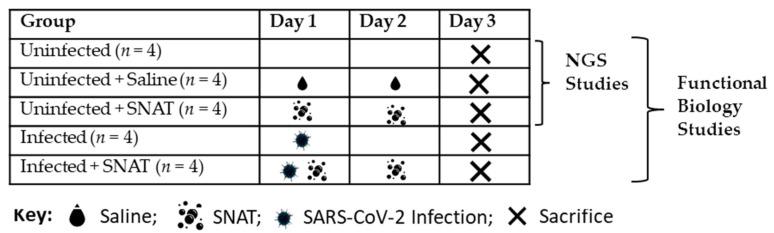
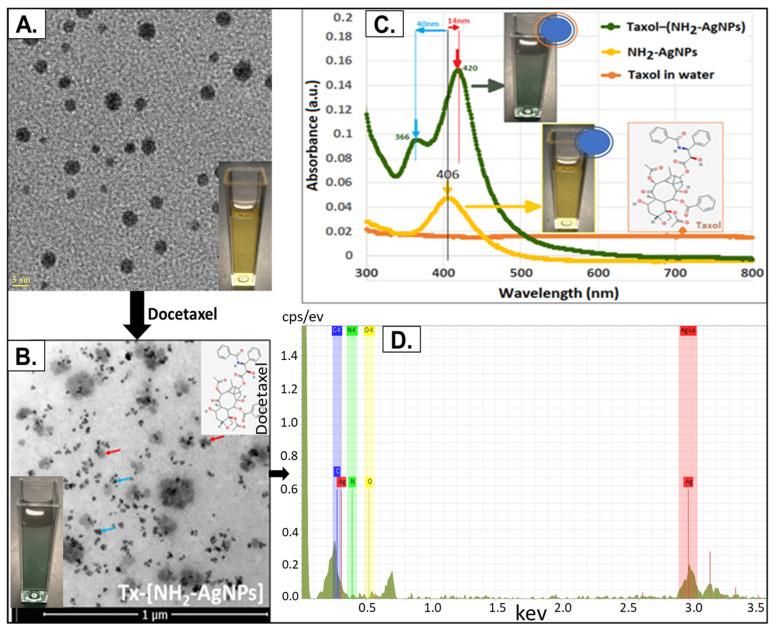
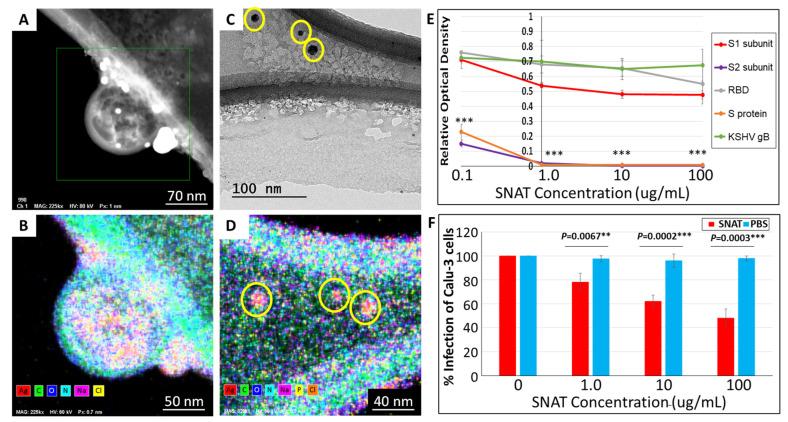
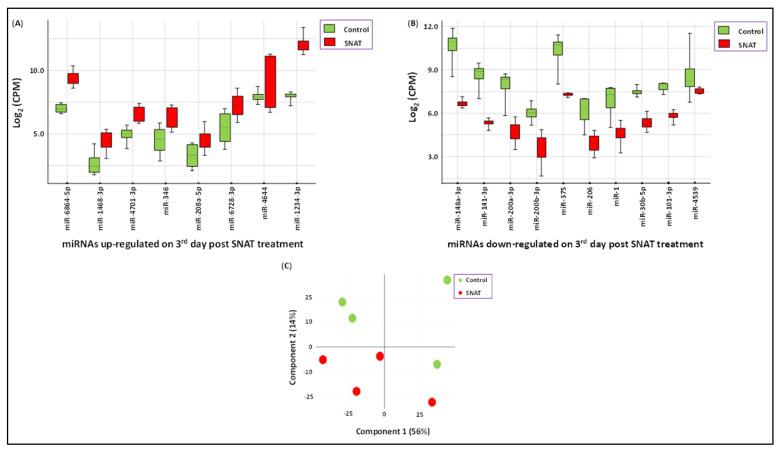
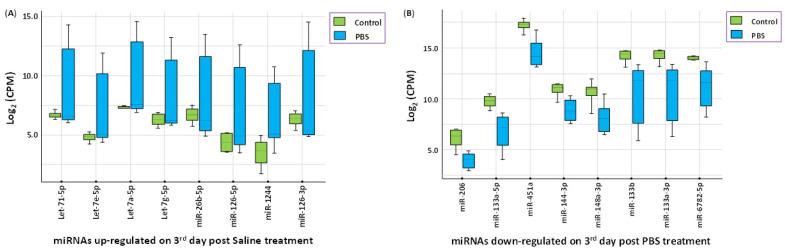
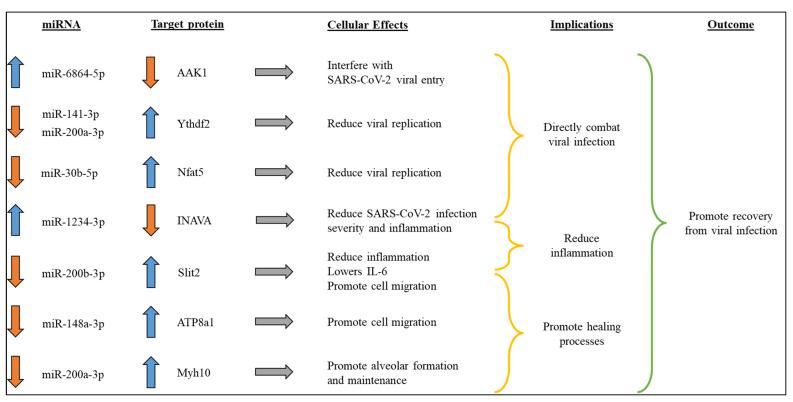
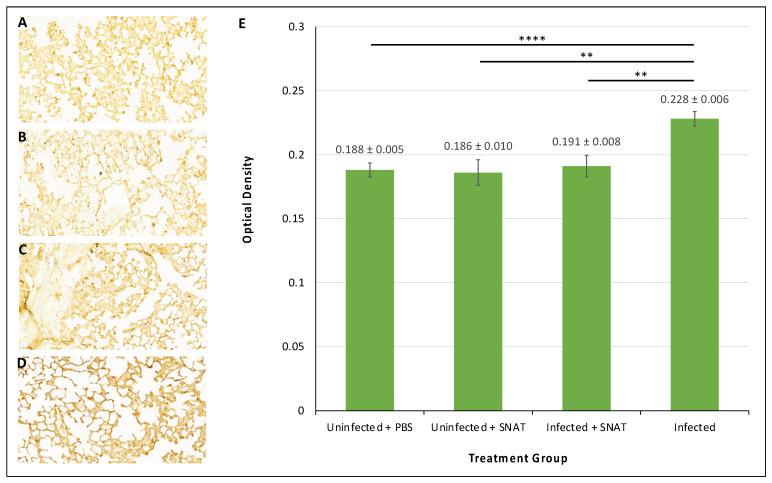
Smart Nano-enabled Antiviral Therapeutic (SNAT) is a promising nanodrug that previously demonstrated efficacy in preclinical studies to alleviate SARS-CoV-2 pathology in hamsters. SNAT comprises taxoid (Tx)-decorated amino (NH)-functionalized near-atomic size positively charged silver nanoparticles (Tx-[NH-AgNPs]). Herein, we aimed to elucidate the molecular mechanism of the viral inhibition and safety of aerosolized SNAT treatment in SARS-CoV-2-infected golden Syrian hamsters. High-resolution transmission electron microscopy (HR-TEM) coupled with energy dispersive spectroscopy (EDS) and ELISAs showed SNAT binds directly to the SARS-CoV-2 virus by interacting with intact spike (S) protein, specifically to S2 subunit. SNAT (≥1 µg/mL) treatment significantly lowered SARS-CoV-2 infections of Calu-3 cells. Extraction-free whole transcriptome assay was used to detect changes in circulatory micronome in hamsters treated intranasally with SNAT (two doses of 10 µg/mL of 2 mL each administered 24 h apart). Uninfected hamsters treated with SNAT had altered circulatory concentrations of 18 microRNAs (8 miRNAs upregulated, 10 downregulated) on day 3 post-treatment compared to uninfected controls. SNAT-induced downregulation of miR-141-3p and miR-200b-3p may reduce viral replication and inflammation by targeting Ythdf2 and Slit2, respectively. Further, SNAT treatment significantly lowered IL-6 expression in infected hamster lungs compared to untreated infected hamsters. Taken together, we demonstrate that SNAT binds directly to SARS-CoV-2 via the S protein to prevent viral entry and propose a model by which SNAT alters the cellular miRNA-directed milieu to promote antiviral cellular processes and neutralize infection. Our results provide insights into the use of low-dose intranasally delivered SNAT in treating SARS-CoV-2 infections in a hamster model.
智能纳米抗病毒疗法(SNAT)是一种很有前景的纳米药物,此前在临床前研究中已证明其在减轻仓鼠体内SARS-CoV-2病理方面的疗效。SNAT由紫杉醇(Tx)修饰的氨基(NH)功能化近原子尺寸带正电荷的银纳米颗粒(Tx-[NH-AgNPs])组成。在此,我们旨在阐明雾化SNAT治疗对感染SARS-CoV-2的金黄叙利亚仓鼠的病毒抑制分子机制和安全性。高分辨率透射电子显微镜(HR-TEM)结合能量色散光谱(EDS)和酶联免疫吸附测定(ELISA)表明,SNAT通过与完整的刺突(S)蛋白相互作用,特别是与S2亚基相互作用,直接结合到SARS-CoV-2病毒上。SNAT(≥1µg/mL)处理显著降低了Calu-3细胞中的SARS-CoV-2感染。采用无提取全转录组分析来检测经鼻内给予SNAT(两剂,每剂10µg/mL,2mL,间隔24小时给药)的仓鼠循环微基因组的变化。与未感染的对照组相比,用SNAT处理的未感染仓鼠在治疗后第3天循环中18种微小RNA的浓度发生了改变(8种miRNA上调,10种下调)。SNAT诱导的miR-141-3p和miR-200b-3p下调可能分别通过靶向Ythdf2和Slit2来减少病毒复制和炎症。此外,与未治疗的感染仓鼠相比,SNAT处理显著降低了感染仓鼠肺部的IL-6表达。综上所述,我们证明SNAT通过S蛋白直接结合到SARS-CoV-2上以防止病毒进入,并提出了一个模型,通过该模型SNAT改变细胞微小RNA导向的环境以促进抗病毒细胞过程并中和感染。我们的结果为在仓鼠模型中使用低剂量鼻内给药的SNAT治疗SARS-CoV-2感染提供了见解。

 Zotero 插件