
一种用于油水乳液过滤中节能膜污染控制的旋转间隔系统。
A Rotary Spacer System for Energy-Efficient Membrane Fouling Control in Oil/Water Emulsion Filtration.
作者信息
Mat Nawi Normi Izati, Mohd Lazis Afiq, Rahma Aulia, Elma Muthia, Bilad Muhammad Roil, Md Nordin Nik Abdul Hadi, Wirzal Mohd Dzul Hakim, Shamsuddin Norazanita, Suhaimi Hazwani, Yusof Norhaniza
机构信息
Department of Chemical Engineering, Universiti Teknologi PETRONAS, Seri Iskandar 32610, Perak, Malaysia.
Chemical Engineering Department, Lambung Mangkurat University, Banjarbaru 70714, South Kalimantan, Indonesia.
出版信息
Membranes (Basel). 2022 May 26;12(6):554. doi: 10.3390/membranes12060554.
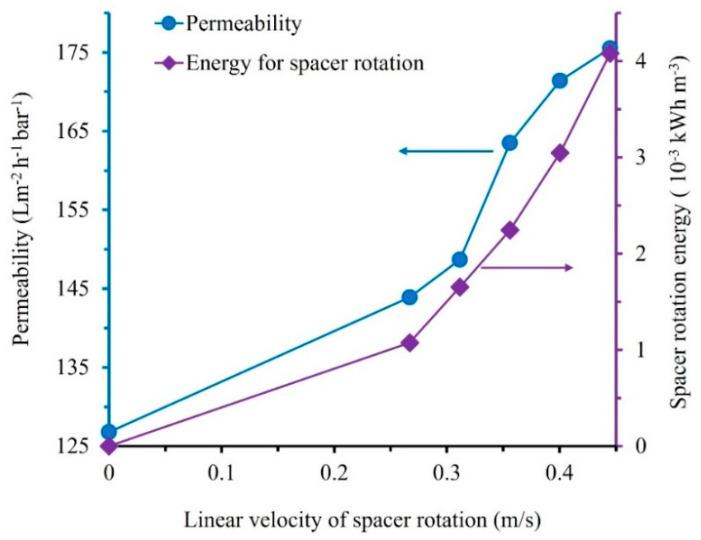
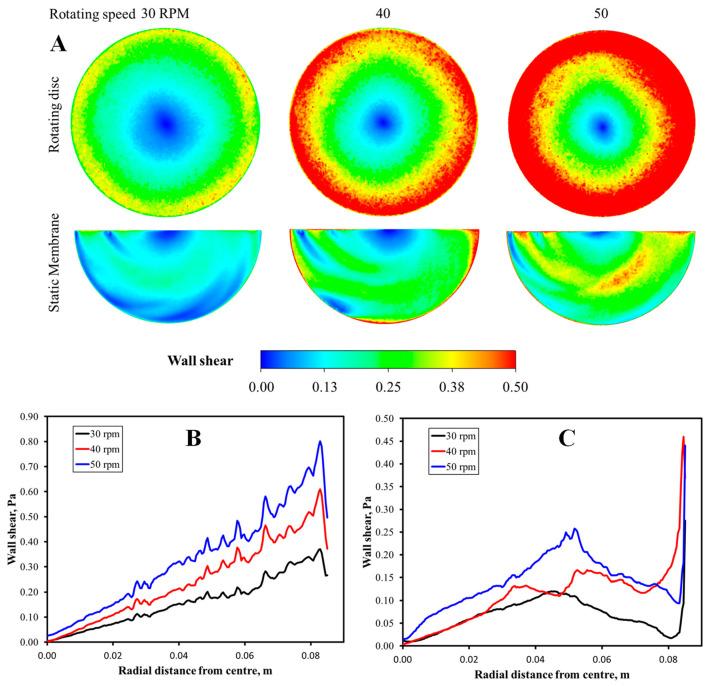
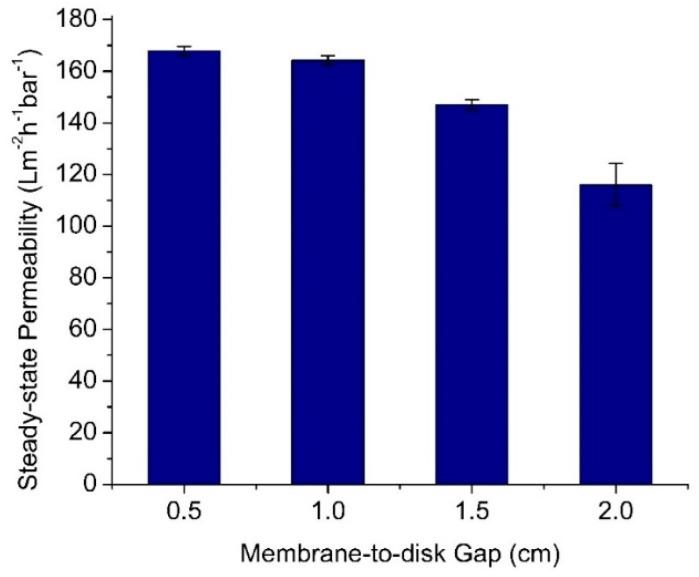
Membrane fouling deteriorates membrane filtration performances. Hence, mitigating membrane fouling is the key factor in sustaining the membrane process, particularly when treating fouling-prone feed, such as oil/water emulsions. The use of spacers has been expanded in the membrane module system, including for membrane fouling control. This study proposed a rotating spacer system to ameliorate membrane fouling issues when treating an oil/water emulsion. The system's effectiveness was assessed by investigating the effect of rotating speed and membrane-to-disk gap on the hydraulic performance and the energy input and through computational fluid dynamics (CFD) simulation. The results showed that the newly developed rotary spacer system was effective and energy-efficient for fouling control. The CFD simulation results proved that the spacer rotations induced secondary flow near the membrane surface and imposed shear rate and lift force to exert fouling control. Increasing the rotation speed to an average linear velocity of 0.44 m/s increased the permeability from 126.8 ± 2.1 to 175.5 ± 2.7 Lmhbar. The system showed better performance at a lower spacer-to-membrane gap, in which increasing the gap from 0.5 to 2.0 cm lowered the permeability from 175.5 ± 2.7 to 126.7 ± 2.0 Lmhbar. Interestingly, the rotary system showed a low energy input of 1.08 to 4.08 × 10 kWhm permeate when run at linear velocities of 0.27 to 0.44 ms. Overall, the findings suggest the competitiveness of the rotary spacer system as a method for membrane fouling control.
膜污染会降低膜过滤性能。因此,减轻膜污染是维持膜工艺的关键因素,尤其是在处理易污染进料(如油/水乳液)时。间隔物在膜组件系统中的应用不断扩大,包括用于控制膜污染。本研究提出了一种旋转间隔物系统,以改善处理油/水乳液时的膜污染问题。通过研究转速和膜与盘间隙对水力性能、能量输入的影响,并通过计算流体动力学(CFD)模拟来评估该系统的有效性。结果表明,新开发的旋转间隔物系统在控制污染方面有效且节能。CFD模拟结果证明,间隔物的旋转在膜表面附近引起二次流,并施加剪切速率和升力以实现污染控制。将转速提高到平均线速度0.44 m/s时,渗透率从126.8±2.1提高到175.5±2.7 Lmhbar。该系统在较低的间隔物与膜间隙下表现出更好的性能,其中将间隙从0.5 cm增加到2.0 cm会使渗透率从175.5±2.7降低到126.7±2.0 Lmhbar。有趣的是,当以0.27至0.44 m/s的线速度运行时,旋转系统的能量输入较低,为1.08至4.08×10 kWh/m渗透液。总体而言,研究结果表明旋转间隔物系统作为一种膜污染控制方法具有竞争力。



 Zotero 插件