
新冠疫情预测与防控背景下的优化:文献综述
Optimization in the Context of COVID-19 Prediction and Control: A Literature Review.
作者信息
Jordan Elizabeth, Shin Delia E, Leekha Surbhi, Azarm Shapour
机构信息
Department of Mechanical EngineeringUniversity of Maryland College Park MD 20742 USA.
Department of Epidemiology and Public HealthUniversity of Maryland School of Medicine Baltimore MD 21201 USA.
出版信息
IEEE Access. 2021 Sep 17;9:130072-130093. doi: 10.1109/ACCESS.2021.3113812. eCollection 2021.
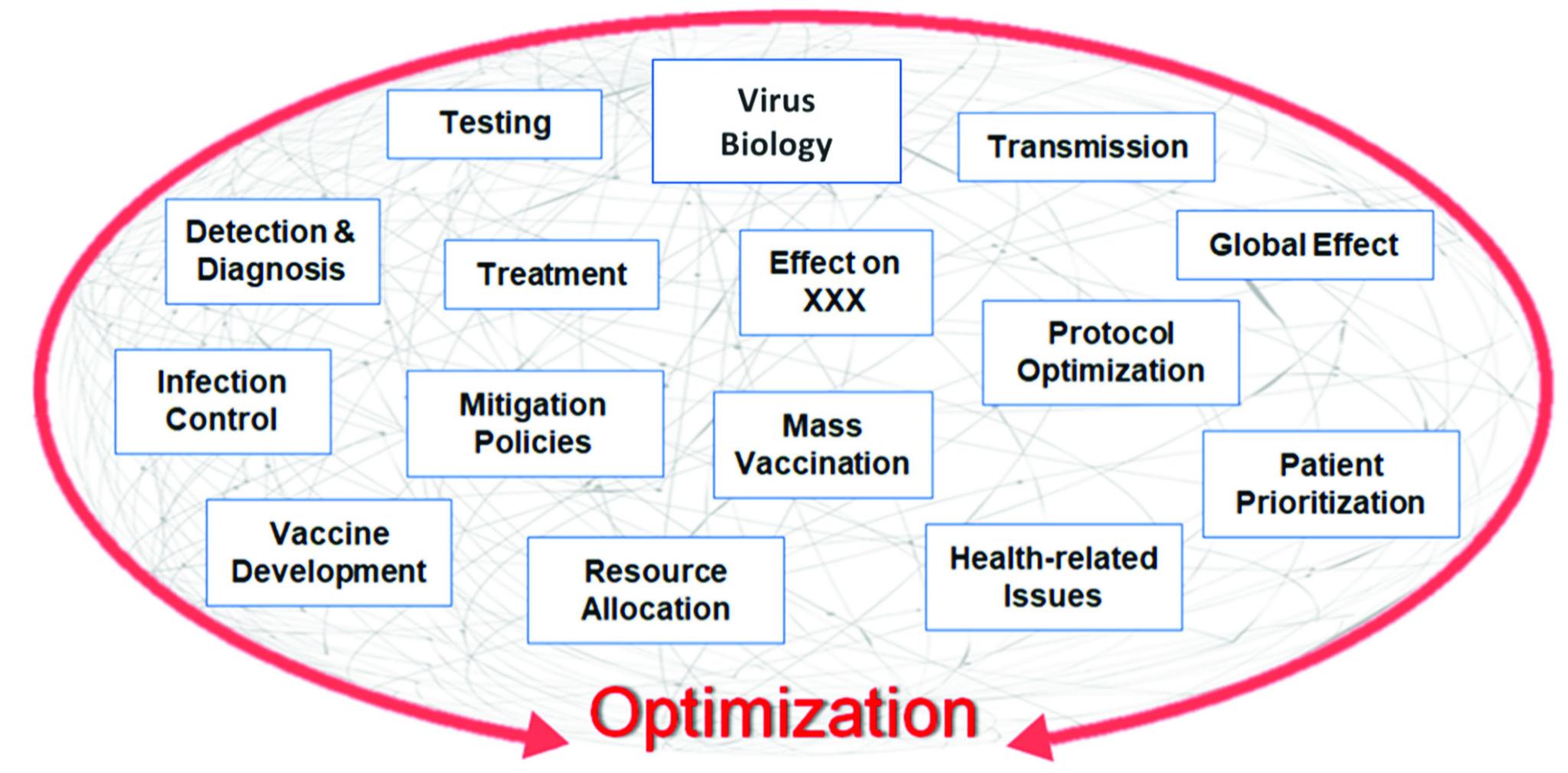
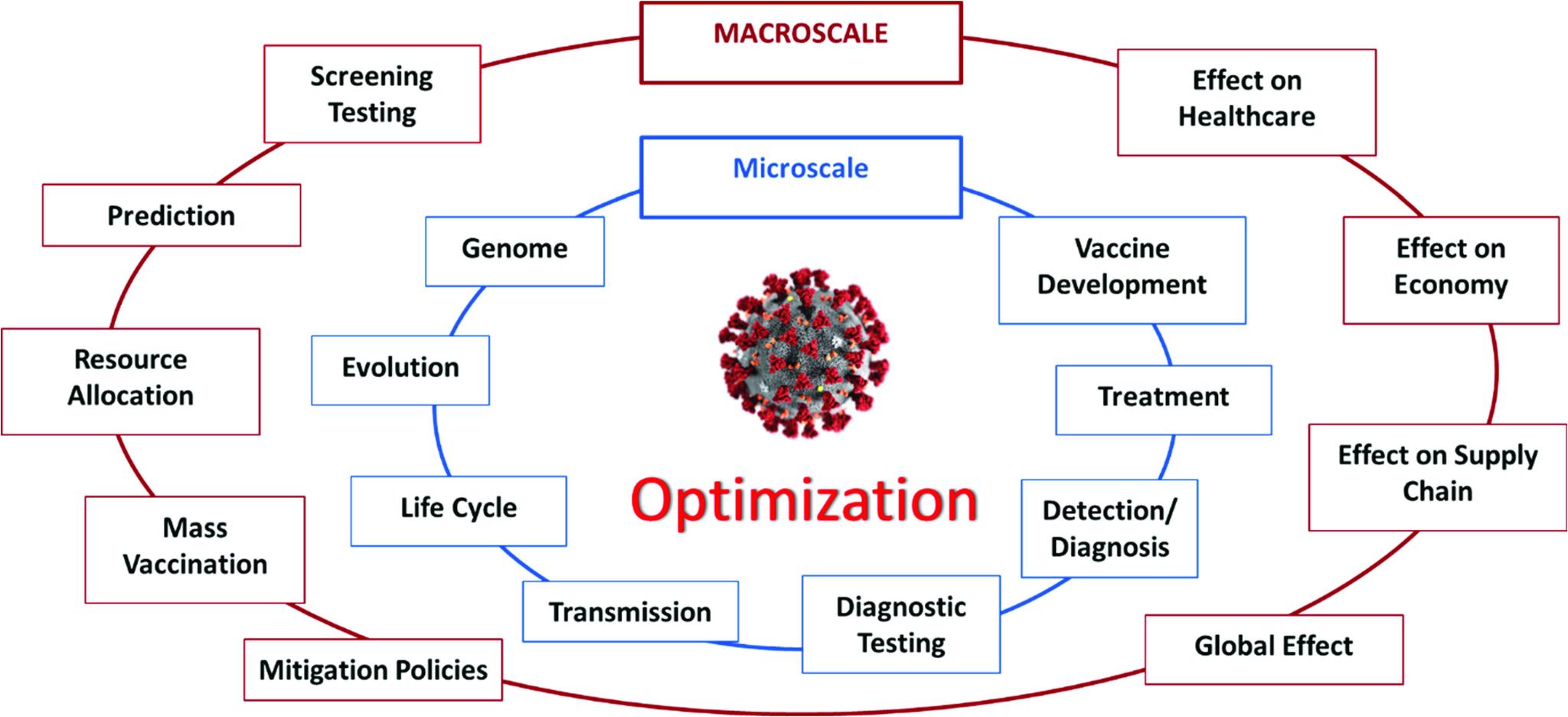
This paper presents an overview of some key results from a body of optimization studies that are specifically related to COVID-19, as reported in the literature during 2020-2021. As shown in this paper, optimization studies in the context of COVID-19 have been used for many aspects of the pandemic. From these studies, it is observed that since COVID-19 is a multifaceted problem, it cannot be studied from a single perspective or framework, and neither can the related optimization models. Four new and different frameworks are proposed that capture the essence of analyzing COVID-19 (or any pandemic for that matter) and the relevant optimization models. These are: (i) microscale vs. macroscale perspective; (ii) early stages vs. later stages perspective; (iii) aspects with direct vs. indirect relationship to COVID-19; and (iv) compartmentalized perspective. To limit the scope of the review, only optimization studies related to the prediction and control of COVID-19 are considered (public health focused), and which utilize formal optimization techniques or machine learning approaches. In this context and to the best of our knowledge, this survey paper is the first in the literature with a focus on the prediction and control related optimization studies. These studies include optimization of screening testing strategies, prediction, prevention and control, resource management, vaccination prioritization, and decision support tools. Upon reviewing the literature, this paper identifies current gaps and major challenges that hinder the closure of these gaps and provides some insights into future research directions.
本文概述了2020 - 2021年文献报道的一系列与2019冠状病毒病(COVID - 19)特别相关的优化研究的一些关键成果。如本文所示,COVID - 19背景下的优化研究已用于该大流行的许多方面。从这些研究中可以观察到,由于COVID - 19是一个多方面的问题,不能从单一视角或框架进行研究,相关的优化模型也不能如此。本文提出了四个新的且不同的框架,它们抓住了分析COVID - 19(或就此而言的任何大流行)及相关优化模型的本质。这些框架是:(i)微观尺度与宏观尺度视角;(ii)早期阶段与后期阶段视角;(iii)与COVID - 19有直接与间接关系的方面;以及(iv) compartmentalized视角。为了限制综述的范围,仅考虑与COVID - 19的预测和控制相关的优化研究(以公共卫生为重点),且这些研究利用了正式的优化技术或机器学习方法。在这种背景下,据我们所知,本综述论文是文献中第一篇专注于与预测和控制相关的优化研究的论文。这些研究包括筛查检测策略的优化、预测、预防与控制、资源管理、疫苗接种优先级确定以及决策支持工具。在回顾文献时,本文确定了当前的差距以及阻碍弥合这些差距的主要挑战,并对未来的研究方向提供了一些见解。




 Zotero 插件