
水生环境中的药品:藻类的生态毒理学与修复潜力综述。
Pharmaceuticals in the Aquatic Environment: A Review on Eco-Toxicology and the Remediation Potential of Algae.
机构信息
Department of Plant Physiology and Biotechnology, Faculty of Biology, University of Gdansk, Wita Stwosza 59, 80-308 Gdansk, Poland.
出版信息
Int J Environ Res Public Health. 2022 Jun 23;19(13):7717. doi: 10.3390/ijerph19137717.
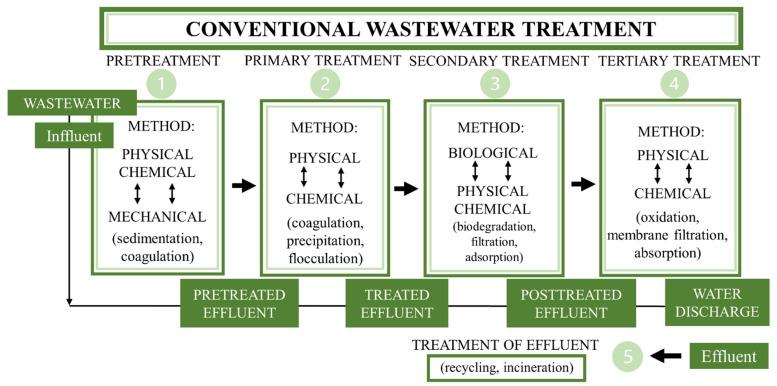
The pollution of the aquatic environment has become a worldwide problem. The widespread use of pesticides, heavy metals and pharmaceuticals through anthropogenic activities has increased the emission of such contaminants into wastewater. Pharmaceuticals constitute a significant class of aquatic contaminants and can seriously threaten the health of non-target organisms. No strict legal regulations on the consumption and release of pharmaceuticals into water bodies have been implemented on a global scale. Different conventional wastewater treatments are not well-designed to remove emerging contaminants from wastewater with high efficiency. Therefore, particular attention has been paid to the phycoremediation technique, which seems to be a promising choice as a low-cost and environment-friendly wastewater treatment. This technique uses macro- or micro-algae for the removal or biotransformation of pollutants and is constantly being developed to cope with the issue of wastewater contamination. The aims of this review are: (i) to examine the occurrence of pharmaceuticals in water, and their toxicity on non-target organisms and to describe the inefficient conventional wastewater treatments; (ii) present cost-efficient algal-based techniques of contamination removal; (iii) to characterize types of algae cultivation systems; and (iv) to describe the challenges and advantages of phycoremediation.
水环境污染已成为全球性问题。由于人为活动广泛使用农药、重金属和药品,这些污染物越来越多地排放到废水中。药品是一类重要的水生污染物,会严重威胁到非目标生物的健康。目前全球范围内尚未对药品的消费和向水体的排放实施严格的法律规定。不同的常规废水处理方法设计不佳,无法有效地从废水中去除新兴污染物。因此,人们特别关注藻类修复技术,它似乎是一种有前途的低成本、环保型废水处理选择。该技术利用大型或微型藻类去除或生物转化污染物,并不断发展以应对废水污染问题。本文综述的目的是:(i) 研究水中药品的存在及其对非目标生物的毒性,并描述低效的常规废水处理方法;(ii) 介绍具有成本效益的基于藻类的污染去除技术;(iii) 描述藻类培养系统的类型;(iv) 描述藻类修复的挑战和优势。



 Zotero 插件