
K18- 和 CAG-hACE2 转基因小鼠模型与 SARS-CoV-2:对神经退行性变研究的启示。
K18- and CAG-hACE2 Transgenic Mouse Models and SARS-CoV-2: Implications for Neurodegeneration Research.
机构信息
Department of Biomedical Sciences, Division of Neuroscience and Clinical Pharmacology, University of Cagliari, 09042 Monserrato, Sardinia, Italy.
Department of Neuroscience, Georgetown University Medical Center, Washington, DC 20057, USA.
出版信息
Molecules. 2022 Jun 28;27(13):4142. doi: 10.3390/molecules27134142.
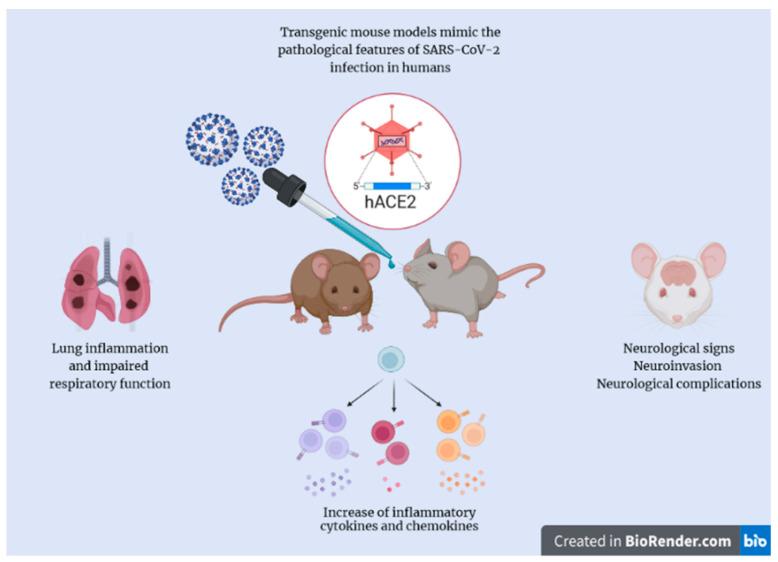
COVID-19, caused by severe acute respiratory syndrome coronavirus 2 (SARS-CoV-2), is a global pandemic that might lead to very serious consequences. Notably, mental status change, brain confusion, and smell and taste disorders along with neurological complaints have been reported in patients infected with SARS-CoV-2. Furthermore, human brain tissue autopsies from COVID-19 patients show the presence of SARS-CoV-2 neuroinvasion, which correlates with the manifestation of meningitis, encephalitis, leukocyte infiltration, and neuronal damage. The olfactory mucosa has been suggested as a way of entry into the brain. SARS-CoV-2 infection is also known to provoke a hyper-inflammatory reaction with an exponential increase in the production of pro-inflammatory cytokines leading to systemic responses, even in the absence of direct infection of brain cells. Angiotensin-converting enzyme 2 (ACE2), the entry receptor of SARS-CoV-2, has been extensively demonstrated to be present in the periphery, neurons, and glial cells in different brain regions. To dissect the details of neurological complications and develop therapies helping COVID-19 survivors regain pre-infection quality of life, the development of robust clinical models is highly warranted. Several human angiotensin-converting enzyme 2 (hACE2) transgenic mouse models have been developed and used for antiviral drug screening and vaccine development, as well as for better understanding of the molecular pathogenetic mechanisms of SARS-CoV-2 infection. In this review, we summarize recent results from the studies involving two such mouse models, namely K18- and CAG-hACE2 transgenics, to evaluate the direct and indirect impact of SARS-CoV-2 infection on the central nervous system.
新型冠状病毒病(COVID-19)由严重急性呼吸系统综合征冠状病毒 2 型(SARS-CoV-2)引起,是一种全球性大流行疾病,可能导致非常严重的后果。值得注意的是,感染 SARS-CoV-2 的患者出现了精神状态改变、脑功能紊乱、嗅觉和味觉障碍以及神经系统症状。此外,COVID-19 患者的人脑组织尸检显示 SARS-CoV-2 神经入侵,这与脑膜炎、脑炎、白细胞浸润和神经元损伤的表现相关。嗅觉黏膜被认为是进入大脑的途径之一。SARS-CoV-2 感染也会引发过度炎症反应,导致促炎细胞因子大量产生,引起全身反应,即使没有脑细胞的直接感染也是如此。血管紧张素转换酶 2(ACE2)是 SARS-CoV-2 的进入受体,广泛存在于不同脑区的外周、神经元和神经胶质细胞中。为了剖析神经并发症的细节并开发帮助 COVID-19 幸存者恢复感染前生活质量的治疗方法,非常需要开发强大的临床模型。已经开发并使用了几种人类 ACE2(hACE2)转基因小鼠模型,用于抗病毒药物筛选和疫苗开发,以及更好地理解 SARS-CoV-2 感染的分子发病机制。在这篇综述中,我们总结了涉及两种此类小鼠模型,即 K18-和 CAG-hACE2 转基因小鼠的最新研究结果,以评估 SARS-CoV-2 感染对中枢神经系统的直接和间接影响。

 Zotero 插件