
严重急性呼吸综合征冠状病毒2(SARS-CoV-2)的ORF3a蛋白作为抗2019冠状病毒病(COVID-19)及感染后长期影响的治疗靶点
SARS-CoV-2 ORF3a Protein as a Therapeutic Target against COVID-19 and Long-Term Post-Infection Effects.
作者信息
Zhang Jiantao, Hom Kellie, Zhang Chenyu, Nasr Mohamed, Gerzanich Volodymyr, Zhang Yanjin, Tang Qiyi, Xue Fengtian, Simard J Marc, Zhao Richard Y
机构信息
Department of Pathology, University of Maryland School of Medicine, Baltimore, MD 21201, USA.
Department of Pharmaceutical Sciences, University of Maryland School of Pharmacy, Baltimore, MD 21201, USA.
出版信息
Pathogens. 2024 Jan 14;13(1):75. doi: 10.3390/pathogens13010075.
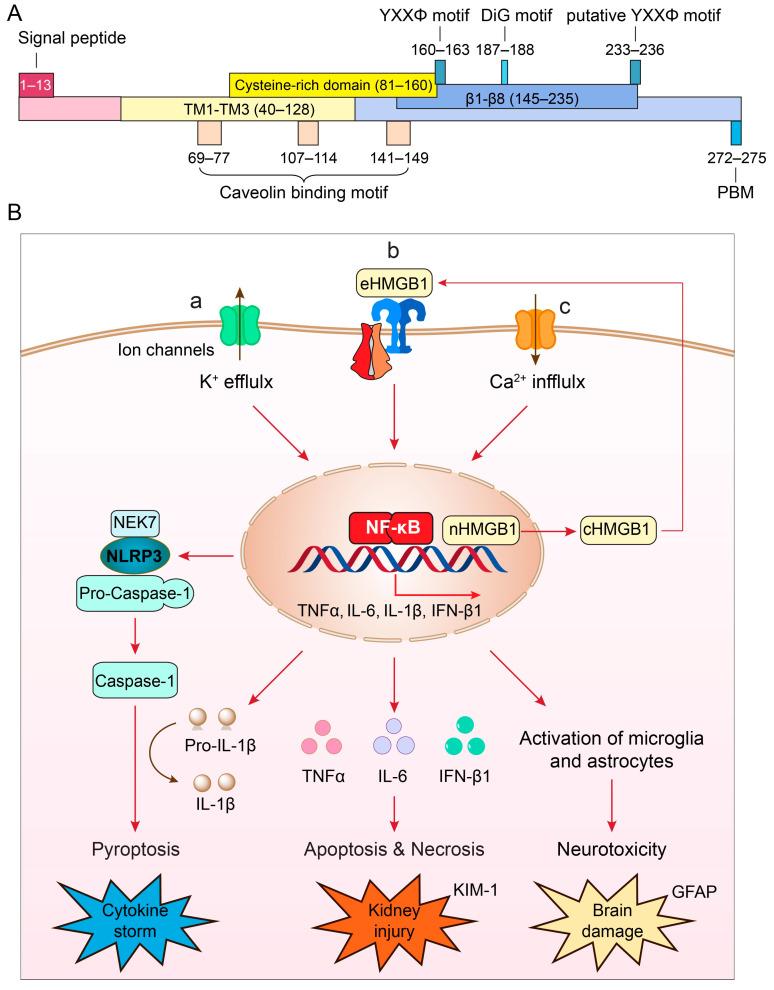
The COVID-19 pandemic caused by SARS-CoV-2 has posed unparalleled challenges due to its rapid transmission, ability to mutate, high mortality and morbidity, and enduring health complications. Vaccines have exhibited effectiveness, but their efficacy diminishes over time while new variants continue to emerge. Antiviral medications offer a viable alternative, but their success has been inconsistent. Therefore, there remains an ongoing need to identify innovative antiviral drugs for treating COVID-19 and its post-infection complications. The ORF3a (open reading frame 3a) protein found in SARS-CoV-2, represents a promising target for antiviral treatment due to its multifaceted role in viral pathogenesis, cytokine storms, disease severity, and mortality. ORF3a contributes significantly to viral pathogenesis by facilitating viral assembly and release, essential processes in the viral life cycle, while also suppressing the body's antiviral responses, thus aiding viral replication. ORF3a also has been implicated in triggering excessive inflammation, characterized by NF-κB-mediated cytokine production, ultimately leading to apoptotic cell death and tissue damage in the lungs, kidneys, and the central nervous system. Additionally, ORF3a triggers the activation of the NLRP3 inflammasome, inciting a cytokine storm, which is a major contributor to the severity of the disease and subsequent mortality. As with the spike protein, ORF3a also undergoes mutations, and certain mutant variants correlate with heightened disease severity in COVID-19. These mutations may influence viral replication and host cellular inflammatory responses. While establishing a direct link between ORF3a and mortality is difficult, its involvement in promoting inflammation and exacerbating disease severity likely contributes to higher mortality rates in severe COVID-19 cases. This review offers a comprehensive and detailed exploration of ORF3a's potential as an innovative antiviral drug target. Additionally, we outline potential strategies for discovering and developing ORF3a inhibitor drugs to counteract its harmful effects, alleviate tissue damage, and reduce the severity of COVID-19 and its lingering complications.
由严重急性呼吸综合征冠状病毒2(SARS-CoV-2)引起的2019冠状病毒病(COVID-19)大流行带来了前所未有的挑战,因为它传播迅速、具有变异能力、死亡率和发病率高,且会引发持久的健康并发症。疫苗已显示出有效性,但其效力会随着时间推移而降低,同时新的病毒变种不断出现。抗病毒药物是一种可行的替代方案,但其成效并不稳定。因此,持续需要鉴定出用于治疗COVID-19及其感染后并发症的创新抗病毒药物。在SARS-CoV-2中发现的开放阅读框3a(ORF3a)蛋白,由于其在病毒发病机制、细胞因子风暴、疾病严重程度和死亡率中具有多方面作用,是抗病毒治疗的一个有前景的靶点。ORF3a通过促进病毒组装和释放(病毒生命周期中的关键过程)对病毒发病机制有显著贡献,同时还抑制机体的抗病毒反应,从而有助于病毒复制。ORF3a还与引发过度炎症有关,其特征是以NF-κB介导的细胞因子产生,最终导致肺、肾和中枢神经系统的细胞凋亡性死亡和组织损伤。此外,ORF3a触发NLRP3炎性小体的激活,引发细胞因子风暴,这是导致疾病严重程度和后续死亡率的主要因素。与刺突蛋白一样,ORF3a也会发生突变,某些突变变体与COVID-19中更高的疾病严重程度相关。这些突变可能影响病毒复制和宿主细胞炎症反应。虽然很难确定ORF3a与死亡率之间的直接联系,但其在促进炎症和加剧疾病严重程度方面的作用可能导致重症COVID-19病例的死亡率更高。本综述全面且详细地探讨了ORF3a作为创新抗病毒药物靶点的潜力。此外,我们概述了发现和开发ORF3a抑制剂药物以对抗其有害作用、减轻组织损伤并降低COVID-19及其长期并发症严重程度的潜在策略。
 Zotero 插件