
三种浮萍衰老的速度和形态
Pace and shape of senescence in three species of duckweed.
作者信息
Paiha Austin P, Laird Robert A
机构信息
Department of Biological Sciences University of Lethbridge Lethbridge Alberta Canada.
出版信息
Ecol Evol. 2022 Jul 5;12(7):e9038. doi: 10.1002/ece3.9038. eCollection 2022 Jul.
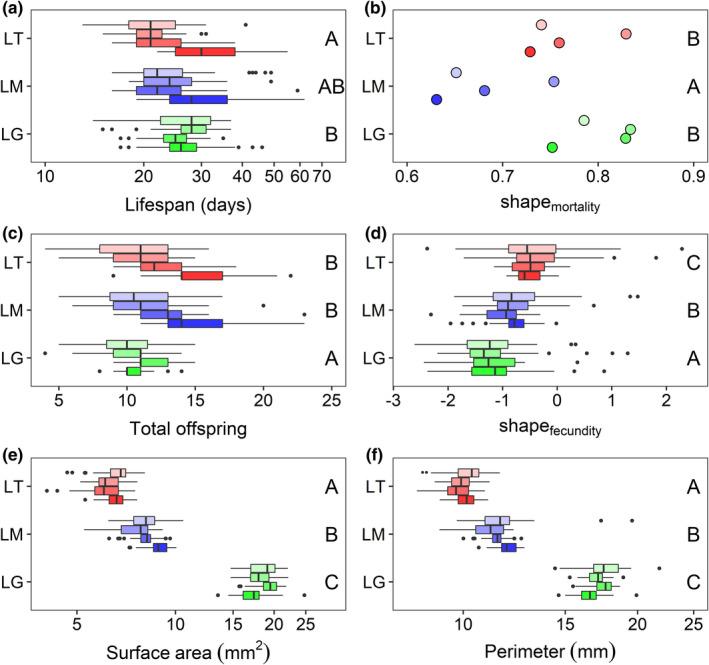
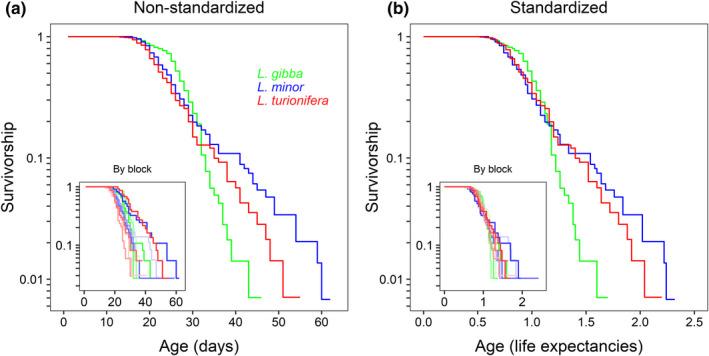
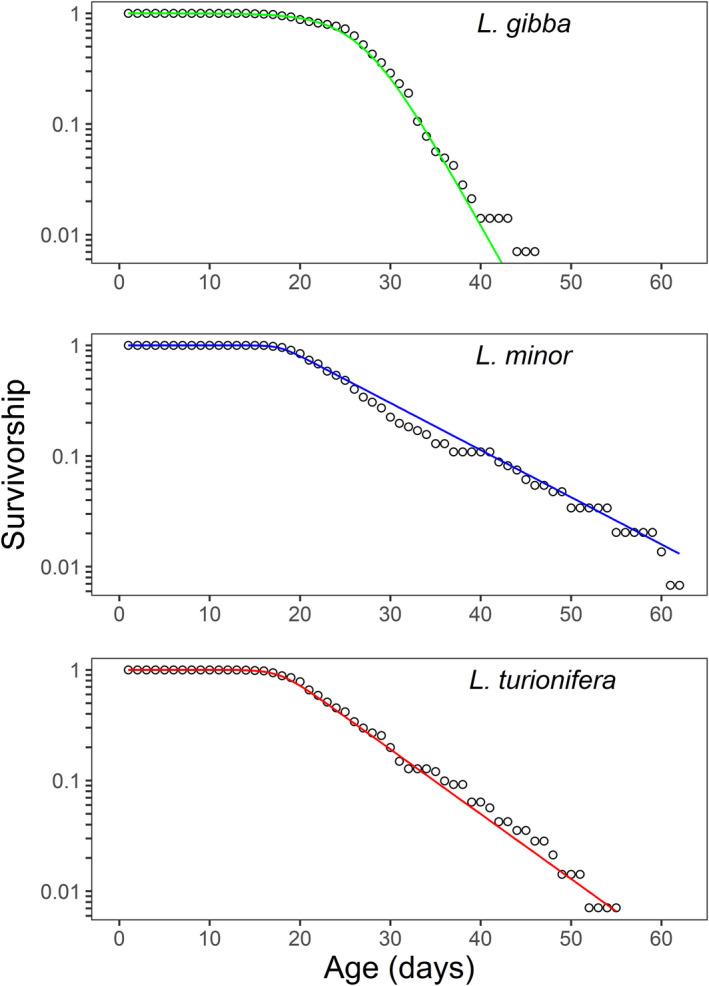
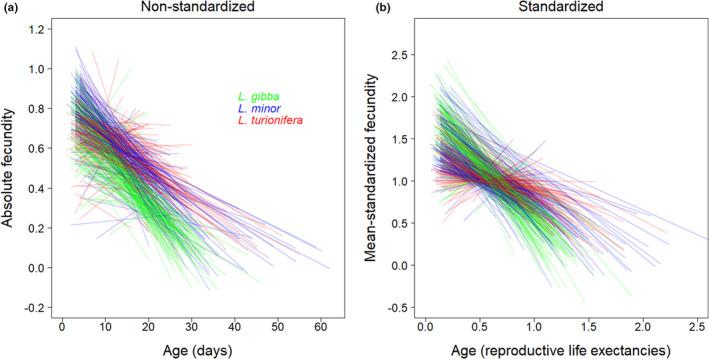
Senescence is progressive bodily deterioration associated with declines in survival and fecundity in older age classes. There is great diversity in patterns of senescence across species, but these patterns can be difficult to compare formally due to variation in the absolute time scales in which species live and die: members of some species live for a matter of days, others for millennia. To address this issue, the "pace-shape" approach was developed to decouple absolute time from analyses and instead standardize life history traits in terms of average life expectancy, facilitating intra- and interspecific comparisons. Here, we use this approach to distinguish the generic form of demographic trajectories (shape) from the time scale on which the trajectories occurred (pace) in three species of tiny, free-floating aquatic plants known as duckweeds ( L., L., and Landolt), which have mean lifespans of less than a month under typical lab conditions, and exhibit age-related declines in survivorship and reproduction. Using a randomized block design in which we tracked a final total of 430 individuals, we report differences in pace and shape among the three species. Specifically, the largest, least-fecund, and typically longest-lived species, , tended to exhibit more rapid decreases in time-standardized survivorship and fecundity compared with the other two species. This study emphasizes variation in aging patterns that can be found among plant species, including those in the same genus, and provides further validation for the utility of applying the pace and shape approach in interspecific comparisons.
衰老指的是身体机能的逐渐衰退,这与老年群体的生存和繁殖能力下降相关。不同物种的衰老模式存在很大差异,但由于物种生死的绝对时间尺度各不相同,这些模式很难进行正式比较:有些物种的成员只能存活几天,而有些则能存活数千年。为了解决这个问题,人们开发了“速度 - 形状”方法,将绝对时间从分析中分离出来,而是根据平均预期寿命对生活史特征进行标准化,从而便于种内和种间比较。在这里,我们使用这种方法来区分三种微小的漂浮水生植物——浮萍(Lemna minor、Lemna gibba和Spirodela polyrhiza Landolt)——的种群统计学轨迹的一般形式(形状)和轨迹发生的时间尺度(速度)。在典型的实验室条件下,这些浮萍的平均寿命不到一个月,并且表现出与年龄相关的生存和繁殖能力下降。通过采用随机区组设计,我们总共跟踪了430个个体,报告了这三个物种在速度和形状上的差异。具体而言,最大、繁殖力最低且通常寿命最长的物种Spirodela polyrhiza,与其他两个物种相比,其时间标准化的生存率和繁殖力往往下降得更快。这项研究强调了植物物种间衰老模式的差异,包括同一属内的物种,并进一步验证了“速度 - 形状”方法在种间比较中的实用性。

 Zotero 插件